Sightlines · a mini film course
The Space Between Seeing and Doing
Every thriller, every war film, every spy picture runs on the same hidden engine: someone sees a danger and acts to change it. What makes this particular watchlist so rewarding is that each of these twelve films does something distinctive to that engine — tuning it to perfection, running it in a vacuum, prying it open, or deliberately letting it stall. Some of these films are machines of pure, gleaming competence, where a body meets a problem and solves it before your eye can catch up. Others are built on the terrible gap between what characters can see and what they can do about it — men frozen under a sonar ping, a boy whose dreams belong to a life the war has already taken. And a third group hands the crucial knowledge to you, the viewer, so the suspense lives in your head rather than on screen. Watch them together and you start to feel the engine itself: when it hums, when it hesitates, and when it grinds on long after the world has stopped answering.
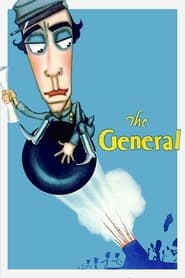
The General (1926)
Start here, with the engine at its purest. Keaton poses a physical problem in every shot — a railroad tie on the track, a locomotive that can't stop — and discharges it into one precisely engineered act, with no reaction shots and no psychology to slow the loop. Watch how the photography keeps the geography of the chase continuously legible, real trains moving through real Oregon landscapes, so you always understand exactly what the body must do against the machine. This is comedy as clockwork, and half the films below are secretly in conversation with it.
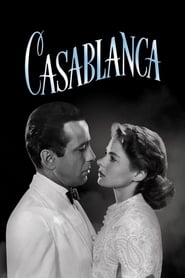
Casablanca (1943)
Here the classical machine is complete: every image is placed, every emotion is legible, and the story of a man deciding whether to act at all clicks forward with total confidence. Watch Arthur Edeson's shadow-heavy lighting — carried over from Frankenstein and The Maltese Falcon — and especially the soft, diffused glow on Ingrid Bergman's face, borrowed from the way Sternberg once photographed Dietrich. Those close-ups hold a feeling at the very edge of readability, a longing with nowhere to go, and they are the film's real subject: the pause before commitment.
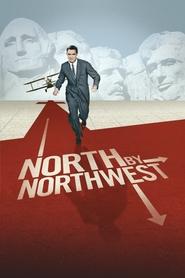
North by Northwest (1959)
Hitchcock's great trick is to make you the one who knows. From early on, the audience holds relations the man on screen cannot — most famously in a sequence where a man in a gray suit stands alone at a sunlit crossroads with the whole horizon visible and nothing on it. Notice how Robert Burks varies the visual register — cramped Manhattan interiors, the formal geometry of the UN, then radical prairie openness — so that space itself keeps changing the rules. The suspense isn't in the action; it's in the gap between what you know and what Thornhill knows.
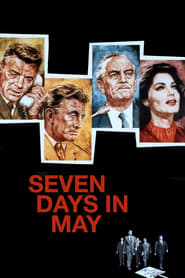
Seven Days in May (1964)
Frankenheimer stages a constitutional crisis with almost no violence: the weapons are memoranda, phone logs, letters. Watch the deep-focus, wide-angle black-and-white photography — a face swelling enormous in the foreground while the man who opposes him stands small and crisp behind, both held on a single plane. The camera doesn't cut to tell you who is dangerous; the composition of the room already told you. A thriller where a single frame can contain an entire quarrel.
Dr. Strangelove (1964)
Kubrick builds three distinct visual worlds — quasi-documentary handheld at the airbase, cramped procedure inside the B-52, theatrical vastness in the War Room — and lets each run its rational routines straight off a cliff. Watch for how competence itself becomes the joke: every character understands the situation with perfect clarity, everyone follows procedure, and the aggregate of intelligible decisions is madness. It's the heroic war film's engine still running — just pointed at the abyss, and played deadpan.
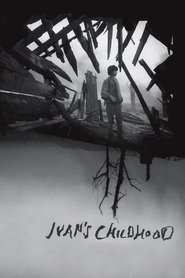
Ivan's Childhood (1962)
Tarkovsky's first feature is a war film welded to something else entirely. The missions — night crossings, reeds, mist, a small figure pressed against vast threatening skies — are all forward motion and held breath. The dreams are photographed in a completely different key: light through birch leaves, water, a mother's face. Watch how Tarkovsky cuts between the two worlds with no dissolve and no consoling music — the hardest cut he can make. The seam between the boy who acts and the child who can only remember is the whole film.
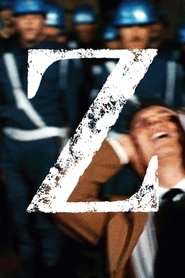
Z (1969)
When the violence comes, the camera plunges into it at ground level — legs, panic, bad angles, cut so fast you never get the clean overhead view. This is deliberate: the film's subject is how institutions manufacture confusion, and the camerawork makes you live that manufactured confusion rather than observe it. Watch how Raoul Coutard's handheld, available-light style — developed for New Wave romances — is repurposed here as a political instrument, and how the film keeps replaying a single event from new witnesses, each pass revising what you thought you saw.
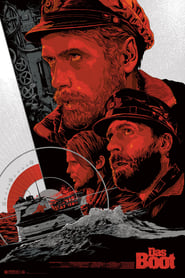
Das Boot (1981)
The submarine film's defining modern work, and a war movie built on the inability to act. Watch Jost Vacano's camera squeeze through the boat in sickly instrument-green and amber gloom, and then watch what happens during silent running: engines dead, every man frozen, faces tilted up at a sound crawling along the hull. Stillness becomes the only available move — which is to say, no move at all. Petersen made the most expensive German film of its day and centered it on held breath.
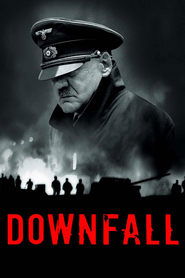
Downfall (2004)
In the map room beneath the Chancellery, hands move armies across a table — armies that no longer exist. The film's chilling subject is a command structure still issuing orders into a void, procedure grinding on after it has come unhooked from reality. Watch Rainer Klausmann's handheld camera trap faces in shallow focus in narrow corridors — proximity without escape — a technique Hirschbiegel developed for enclosed-space psychological pressure and here applies to history's most claustrophobic chamber.
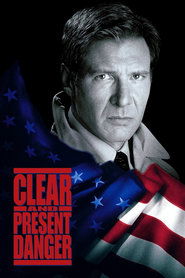
Clear and Present Danger (1994)
One of the tensest sequences in this expert thriller involves no guns at all: a man copying a file while another man, unseen, deletes it out from under him. Two cursors dueling. Watch how McAlpine's photography splits the film into two lit worlds — the cool, shadowed blues of Washington offices versus the exposed brightness elsewhere — and how the film treats paperwork, chain-of-command sparring, and document detective work as genuine action. The engine of the thriller, run entirely through information.
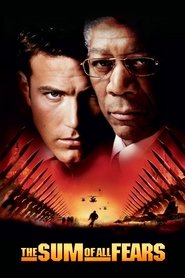
The Sum of All Fears (2002)
The suspense here lives in a gap only you can see: the audience knows things that neither Washington nor Moscow knows, and the danger is misreading — a provocation interpreted through existing enmity. Watch John Lindley's clean, institutional photography of war rooms and screens, deliberately echoing the sober corridors-of-power staging of Seven Days in May and the sealed-room cross-cutting of Fail Safe. And watch for the moment the film's relentless forward motion simply stops, and a man can only look.
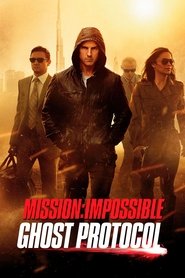
Mission: Impossible – Ghost Protocol (2011)
Brad Bird hired Robert Elswit — Paul Thomas Anderson's cinematographer — to shoot a stunt movie, and the result favors wide frames that hold the performer and the hazard in the same shot. Watch the running gag: every gadget fails at the worst moment, and each failure pries open the usually invisible instant between seeing danger and answering it. A glove that won't grip on the glass skin of the world's tallest building turns the action film's fastest reflex into a held, sweating beat. The whole movie is a comedy built inside that hesitation.
Why watch these together? Because after a few of them, you'll start noticing the machinery in everything you watch. You'll feel when a film trusts action to solve the world (The General, Ghost Protocol), when it hands the crucial knowledge to you instead of the hero (North by Northwest, The Sum of All Fears), when it deliberately withholds the clear view (Z), and when it lets action drain away entirely until all anyone can do is listen, watch, or dream (Das Boot, Ivan's Childhood, Downfall). These twelve films span eighty-five years, five countries, silent slapstick and studio blockbusters and Soviet art cinema — but they're all asking the same question from different angles: what happens in the space between seeing and doing? Watch them in any order. The conversation between them will find you.