Sightlines · a mini film course
The Camera and the Catastrophe: Eleven Ways of Filming History's Weight
What binds this set together isn't a genre or a country — it's a question every one of these films answers differently: when history crushes people, what should the camera do? Should it plunge into the chaos alongside them, or stand back and let the wide frame show how small one person is? Should it cut fast to make you feel the panic, or refuse to cut at all so you can't look away? Some of these films put you inside the body of someone acting; others put you beside someone who can only watch. Across eleven films and six decades, you'll see the full range of answers — and each one is a moral choice disguised as a technical one.

Rome, Open City (1945)
Start here, because this is where a whole grammar of filmmaking was invented under duress. Shot on the actual streets of Rome with available light, off-center framings, and people caught mid-gesture, the film feels less composed than discovered. Watch for how Rossellini refuses the tidy visual elegance of studio filmmaking — the camera behaves like it doesn't know what's coming, because in a city like this, nobody does. And notice how the film breaks the rules about who a story is allowed to lose, and when. Nearly everything else on this list descends from choices made here.
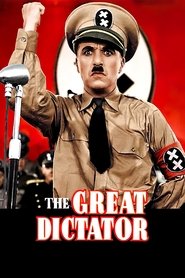
The Great Dictator (1940)
Chaplin's answer to tyranny is to film it as absurd — his dictator's rallies are staged as direct parodies of real Nazi propaganda footage, podium angles and all. Watch especially the famous sequence of Hynkel alone with a balloon painted like the globe: for nearly four minutes, nothing "happens," and yet you're watching a complete portrait of megalomania — a man so lost in his own bliss that the world becomes his toy. Notice, too, how the film splits visually between monumental halls for the powerful and warm, intimate light for the ghetto — two worlds, two lighting schemes, one argument.
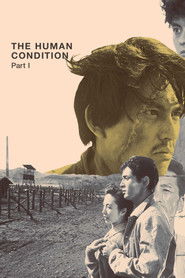
The Human Condition I: No Greater Love (1959)
The first movement of Kobayashi's colossal cycle, and a masterclass in using the wide frame as an argument. Miyajima's ultra-wide compositions turn a Manchurian labor camp into geometry — rows of workers, fence lines, watchtowers — and place one conscientious man inside it, looking very small. Watch how often the frame itself seems to know more than the idealistic protagonist does: the image keeps telling you the world is too wide for one decent person to fill. It's a film about whether conscience can survive inside a machine, and the machine is built into every shot.
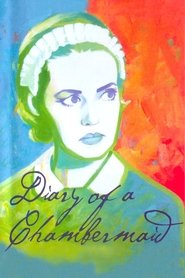
Diary of a Chambermaid (1964)
Buñuel's method here is a poker face. The camera stays level, the light stays flat and grey, and everything — a dinner, a fetish, a death — is filmed with exactly the same unblinking calm. Watch for how that refusal to be shocked becomes the sharpest possible indictment: the respectable country house is revealed as a thin skin over appetite and cruelty precisely because the film declines to dramatize it. Notice the objects — boots, especially — that carry meanings the camera never explains.
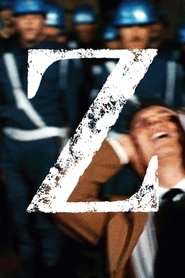
Z (1969)
The film that made the political thriller a mainstream force. Coutard's handheld camera (the same cinematographer who shot for Godard) dives into a political assassination at ground level, cutting so fast among bad angles that you never get the clean overhead view of what happened. That's the point: the confusion is engineered, in the image as in the plot, because the story is about a state that manufactures deniability. Watch how the camerawork itself mimics a cover-up — the film withholds the overview the way officials will withhold the truth.
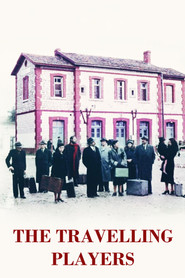
The Travelling Players (1975)
Angelopoulos builds a four-hour sweep of Greek history out of roughly eighty shots, some many minutes long — and inside a single unbroken take, the year can change. The camera drifts down a wet grey street, waits at a corner, and when people return, they belong to a different era. No cut, no warning: the street itself travels through time. Watch for how a troupe of actors keeps trying to perform a simple pastoral play and keeps being interrupted by history — and how the long, patient, painterly shots make time feel like something the landscape holds.
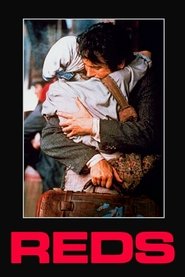
Reds (1981)
An American epic that keeps sabotaging its own spectacle, on purpose. Beatty threads real elderly "Witnesses" — actual survivors of the era, shot as plain documentary against black — through his sweeping fiction, and they contradict each other about everything. Watch how Storaro's Oscar-winning light divides the film's worlds — warm lamplit intimacy for the bohemian passages, a different dramaturgy of shadow elsewhere — and how the Witnesses quietly break the epic's promise that the past can be recovered whole. Memory here comes in versions, not verdicts.

Full Metal Jacket (1987)
Kubrick splits the film into two visual registers, and the split is the meaning. Boot camp is all symmetry, geometric formations, institutional order — a world where the frame itself enforces uniformity. Watch the faces: especially one famous scene in a fluorescent-lit latrine, where the camera simply holds on a face crossed by tiny movements building toward a threshold. Notice, too, Kubrick's signature use of ironic pop music against terrible images — cheerful songs laid over annihilation, a trick he'd been sharpening since Dr. Strangelove.
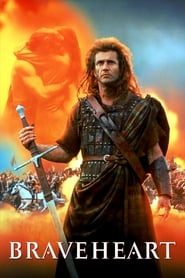
Braveheart (1995)
After decades in which ambitious cinema had grown skeptical of heroes, this film rebuilds the old heroic grammar whole — one man perceives a vast oppression and acts, and the whole field moves with him — without a trace of embarrassment. Watch how John Toll's photography earns it: the skies stay overcast, the greens undersaturated, the light deliberately unpretty, so the country itself seems to press down and demand an answer. Notice how the massed battle formations are staged as geometry before dissolving into handheld chaos — the epic and the visceral in the same sequence.
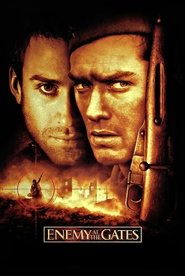
Enemy at the Gates (2001)
A war film built, strangely, around stillness. Its engine is two men lying motionless in rubble for hours, each waiting for the other to move first — and the film keeps returning to the image of a human being narrowed down to an eye at a lens. Watch the opening river-crossing for its embedded, chaotic handheld immediacy in the Saving Private Ryan mode; then watch how the film's real drama abandons motion entirely for watching, breathing, waiting. Fraisse's cold steel-and-ash palette makes even fire feel like a betrayal of position.
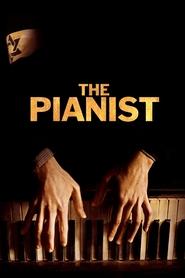
The Pianist (2002)
Polanski's answer to the question is the most austere on this list: the camera watches rather than chases. Edelman's steady, desaturated, disciplined images refuse both sentimentality and expressionist horror. Watch the windows — the film keeps placing its protagonist at one, pressed back into a dark room, looking down at a street he cannot enter. Polanski, who made a career of apartment-as-trap films, transposes that claustrophobia onto the literal architecture of hiding, and the result is a survival story stripped of heroism: a film about witnessing, made by a director who insists you witness too.
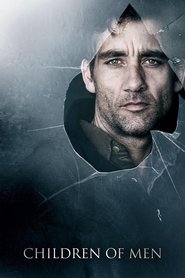
Children of Men (2006)
The modern culmination of everything above. Cuarón and Lubezki take the thriller — a race to get someone precious to safety — and remove its safety valve: the cut. The camera stays with the protagonist through long, unbroken takes, so close it collapses the distance between you and him, and when blood spatters the lens during a battle, it stays there. Watch how the film performs the visual grammar of documentary war footage inside a science-fiction premise, and how the refusal to cut in exactly the moments genre films rely on cutting makes you feel the floor go out from under you.
Why watch them together? Because this set is secretly a single conversation conducted across sixty years. Rossellini's rough, discovered images become Coutard's handheld urgency in Z, which becomes the pseudo-documentary textures of Enemy at the Gates and Children of Men. Kobayashi's wide frames that dwarf a man, Angelopoulos's streets that hold whole decades, Polanski's windows, Kubrick's symmetries — each is a different bet on where the camera should stand when the world goes wrong. Watch in any order, but keep asking one question at every screening: is this camera acting, or watching? Once you can feel the difference — the shot that charges in versus the shot that holds still and endures — you'll see how much of a film's whole moral outlook lives in that single choice. And you'll never watch a war film, a thriller, or a newsreel the same way again.