Sightlines · a mini film course
The Watcher and the Machine: A Course in Conspiracy Cinema
Every film in this set asks the same quiet question: what happens when seeing the truth isn't enough? These are movies about people who look hard — through long lenses, headphones, wiretaps, rifle scopes, notebooks — at systems built to remain unseen. Some of these films let their heroes act on what they've learned. Others watch that ability erode, frame by frame, until competence itself becomes a kind of tragedy. What connects them all is how they see: cameras that chase or refuse to chase, sound that carries more truth than dialogue, frames that either hand you the full picture or deliberately withhold it — the way institutions withhold it. Watch these twelve together and you'll start noticing that the camera's relationship to its protagonist is always a political statement.
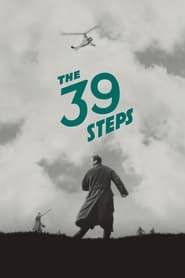
The 39 Steps (1935)
Start here, at the peak of the classical machine, where nothing is endured and everything converts into motion — famously, even a scream becomes a train whistle in a single cut. Watch for Hitchcock's ruthless tempo: the innocent man on the run, institutions meant to protect him turned into hunters, respectable surfaces concealing treachery. Notice how Bernard Knowles's photography swings between crisp studio wit and shadowy near-expressionist passages — fog, torchlight, a body lurching out of darkness. This is the template nearly every other film here will either sprint back toward or dismantle.
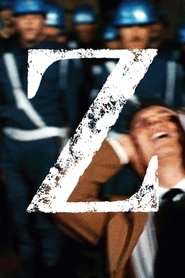
Z (1969)
The film that made the political thriller commercially viable, shot by Raoul Coutard with the handheld, available-light energy he'd developed for the French New Wave. Watch the assassination sequence closely: the camera plunges to ground level, cutting fast between disorienting angles that refuse you a clean overhead view — and that refusal is the point. Chaos was engineered on the street, so chaos is engineered in the image; the film withholds the overview the way officials will withhold the truth. Its real subject isn't a murder but the machinery of deniability around it.
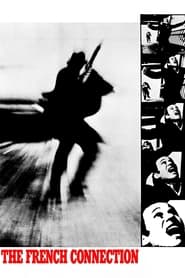
The French Connection (1971)
Friedkin's detective story works by accumulation: snag a thread — a flashy spender at a nightclub — and pull, letting each tail, frisk, and wiretap light up one more inch of something hidden. Watch the cold: Owen Roizman's palette of winter greys, fluorescent greens, and wan streetlight makes the city itself adversarial, and telephoto surveillance shots flatten space into a hunting ground. Note the scene where Doyle eats cold pizza on a sidewalk while his quarry dines behind restaurant glass — Friedkin never explains it, just lets you stand on the cold side of the window.

The Conversation (1974)
Coppola opens with one of the great surveillance sequences in American cinema: a long lens high above Union Square, compressing a lunchtime crowd into anonymous noise, holding on a couple before we know why. You've taken up the watcher's position before the film explains anything — and it never lets you climb back out. Listen as much as you watch: this film pioneered dense ambient sound as a way of putting you inside a man's dread. Its deeper subject is craft itself — whether professional detachment can ever really be moral neutrality.
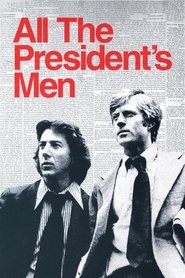
All the President's Men (1976)
Gordon Willis — "the Prince of Darkness" — builds the film on two kinds of light: the merciless fluorescent buzz of the newsroom versus the concrete blackness of the parking garage, where a source is only a voice, a cigarette, a shape the frame won't quite surrender. Watch how the film is made almost entirely of approach and refusal — a phone call that goes nowhere, a door that opens a crack and closes. Suspense here is built from document-checking and editorial friction, not chases. It's a film about what knowing actually costs, one small act at a time.
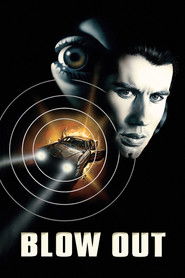
Blow Out (1981)
De Palma opens with a joke — a prowling camera revealed as footage from a cheap slasher film — then gets serious about the same question: what does recorded evidence actually prove? Watch (and listen) as a sound man taping wind at night catches something his trained ear can't file away as an accident. The whole film lives in the gap between what he heard and what he can prove he heard, in a system structured to keep evidence and truth from ever aligning. Zsigmond's widescreen images are gorgeous and despairing in equal measure; the protagonist's competence is exactly what makes him dangerous — and endangered.
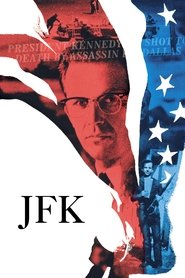
JFK (1991)
Stone's most audacious move is a forgery committed in plain sight: fresh footage degraded to match newsreel grain, staged reconstructions spliced seamlessly against Zapruder's actual 8mm home movie, so you never quite know which frames were captured in 1963 and which were built in 1991. This isn't sloppiness — it's the film's argument. If the official record is itself a fiction, Stone wagers, the only way to fight an image is with images. Watch with a juror's attention and notice your own forger's unease.
The Insider (1999)
Mann inherits the procedural grammar of the journalism picture — the phone calls, the fact-checking, the newsroom arguments — and then studies what happens when knowing the truth doesn't license speaking it. Dante Spinotti's handheld long lenses press uncomfortably close to faces, isolating them from their surroundings; interiors go dim and lamp-lit; the frame breathes and drifts like a nervous system. Watch for the hotel-room moment when a wall seems to thin and open onto something only one man can see — a whole film's argument held in a single uncanny image.
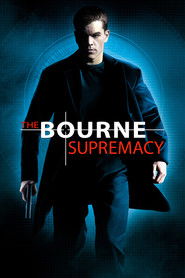
The Bourne Supremacy (2004)
This is where handheld camerawork becomes a thesis rather than a flourish. Greengrass, trained in British documentary, builds the entire film out of one man's attention: watch the early market scene, where nothing is happening yet and Bourne is simply reading — exits, sightlines, a car parked a beat too long. Oliver Wood's long lenses smear crowds into colored static, focus drifts and resettles, and you're never handed a settled, God's-eye view — because Bourne never gets one either. The frame chases the world instead of composing it.
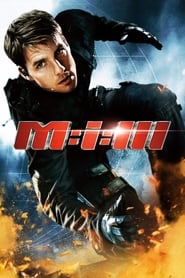
Mission: Impossible III (2006)
Abrams opens on the film's own worst moment, ripped out of sequence and bolted to the front — a countdown, a gun, a life not yet built — then flashes back so you spend two hours dreading a demolition you've already glimpsed. Watch how Dan Mindel's handheld, flare-streaked camera stays glued to faces even at blockbuster scale. Notice, too, how the franchise's mask-and-disguise machinery doubles as metaphor: a film about impersonation that's really about whether a secret life and a shared one can coexist.
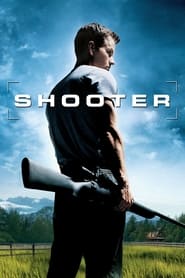
Shooter (2007)
Watch the opening kill and notice the film's proudest physical detail: the bullet lands before you hear the shot, the report rolling across the valley a beat later. That gap — perception, then action, precisely closed — is the whole movie's logic in miniature. Fuqua contrasts the clean-aired Montana wilderness with the fluorescent institutional world that corrupts it, drawing on the wronged-veteran tradition of First Blood and the patient sniper-craft of The Day of the Jackal. A pure specimen of the competent hero, made in an era openly disillusioned with the institutions he served.
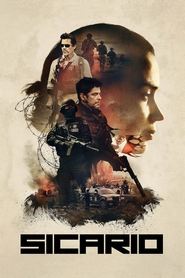
Sicario (2015)
Watch where Villeneuve keeps placing Kate Macer: in a doorway as shooting starts, in the back of a convoy that won't say where it's going, at the edge of a briefing where the real decisions happen elsewhere. The film's entire argument is encoded in that blocking — she is the person things happen near. Roger Deakins shoots the border landscape geologically, dwarfing human figures in vast frames that echo the Western while refusing its heroic promise. This is the thriller's contract — see the problem, fix the problem — being quietly, methodically torn up.
Why watch these together? Because sequenced this way, they form an eighty-year argument about competence and power. Hitchcock's hero can outrun a conspiracy; Friedkin's can pull its threads; by the seventies, Coppola's and Pakula's watchers are trapped inside their own listening; and by Sicario, the best agent in the room can change nothing at all — while Shooter and Mission: Impossible III defiantly rebuild the old machine in the same decade. The camera tells you everything before the plot does: whether it composes or chases, whether it grants you the overview or withholds it, whether sound is texture or evidence. Watch for the moment in each film when someone realizes that seeing clearly and acting effectively are two different things — and notice which films let them close that gap, and which have stopped believing anyone can.