Sightlines · a mini film course
The Camera That Learned to Wait
There is a moment in movies — and French cinema found it earlier and more often than anyone — when the camera stops chasing the story and starts watching the people inside it. These twelve films, spanning from a grand Occupation-era studio production to the lean street films of the 1960s, share a quiet conviction: that a face holding still, a gesture repeated, a room crossed and recrossed can carry more than any chase or shootout. Some of these films borrow the furniture of crime pictures and love stories; all of them slow the machinery down until you can see how feeling actually moves. Watch them together and you'll see a whole national cinema teaching itself — and then the world — that time, allowed to stretch, becomes the drama.
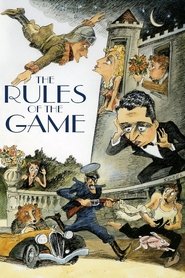
The Rules of the Game (1939)
Watch how Renoir's camera refuses to choose. Jean Bachelet keeps foreground and background equally sharp, so a flirtation up front and a quarrel in the distance play out simultaneously — and the camera drifts down corridors and between rooms as if the country house itself were the main character. Notice how the masters upstairs and the servants downstairs mirror each other, gesture for gesture, until the whole house feels like one of the Marquis's gilded mechanical toys: everyone performing their part, and the film asking what happens if someone stops.
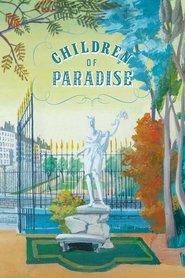
Children of Paradise (1945)
Made under the Occupation, this is the summit of the French studio tradition — a teeming, painterly, gaslit Paris built by hand. But watch the mime. Jean-Louis Barrault was trained in the art, and Carné stakes the film on his knowledge that a body in the right posture is already a sentence: Baptiste's whiteface Pierrot says more with his hands and hung head than the brilliant talkers around him. Notice how the film pairs him against Frédérick's expansive spoken bravura — two whole ways of being eloquent, set side by side.
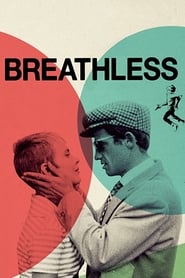
Breathless (1960)
The famous jump cuts get all the press, but watch what they do: they let the film breathe at the tempo of its hero, a small-time crook who has learned everything from Bogart movies and keeps testing whether the gesture — the thumb across the lip — will hold him up. Coutard shot Paris like reportage, hard shadows and crowded real sidewalks, borrowing the found-street energy of Rossellini. Notice how the film keeps all the iconography of the crime picture — the run, the girl, the cool — while quietly declining to deliver a crime picture's machinery.
Hiroshima Mon Amour (1959)
Two cinematographers split the film in two: Sacha Vierny's precise, controlled frames for the French material, location work in Japan for the rest — and the seam between them is part of the meaning. Listen to the opening duet of voices: she insists she has seen everything in Hiroshima; he answers, flatly, that she has seen nothing. Watch how the images seem to obey her while the film sides with him — the whole picture is an argument about whether private grief and public catastrophe can ever really speak to each other.
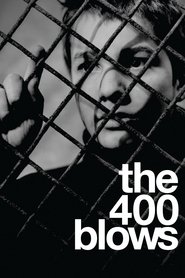
The 400 Blows (1959)
Henri Decaë shoots winter Paris with austere tenderness, and Truffaut casts a real boy rather than a polished child actor — inheriting the neorealist faith that a face found on the street tells the truth. Watch how every adult institution — home, school, the law — processes Antoine through categories that don't fit him; the psychologist's interview is the film's quiet centerpiece, professional questions unable to touch the particular kid in front of her. The boy sees his world with piercing clarity; the tragedy is that seeing clearly is not the same as being able to change anything.
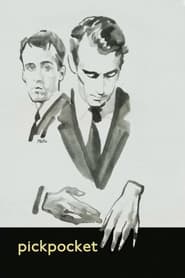
Pickpocket (1959)
Start with the hands. Bresson frames wrists, pockets, passing banknotes — fragments of the body cut loose from the faces that would tell you how to feel. He drains the crime film of suspense on purpose: this is not a thriller about whether a thief gets caught, but a patient study of compulsion, filmed like a ritual. Watch how the flat, even, undramatic style withholds and withholds — so that when feeling finally surfaces, it lands with the force of everything that was denied.
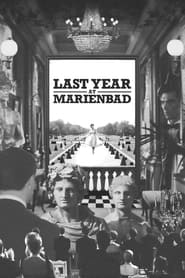
Last Year at Marienbad (1961)
Look at the shadows in the famous garden shot: the hedges and statues cast them, the people don't. That's the film confessing, wordlessly, that you're not watching a record of anything. Vierny's camera glides endlessly through ornate corridors without ever letting you build a map; a gown changes color mid-conversation; a man insists on a shared past a woman doesn't remember, and the images keep revising themselves to match — and mismatch — his story. Don't try to solve it. Watch how memory, desire, and persuasion get built out of pure image and repetition.
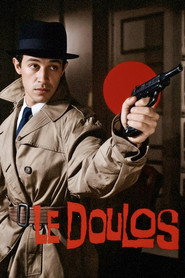
Le Doulos (1962)
The title is slang for a fedora — and, by extension, for the informer hiding under its brim. Nicolas Hayer shoots a cold, silvery world of rain-slicked streets and smoke, and Melville builds the whole film on the impossibility of reading the face beneath the hat. Watch how the film shifts the question from what will he do to what is he — you become the detective, assembling and reassembling what you've seen, never sure whose loyalty you're watching.
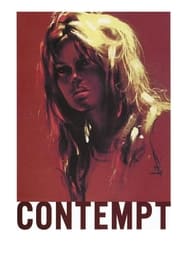
Contempt (1963)
The heart of the film is roughly thirty minutes in an apartment: a married couple moving from room to room through a bad conversation, and Godard refusing to cut it down to a scene-sized argument. Coutard, the street pragmatist, adapts his instincts to monumental widescreen color, tracking the pair through their half-furnished Rome flat. Watch Bardot: no outburst, no big speech, just micro-adjustments of attention, a turning-away — a performance built entirely of what she withholds.
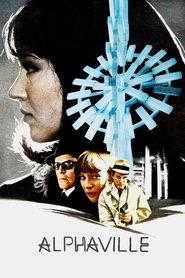
Alphaville (1965)
The great joke of this dystopia is that there's no special effect. Godard pointed Coutard's camera at real 1965 Paris — office lobbies, parking structures, hotel corridors — under their own fluorescent tubes, on fast film stock, and the present photographed accurately turned out to be alien already. Watch how the blown-out whites and near-black faces shrink the human figure against the institution, and listen for the film's real subject: a regime that rules by deleting words — for emotion, for love — from the dictionary, and the poetry smuggled in against it.
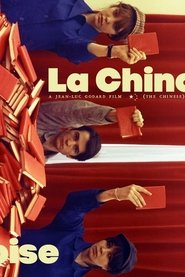
La Chinoise (1967)
Don't watch this one like a window — read it like a poster. Coutard shoots a student apartment frontally, flat and bright: red walls, stacked Little Red Books used as building material, slogans chalked and erased, characters addressing the camera as if it were an interviewer. Borrowing directly from Brecht — chapter titles that interrupt, songs, direct address — Godard makes every image announce itself as an image. The question underneath the graphics is dead serious: what does it cost to turn political theory into political action?
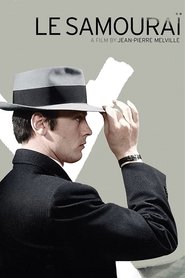
Le Samouraï (1967)
It opens with a man lying on a bed in grey half-light, fully dressed, a caged bird stirring, and minutes pass before anyone speaks. Melville withholds the cut the way his hitman withholds speech — economy as a moral discipline. Decaë lights Delon so sparingly that shadow erases expression; what's left is almost pure surface, composure held to the edge of abstraction. Watch the ritual of the fedora — the hand setting the brim at exactly its angle. The film is telling you where to look: not into him, but at the gesture that is him.
Watched together, these films form a conversation across thirty years. Renoir and Carné build the deep-staged, gesture-rich cinema the postwar generation grew up on; Bresson and Melville strip it to ritual; Resnais fractures it into memory; Godard, Truffaut, and their fellow critics-turned-directors take it into the streets. You'll catch them quoting each other — Coutard's available light traveling from Breathless to Alphaville, Bresson's blank-faced discipline resurfacing in Delon, Melville himself turning up as an actor in Godard's debut. But the deeper reward is training your own eye. Each of these films asks you to stop waiting for the next event and start attending to the shot in front of you — a hand, a hat brim, a shadow that shouldn't be missing. By the twelfth film, you won't be watching stories anymore. You'll be watching cinema think.