Sightlines · a mini film course
The Camera That Learned to Wait: French Cinema and the Art of Watching
There's a moment in the history of movies — French movies, above all — when the camera stops chasing the story and starts watching it. The films in this set trace that shift from every angle. Some come before it (a country château in 1939, a teeming theatrical boulevard in 1945); most sit right at the hinge, in that astonishing stretch from 1959 to 1967 when a generation of Paris critics picked up cameras; one arrives decades later to show how far the idea can go. What connects them is a shared conviction: that a face held in stillness, a room refused a cut, a real street photographed under its own light, can carry more meaning than any plot mechanism. These are films where gestures become sentences, spaces become traps, and time is allowed to stretch until you feel it. Watch them together and you'll see a national cinema teaching itself — and then teaching the world — a new way to look.
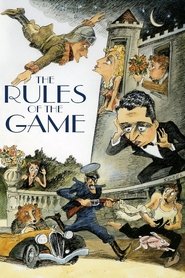
The Rules of the Game (1939)
Watch the depth of the frame: Jean Bachelet's photography keeps foreground and background simultaneously alive, so a flirtation up front and a quarrel at the rear register in the same instant. The camera drifts down corridors and between rooms like a guest who can't stop eavesdropping. Notice too how the country house works as a hall of mirrors — the masters' intrigues upstairs and the servants' intrigues below run on the same code, until you lose track of which is the original and which the reflection. And keep an eye on the Marquis and his mechanical music boxes: little machines that perform joy on command, in a world where everyone is performing.
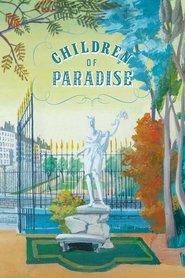
Children of Paradise (1945)
Made under the Occupation, this is the summit of the French studio tradition — a wholly built world, lit like a painting, its teeming Boulevard du Temple a living organism rather than a backdrop. The thing to watch is Jean-Louis Barrault's mime, Baptiste: a trained body that says everything with a posture, a hung head, a pale line of limbs. The film deliberately sets his silence against Frédérick Lemaître's torrential spoken bravura — two whole traditions of performance side by side. Notice how a held gesture here doesn't advance the story so much as expose it: the body made legible, love shown rather than declared.
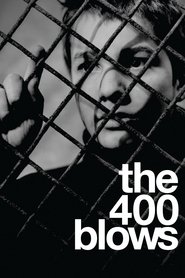
The 400 Blows (1959)
Truffaut's first feature announced the New Wave to the world, and its radicalism is quiet: it simply refuses to let any adult institution see the boy clearly. Watch the psychologist's interview — methodical, professional questions that cannot make contact with the particular child in front of them. Henri Decaë shoots the Paris winter light austerely, on real locations, with much of the dialogue added afterward in the neorealist manner. Above all, notice how Antoine perceives everything and can change almost nothing — a boy whose sharp eyes far outrun his power to act, in a film that follows him with unsentimental tenderness.
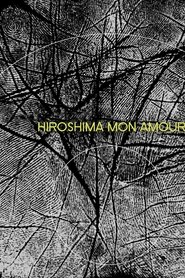
Hiroshima Mon Amour (1959)
Two cinematographers split the film along its fault line: Sacha Vierny's meticulous frames for the French material, Michio Takahashi for Japan — and Resnais lets documentary grain and fictional smoothness coexist without apology. Watch the opening: bodies shot so close they stop being bodies, skin grained with something you can't identify, while two voices argue over what it means to have "seen" a catastrophe. The film's whole question lives in that argument — whether looking at evidence is the same as knowing, whether private grief and historical destruction can illuminate each other at all. This is a love story built like an essay, and it refuses melodrama's easy release at every turn.
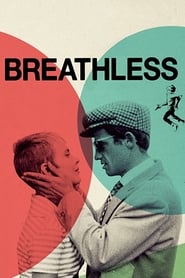
Breathless (1960)
Raoul Coutard shot Paris as reportage — shadows falling hard, backgrounds bleeding into noise, real sidewalks, real light — against everything polished French cinema stood for. Watch Belmondo's thumb cross his lip: he's borrowed the gesture from Bogart, and the film keeps testing whether a borrowed style can hold a man up. Notice how the famous jump cuts make the movie itself restless, slicing the middles out of moments the way its hero skips past consequences. It has all the furniture of an American crime picture — the man on the run, the cool — with the engine of suspense deliberately removed, so what's left is pure behavior, watched.
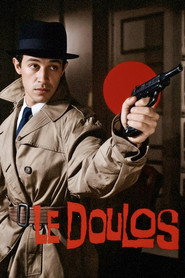
Le Doulos (1962)
Melville's title is slang for a fedora — and, by extension, for the informer hiding under its brim. That double meaning is the whole design: Nicolas Hayer's cold, silvery photography gives you rain-slicked streets and shadowed faces, and dares you to read what's under the hats. Watch how the heist comes early and goes wrong, and how the real drama afterward isn't action but interpretation — men watching men, and you watching all of them, forced to keep reassembling what you think you know. The suspense here isn't "what will he do" but "what is he," and no gunplay can answer it.
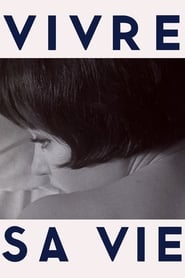
Vivre Sa Vie (1962)
Godard opens on the back of a head: a couple talking at a café counter, faces turned away, caught only as smudges in a mirror. For a film that becomes one of cinema's great meditations on a woman's face, that withholding is the key — watch how the film rations Anna Karina's face, when you're allowed to look and what looking gives you. The essential scene: Nana in a cinema, weeping at Dreyer's Passion of Joan of Arc, her wet face cut against Falconetti's across thirty years of film history. Nothing "happens" — the feeling is the event. Coutard's long, patient takes refuse conventional coverage throughout; the film is built in chapters, like an essay that keeps interrupting its own fiction.
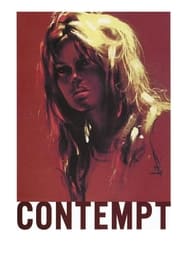
Contempt (1963)
Coutard, the master of Paris street-shooting, here adapts to monumental widescreen and color — and the film's centerpiece is a half-hour argument in a half-furnished Rome apartment that Godard refuses to abbreviate. Watch how the bad conversation runs at the length of a real bad conversation: the doublings-back, the wounded silences, traffic rising from the street to fill the gaps. Notice the widescreen frame used the way domestic melodrama pioneered it — husband and wife pushed to opposite edges, the space between them doing the talking. The crucial event of this marriage happens off-screen, before the argument starts; what you watch is a man circling a fact he cannot reach.
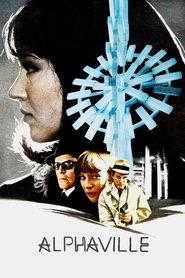
Alphaville (1965)
The great joke: a totalitarian future built with no sets and no effects. Godard pointed Coutard's camera at the actual Paris of 1965 — an office lobby, a parking structure, hotel corridors — under their own fluorescent tubes, and the present photographed accurately turned out to be alien already. Watch how the high-speed film stock blows the whites out and lets faces surface from near-total black, wide-angle lenses stretching institutional rooms until the human figure shrinks. And listen: the film's real battleground is language itself — a regime that governs by deleting words, and poetry deployed as a weapon, because poetic language always means more than it literally says.
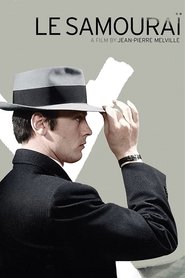
Le Samouraï (1967)
It opens with a man lying on a bed in grey half-light, fully dressed, a cigarette burning, a caged bird stirring — and minutes pass before anyone speaks. Melville withholds cuts the way his hitman withholds words; economy is treated as a moral discipline. Watch Decaë's lighting erase expression from Delon's face until what remains is almost pure contour — not a man hiding feelings but a surface presenting a single quality, held to the edge of abstraction. Watch the ritual of the fedora: the hand setting the brim at exactly its angle. The film is telling you where to look — not into him, but at the gesture that is him.
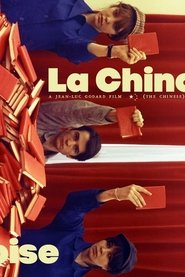
La Chinoise (1967)
By 1967 Godard had pushed past the New Wave entirely, and this film announces it in color: a flat red wall, hundreds of Little Red Books stacked like bricks, an apartment that never pretends to be a place where people live. It's a stage, a classroom, a poster — and Godard wants you to notice. Watch how Coutard shoots frontally and bright, flattening depth toward the graphic, with slogans chalked on walls and text dropped onto the screen, until the images stop behaving like windows and demand to be read like pages. The red isn't décor; it quotes the tricolor and Maoist iconography at once, converting whole scenes into a single charge. Underneath the play of surfaces is a serious question: what it costs to turn political theory into political action.
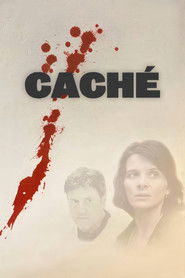
Caché (2005)
Haneke's opening is one of the great traps in modern cinema: a quiet Paris street, held in a long static shot that keeps not cutting — until the image stutters with rewind lines and you realize you've been watching a videotape inside the film, along with the characters. From that moment, no image comes with the usual guarantee. Christian Berger's frontal, tripod-locked, deep-focus shots refuse the moves — point-of-view, tracking, zoom — that would tell you whose side the camera is on. Watch how a man receives evidence and can only look at it: play, rewind, stare. The thriller's costume is all here — anonymous tapes, escalating dread — but the mechanism has been handed to you, and what it investigates is comfort itself, and the guilt it manages not to feel.
Watched together, these films become a conversation across sixty-five years. Renoir's deep, mobile frame and Carné's eloquent silent body are the inheritance; the New Wave generation — who worshipped Renoir and shot on the streets Rossellini taught them to trust — turned that inheritance inside out, trading polished suspense for patience, borrowed gestures, real light, and faces held long enough to become events. Melville, the solitary elder they claimed as a precursor, distilled the crime film to pure ritual alongside them. And Haneke, decades on, takes the long, watching shot to its logical end: an image you can no longer passively trust at all. The reward of this course is a retrained eye. By the last film, you won't be waiting to find out what happens next — you'll be reading rooms, rationed faces, held gestures, and unbroken shots, and discovering how much of cinema's meaning was living there all along.