Sightlines · a mini film course
The Camera That Stopped Chasing: Godard's Restless Decade and Its Echoes
There is an old promise at the heart of most movies: a character sees a problem, does something about it, and the doing changes the world. Chase, rescue, heist, resolution. The films in this set — Godard's astonishing 1960–1967 run, flanked by Dreyer's final masterwork, Malle's wartime memory-piece, and Haneke's chilly thriller-that-isn't — all quietly break that promise. Their people look more than they act. Their cameras watch rather than chase. Plots that should tighten instead drift, stretch, or dissolve, and what rushes in to fill the space is everything cinema usually hurries past: faces, rooms, real streets, real time, the gap between what a person feels and what they can possibly do about it. Watching these together, you'll see a whole grammar being taken apart — playfully at first, then politically, then with devastating stillness.
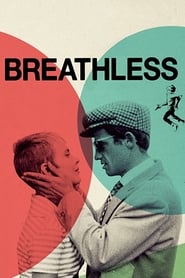
Breathless (1960)
Start here, where the demolition begins as pure exhilaration. Watch Belmondo run his thumb across his lip the way Bogart did — a man who has learned living from movie posters, testing whether borrowed cool can hold him up. Notice Raoul Coutard's photography, which treats Paris like reportage: hard shadows, uncorrected skin tones, crowded real sidewalks shot on the fly. And feel the famous jump cuts — moments sliced out of the middle of shots — which make time itself stutter, as restless and improvised as the man on screen.
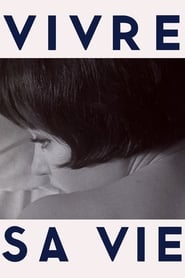
Vivre Sa Vie (1962)
The first shot gives you the backs of two heads: a couple talking at a café counter, faces withheld, caught only as smudges in a mirror. The whole film rations the face this way — deciding when you may look at Anna Karina and what looking earns you. Watch for the scene where Nana sits in a cinema weeping at Dreyer's The Passion of Joan of Arc, her wet face cut against Falconetti's: nothing "happens," no plot advances, yet the feeling itself becomes the event. This is Godard at his most patient and painterly, built on long takes that refuse ordinary coverage.
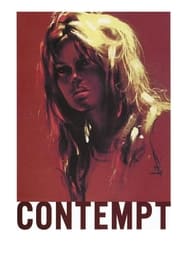
Contempt (1963)
The centerpiece is a half-hour argument in a half-furnished Rome apartment, and Godard refuses to cut away — the bad conversation runs at the length of a real bad conversation, with its doublings-back, wounded silences, and street noise rising to fill what goes unsaid. Watch how the wide anamorphic frame is used to place husband and wife at opposite edges of the image, the marriage literalized as horizontal distance. Bardot plays withdrawal not as outburst but as micro-adjustments of attention — a turning-away you have to lean in to catch.

Band of Outsiders (1964)
Three would-be criminals are handed a perfect genre setup — a suburban house, an aunt, a rumored stack of cash — and spend the film doing almost anything else: an English class, a sprint through the Louvre, and the most beloved dance scene Godard ever shot. In that café Madison, listen for the strange thing: the world's sound drops out, and Godard's own dry voice tells you what each dancer is thinking. Coutard photographs Paris deliberately unglamorously — fluorescent cafés, wet undistinguished streets — so the gap between the characters' movie-fed dreams and their actual surroundings becomes the film's true subject.
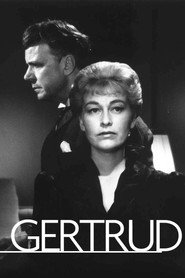
Gertrud (1964)
Dreyer's last film is built from some of the longest sustained shots in narrative cinema, and its signature gesture is unforgettable once you spot it: two people on a sofa speaking of love, and neither looking at the other. Declarations delivered to the empty air; confessions addressed to the floor. Watch where Gertrud's eyes go — into a middle distance no one else can see — and notice how the slow, gliding camera detaches itself from the action, unhurried, funereal, granting her the time the world won't. Time here is allowed to stretch until watching becomes its own form of drama.
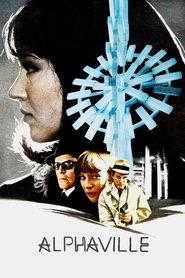
Alphaville (1965)
The great joke of this dystopia is that there is no special effect. Godard pointed the camera at 1965 Paris — an office lobby, a parking structure, hotel corridors — and let them stand, unaltered, as the capital of a totalitarian future. Watch how Coutard's high-speed film stock and available fluorescent light make the whites blow out and faces surface from near-black, and how wide-angle lenses stretch the corridors until human figures shrink against the institution. A city becomes a trap simply by being photographed accurately. Notice too the film's central weapon: poetry, language that means more than it says, in a world governed by a machine that shrinks the dictionary.
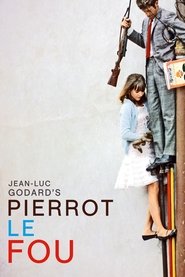
Pierrot le Fou (1965)
The first true image: a man in a bathtub reading art history aloud to a daughter who isn't listening — a person who would rather narrate experience than have it. Watch how the film borrows the gangster picture and the road movie as costume rather than structure, letting whole events fall into the gaps between cuts. And watch the color: saturated reds and blues that carry emotion rather than describe space, interiors composed like Matisse paintings, the camera equally happy tracking freely or locking into a static tableau you consult like a canvas.

Masculin Féminin (1966)
Here the New Wave's youthful freedom begins to harden into critique. Godard borrows the sociological interview from documentary — long handheld takes in which questions are put directly to young faces, most famously an extended interrogation of a "consumer survey" subject — and the camera holds those faces longer than politeness allows. Watch for the offhand violences at the edges of the frame that interrupt nothing; watch Jean-Pierre Léaud, the New Wave's running boy from The 400 Blows, now mostly a recorder — earnest, stalled, perpetually mid-sentence, caught between Marx and Coca-Cola.
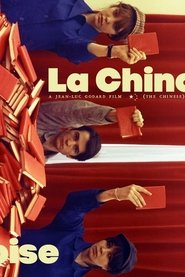
La Chinoise (1967)
Almost nothing in this apartment pretends to be a place where people live: a flat red wall, hundreds of Little Red Books stacked like bricks, slogans chalked and erased. Godard wants you to notice the staging — Coutard shoots frontally and bright, depth flattened toward the graphic, so the images stop behaving like windows and start demanding to be read like a page. Watch the color especially: the reds and whites quote the French tricolor and Maoist iconography at once, turning décor into argument. The real subject is the gap between political theory and political action — and what it costs to try to close it.
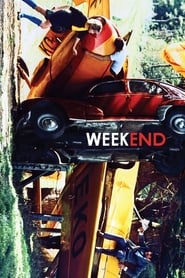
Weekend (1967)
The shot everyone remembers: the camera slides sideways along a country road for seven or eight minutes, past stalled cars, picnickers, a sailboat on a trailer, a zoo cage — all filmed with the same even, indifferent glide, scored by nothing but car horns. Watch how that unbroken lateral movement refuses to prioritize anything, and how a classical crime-movie motive (drive to the country, collect an inheritance) is set up only to rot away, replaced by dark comedy, essay, and finally something close to horror. This is where Godard's decade of dismantling arrives at open demolition.
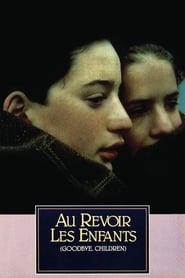
Au Revoir les Enfants (1987)
Malle's memory of his own boyhood under the Occupation is built with disciplined restraint: Renato Berta's cold, narrow palette of grays and winter light, a watchful camera held at an observational distance from the rhythms of a boarding school. The entire film exists to deliver a single involuntary glance — a boy's eyes slipping sideways for less than a second — and to make sure that glance can do nothing. Watch how young Manesse plays Julien almost entirely through watchfulness rather than deed; the film's power lies in what a child can perceive but never act upon.
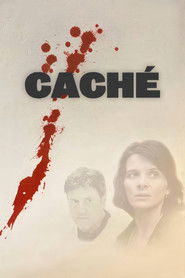
Caché (2005)
Haneke's opening shot holds a quiet Paris street past the point where any movie would cut — until the image stutters with rewind lines and you realize you've been watching a videotape inside the film, alongside the characters. That small, total move strips away cinema's oldest free guarantee: that what you see is the story, not evidence held against someone. Watch Christian Berger's relentlessly frontal, static frames — no point-of-view shots, no zooms, nothing to tell you who is watching or why — and watch how a man who receives threatening tapes can do nothing with them but play, rewind, and stare.
Watched together, these films teach a single lesson from a dozen angles: that when a movie stops rushing toward resolution, everything else becomes visible. You start noticing where people look when they speak. You feel the difference between a cut that serves a chase and a shot that simply refuses to end. You see real Paris streets become alien futures, apartments become stages, a traffic jam become a portrait of a civilization. Godard's decade — from the jazzy insolence of Breathless to the scorched earth of Weekend — is the spine, but Dreyer shows where the stillness came from, and Malle and Haneke show how far it travels: into memory, into guilt, into the uneasy act of watching itself. Give these films your patience, and they'll retrain your eye.