Sightlines · a mini film course
When the World Won't Cooperate: Action, Paralysis, and the Limits of the Hero
What links these nine films — across decades, genres, and budgets ranging from a Japanese epic to a Hollywood tentpole — is a shared preoccupation with a deceptively simple question: *can the person at the centre of the story actually change anything?* Some of these films are built on the confidence that yes, absolutely, one decisive act can reshape the world. Others quietly hollow that confidence out until what's left is a figure who can only watch, endure, and remember. Watching them together, you start to feel the difference the way you feel a change in air pressure — not as abstract theory but as a physical sensation in the editing, the camera placement, the length of a held shot. That tension between doing and seeing, between action and paralysis, is the pulse all nine share.
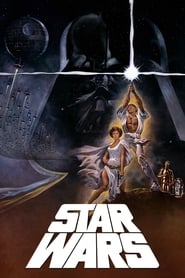
Star Wars (1977)
This is the cathedral of the doer. At the very moment when European and American art cinema had decided the most serious thing a film could do was follow a character who can't act — who drifts, watches, endures — George Lucas built the most jubilant possible counter-argument. Watch how Gilbert Taylor's anamorphic photography handles the editing: every cut propels you forward along a chain of cause and effect, problem solved leading to new problem, until the whole machine reaches its decisive release. The one crack in the armour is a single held shot — Luke at the edge of the homestead, twin suns sinking, binoculars hanging forgotten — where the film briefly allows pure, actionless feeling. Notice how quickly it closes that crack and gets back to work. That moment of stillness is the film confessing what it's arguing against.
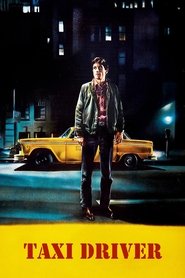
Taxi Driver (1976)
Where Star Wars closes the gap between seeing and doing, Taxi Driver makes that gap its entire subject. Travis Bickle perceives constantly — the camera rides with him through smeared, neon-streaked windshields, catching fragments of the city in headlight beams — but his perception never converts cleanly into action. He drives. He circles. Watch how Michael Chapman's camera keeps switching registers: sometimes deep inside Travis's point of view, sometimes observing him from across the diner or from a cold overhead angle, as if the film itself can't quite commit to inhabiting him. That instability is the point. Paul Schrader's script lifts the skeleton of a classic rescue mission (borrowed, consciously, from John Ford's The Searchers) and then quietly rots it from within. The vigilante form is all there. Its motor has been tampered with.
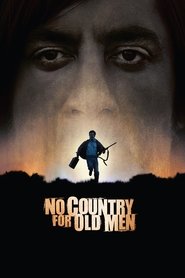
No Country for Old Men (2007)
If Taxi Driver tampers with the motor, the Coens remove it entirely and film the empty engine bay. The genre furniture is immaculate — a man finds money, a killer hunts him, a lawman closes in — and Roger Deakins photographs the West Texas landscape with a restraint that feels almost devotional: long lenses pressing figures against featureless desert, the rare interior lit with the careful precision of a Dutch painting. Watch in particular for the near-total absence of a conventional film score. Ambient sound — the hum of a motel corridor, wind across flat ground, the click of a peculiar weapon — does the work that music usually does in a thriller, and it makes every silence feel inhabited by something you can't name. The film honors every expectation the crime genre creates, and then, one by one, with perfect calm, declines to fulfill them.
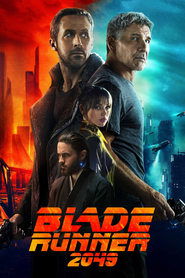
Blade Runner 2049 (2017)
Denis Villeneuve films his detective — a man whose job is literally to act on what he finds — as though action is an afterthought and looking is the real work. Roger Deakins builds each environment as a distinct color world: sodium-orange desert, cold blue-grey rain, the sickly amber of corporate interiors. These aren't just beautiful backdrops; they're enclosures. Watch how often K appears as a small, precisely placed figure at the bottom of a vast space — a shaft of light, a lot of nothing around it, and a human being dropped in like punctuation. The film asks you to feel the weight of that space pressing down. This is a philosophical science-fiction film wearing a detective story as its outer coat, and the coat is cut deliberately loose.
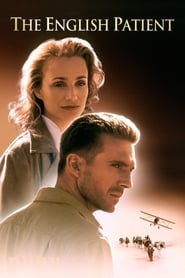
The English Patient (1996)
Anthony Minghella's film works by building two completely different modes of cinema and running them simultaneously. In the present tense, a burned man lies immobile in a Tuscan villa; he cannot act on anything. All he can do is remember. John Seale's Oscar-winning photography makes the desert of those memories into something almost abstract — dunes lit and framed so they rhyme with the curve of a shoulder or the fold of cloth, aerial shots of a biplane crossing a landscape that seems to breathe. Watch for the film's governing visual rhythm: the constant movement between closeness (a hand, a wound, a face) and enormous scale (the Sahara, the infinite sand). The nonlinear structure isn't a puzzle to be solved; it's an invitation to experience time the way the man on the bed experiences it — not as sequence, but as overwhelming recurrence.
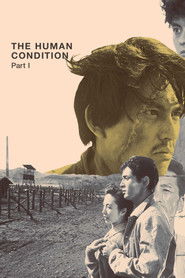
The Human Condition I: No Greater Love (1959)
Masaki Kobayashi shoots his protagonist, Kaji, in frames so wide that the man looks like a comma in a very long sentence. Yoshio Miyajima's GrandScope photography organizes the Manchurian mining camp into grids of fences, watchtowers, and ranked rows of labourers — a world composed into geometry, confinement made visible in the very structure of the image. This three-hour first part of a ten-hour trilogy is, on its surface, built around a man who wants to act and believes he can act: Kaji has ideas, ideals, and a genuine plan. Watch how the film patiently accumulates the forces arranged against him — not through dramatic confrontation alone, but through the slow, grinding logic of institutional weight. The wide frame knows something about the outcome that the man in the middle of it doesn't yet.
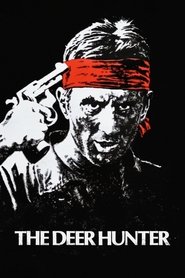
The Deer Hunter (1978)
Vilmos Zsigmond shoots Michael in the mountains as a speck against enormous ridgelines — a single human will set against a vast, indifferent landscape — and in those early sequences the film seems fully committed to a story of mastery and precision. "One shot" is Michael's creed, and for a while the world obliges him. Zsigmond's burnished, smoky interiors for the Pennsylvania sequences — the bar, the wedding hall, the steel mill's glare — give the community the warmth of something that could be preserved. Watch how Cimino builds this world with such patience and duration (the wedding sequence alone runs close to an hour) before Vietnam enters the frame. The film is constructing something specific and fragile, and it wants you to feel the weight of it before it begins the long work of taking it apart.
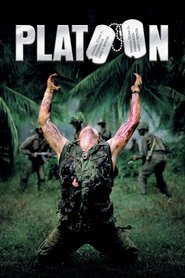
Platoon (1986)
Oliver Stone's film plants the camera at ground level, inside the experience, and Robert Richardson shoots it with a handheld restlessness that keeps geography deliberately unclear. There are objectives, patrols, a perimeter — the mechanical structure of a war film — but watch how rarely you can orient yourself spatially. The jungle dissolves into partial sightlines, flares, and muzzle-flash. This isn't chaos for its own sake; it's a considered choice about where the camera belongs and what it can honestly claim to see. Taylor, the narrator, describes himself as passive, and Stone films him that way: a witness rather than an agent, someone to whom things happen rather than someone who drives events. The film's most iconic image — watch for it — makes this literal in a way that will stop you cold.
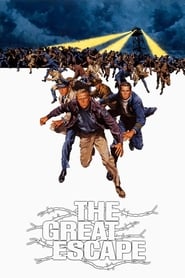
The Great Escape (1963)
Here the engine runs at full voltage and the film is completely, joyfully honest about that. Daniel Fapp's clean, widescreen photography makes the geometry of the camp legible in the first reel — the warning wire, the towers, the cleared death-strip — so that when the prisoners begin their work, you understand exactly what they're working against. Sturges and Fapp love process: watch how lovingly the film attends to the physical, incremental how of the escape — the dirt smuggled in trouser legs, the improvised tools, the step-by-step excavation. There's a particular pleasure in a film that trusts its audience to find meaning in methodology. The one still point in all this purposeful motion is a man alone in a cell, throwing a baseball against a wall and catching it. Notice what that image does — it rhymes with everything around it in a way that's quietly beautiful.

The Last Samurai (2003)
John Toll photographs Japan (and New Zealand standing in for it) with a painter's eye for natural light — soft and overcast in the village sequences, hazy and golden in the fields — and his compositions throughout draw consciously from Kurosawa's visual grammar: massed figures in landscape, color-coded banners, the wide frame used to place humans within history rather than above it. Watch how Zwick handles the contrast between Algren's early scenes and his time in the village. The pacing slows, the cutting lengthens, the film becomes interested in watching rather than advancing. This is a deliberate strategy: the film is setting up two different relationships to time and action, and the contrast between them is its argument. The final battle sequence — when you reach it — should be held against everything the film has shown you about beauty, skill, and the merciless logic of superior technology.
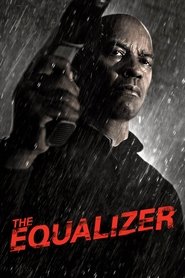
The Equalizer (2014)
Fuqua and his cinematographer Mauro Fiore spend nearly a full hour doing something unusual for an action film: staying still. McCall's nightly rituals at the diner — napkin folded, book squared to the table edge, tea steeped exactly — are filmed with the patience of a character study. The camera finds him repeatedly behind glass: framed in the diner window, isolated in reflections, a man studying the world through surfaces he hasn't yet decided to cross. Watch how this patience functions as a kind of pressure-building, and pay attention to Washington's performance during these sequences — the stillness is doing enormous work. The film is in an extended argument with its own genre, deliberately postponing the action-film logic it knows you're waiting for, and the delay changes what the eventual release means.
Watching Them Together
The reward of seeing these nine films as a set is that they start to illuminate each other in unexpected ways. The Great Escape and Star Wars become the confidence; Taxi Driver and No Country for Old Men become the doubt; The English Patient and The Human Condition become the elegy. The war films — Platoon, The Deer Hunter, The Last Samurai — map the full range from belief in the decisive act to the terrible knowledge of what it costs. And films like The Equalizer and Blade Runner 2049 show how genre cinema keeps returning to this tension: the slow watcher who must become, or cannot become, or pays dearly for becoming, the one who acts. Watch any one of these alone and you have a film. Watch them together and you have a conversation about the most fundamental thing cinema does — what it means to see clearly, and whether seeing is ever enough.