Sightlines · a mini film course
Every film in this set builds a world and then asks whether its people can trust it. Sometimes the doubt is architectural — a city stacked into layers, a station sealed against the outside. Sometimes it's internal — a memory that might be an implant, a recording that might be a lie. What binds these eleven films together is a shared conviction that science fiction is really noir in disguise: worlds of hard shadows, drained color, and watchful cameras, where the central mystery isn't a crime but the nature of reality itself. Watch them as a set and you'll see the same family of questions — is the self just its memories? can an image be trusted? who built this place, and why? — passed hand to hand across four decades, each film answering with a different visual invention.
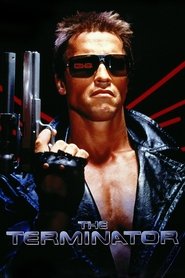
The Terminator (1984)
This is the set's engine at full throttle: a film with no dead time, where seeing flows instantly into running or shooting. Watch how Adam Greenberg shoots Los Angeles almost entirely at night — rain-slicked streets, deep shadow, hard colored light — pure noir grammar borrowed for a machine-age nightmare. Notice how the Terminator is introduced in fragments: a silhouette, a hand, a red glint of eye. The film is a slow reveal of what's underneath a human surface, and its stop-motion metalwork descends directly from Ray Harryhausen's skeleton fights.
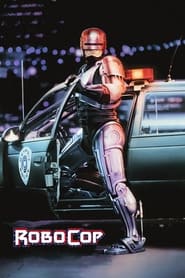
RoboCop (1987)
Verhoeven's outsider eye — Dutch director, German cinematographer — turns an American action premise into savage satire. Watch for the shifts in visual register: the human material shot warm, the machine material in low angles and reflective surfaces. And pay attention to the interruptions — fake newscasts, absurd commercials — that keep snapping you out of the story to look at the culture that produced it. The pixelated targeting-visor POV, inherited from Westworld, is the film's coldest idea: a man's own glance overwritten by readout.
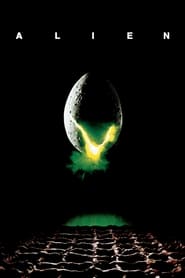
Alien (1979)
A masterclass in not showing. Derek Vanlint lights the Nostromo with motivated, industrial, partial light — corridors dissolve into darkness, and the creature is almost never fully illuminated. The camera drifts and probes rather than chases. Notice too the editing tempo borrowed from 2001: space travel as mundane, grinding labor, which makes the crew feel like disposable employees long before anything goes wrong. The monster has no motive, no grievance — pure appetite — and that refusal to explain is exactly what makes it inescapable.
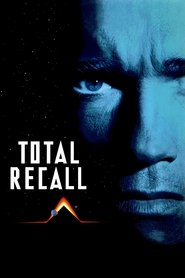
Total Recall (1990)
Verhoeven again, this time building a film on a knife's edge: he has said outright that he constructed it so two mutually exclusive readings of what's happening are both coherent all the way down. Watch how Jost Vacano's restless handheld camera — developed in the submarine corridors of Das Boot — keeps the ground unstable under you. The film never plants a flag on what's real. Your uncertainty isn't a puzzle to be solved; it's the material the movie is built from.
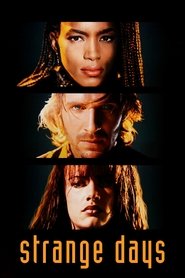
Strange Days (1995)
Bigelow opens by putting you inside someone else's eyes before telling you whose. Watch for the film's two distinct ways of looking: the grimy, neon-soaked noir of "real" Los Angeles versus the unbroken first-person clips recorded straight from a stranger's nervous system. The lineage runs from Peeping Tom and Lady in the Lake, but Bigelow builds custom rigs and makes first-person vision genuinely immersive — years before GoPro, VR, and bodycam footage made it ordinary. Ask yourself, as you watch: what does it mean to wear someone else's experience?
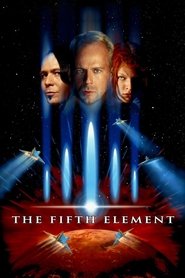
The Fifth Element (1997)
Besson's density-and-saturation aesthetic — Gaultier costumes anchoring the frame in orange, yellow, electric blue — comes from French comics, not Hollywood. Watch for the moments when the film simply stops moving the plot to present something gorgeous: most famously an opera aria that climbs past the ceiling of any human voice while chaos unfolds elsewhere. Most films touch that register of pure spectacle and hurry back to business. This one lives there, and dares you to mind.

Dark City (1998)
Photographed in near-total night, with hard, sourced light carving figures out of darkness like 1940s noir pushed toward the grotesque. Watch the architecture: the film's visual DNA runs straight back to Metropolis, Caligari, and Nosferatu — painted shadows, canted angles, a city as psychological space. Its central image is a metropolis that rebuilds itself while no one is watching, a sealed world with no sun, no edge, and no history anyone can verify — except for one word everyone knows and no one can find on a map.
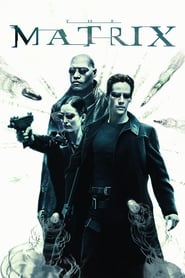
The Matrix (1999)
Watch the color: a greenish cast for one world, a different chromatic register for the other — the film teaches you to tell realities apart by their light. Then watch how globalized its grammar is: Hong Kong action choreography, anime pre-visualization from Akira and Ghost in the Shell, long coats quoting Chow Yun-fat. The famous falling digital rain announces the film's deepest idea in the title sequence: that the image itself might be something you learn to read rather than merely see.
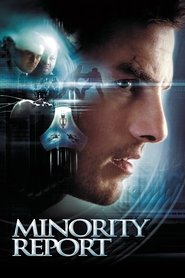
Minority Report (2002)
Kamiński's bleach-bypass photography crushes the palette toward cold blues and steely grays — a blockbuster deliberately drained of warmth. Watch the film's strangest and truest scenes: a man standing at a wall of glass, sorting and reading fragments of a crime that hasn't happened. Detection here isn't chasing — it's deciphering images that arrive out of order. And notice the Hitchcock underneath: the innocent-man engine of The Wrong Man driving a Philip K. Dick future.
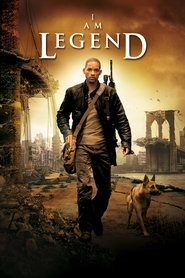
I Am Legend (2007)
The achievement here isn't the creatures — it's the emptiness. Actual New York streets, closed at dawn for the camera, extended into years of organic decay: deer in Times Square, a lion in the grass. Andrew Lesnie's anamorphic widescreen frames one man as a small figure dwarfed by a reclaimed city, gorgeous and menacing in the same shot. Watch how the daylight scenes carry an invisible clock — sundown is a deadline, and the tension comes from nothing but time draining out of the day.
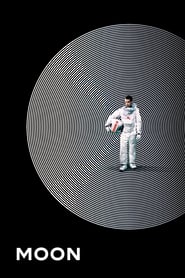
Moon (2009)
The quietest film in the set, and a deliberate counterweight to spectacle. Gary Shaw shoots the lunar station like a remote oil rig — overhead fluorescents, institutional grays, no glamour — and the editing keeps a patient, architectural tempo borrowed from 2001. Watch the small details: a half-finished model town on a table, a calm computer voice with a screen-mounted emoticon. This is the constructed-memory tradition of Blade Runner and Total Recall slowed down until you can feel its weight: not who did this, but what is it like to be a self you cannot verify.
Watched together, these films become a conversation. You'll see Metropolis's vertical city rebuilt three times over; you'll see the same restless handheld camera cross from a German submarine into two Verhoeven futures; you'll see noir shadow migrate from 1940s crime pictures into machine nightmares and sealed cities. More than that, you'll notice a rhythm: some of these films run flat-out, seeing and doing fused into pure momentum, while others slow down until watching itself becomes the drama — a man reading images he can't act on, a city enjoyed and feared in the same frame. The pleasure of the set is feeling both speeds, and realizing they're asking the same question from opposite directions: when the world can be built, edited, or implanted, what — if anything — is left that's really yours?