Sightlines · a mini film course
The Unseen and the Emptied: A Course in Fear You Can't Point At
Every film in this set understands the same secret: the scariest thing a camera can do is show you a place where something should be — and isn't. A shark that stays underwater. A London with the people subtracted. A city that rebuilds itself while everyone sleeps. A monster made of shimmering air. Again and again, these films turn absence into pressure: the empty street, the off-screen predator, the space that has stopped behaving like a setting and started behaving like a trap — or a mind. Watch them together and you'll start noticing how dread is built: through withholding, through sound arriving before sight, through the camera watching rather than chasing, through familiar spaces drained of the life that gave them meaning. Some of these films run on pure forward momentum; others let time stretch until you're leaning at the screen. The contrast is the lesson.
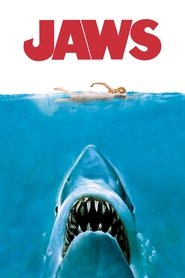
Jaws (1975)
The founding text of the unseen threat. The mechanical sharks famously failed in saltwater, and Spielberg — half by necessity, half by rediscovering Hitchcock's law that the unseen frightens more than the seen — built the film around the animal's absence. Watch for the proxies: three yellow barrels dragged across the chop, a displaced wake, a camera lurching at the waterline. And watch for the dolly zoom on Chief Brody at the beach — the camera tracks in while the lens zooms out, and the world seems to collapse around one man's dawning horror. It's a direct borrowing from Vertigo, and it's become one of the most quoted shots in cinema.
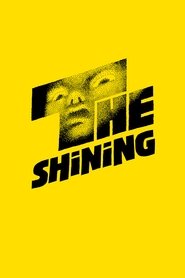
The Shining (1980)
Here the empty space isn't hiding a monster — it is the monster. Watch how the brand-new Steadicam glides a few inches off the floor behind Danny's tricycle, and listen to the wheels go loud on hardwood, soft on carpet, loud again: sound making you brace before every corner. Notice the corridors receding to a single vanishing point, the unnerving brightness, the symmetry. And know this going in: the Overlook's geography is famously impossible — rooms that can't connect, windows where walls should be. People have tried to map this hotel for decades and failed. That failure is the point.

Dark City (1998)
A city of near-total night, shot in hard, sourced light — neon, lamps, shafts through blinds — carving figures out of darkness like 1940s noir pushed toward the grotesque. Watch the architecture itself: this film's visual DNA runs straight back to Metropolis, Caligari, and Nosferatu — the looming hat-and-coat figures are direct descendants of silent-cinema shadow-menace. The central question is deliciously simple: is a self the sum of its memories, or something underneath them? Notice that nobody in this city can quite remember daylight, and that everyone knows the name of a seaside place no one can find directions to. Listen for it.
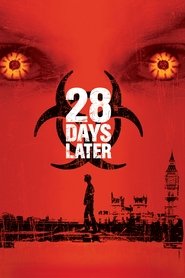
28 Days Later (2002)
The most frightening shot in the film may be one in which nothing happens: a man in a hospital gown on Westminster Bridge, and nobody there. Those are real London streets, emptied by shooting at dawn with the roads closed, and the raw consumer-grade digital video — shot by a veteran of the Danish handheld-realism school — makes the vacancy feel like documentary. Watch how the film gives its hero nothing to do: no enemy to fight, no errand that matters, just a world to register. Then watch how the horror shifts, gradually, from the infected to the humans who've organized themselves around the collapse.
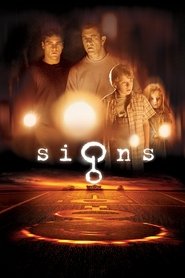
Signs (2002)
The intimate counterpoint: an alien-invasion film that refuses the burning cities and stays on one Pennsylvania farm, in muted autumnal light, building dread through framing and duration rather than movement. This is Hitchcock's grammar reborn — suspense, not surprise; anxious strings in the Herrmann register; a threat experienced as a domestic siege. The thing to watch for is how the film plants: small habits, throwaway objects, tics the camera clocks and walks past. Hold every one of them in your head. Nothing in this movie is accidental — that's not just the theme, it's the construction method.
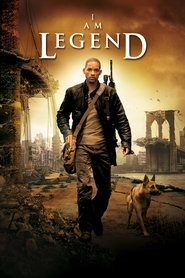
I Am Legend (2007)
Watch the light. There's a clock in every daylight shot even when you can't see one — sundown is a deadline, and the tension in the drives back to base comes from nothing you can point at except time draining out of the day. The anamorphic widescreen dwarfs one man against a reclaimed Manhattan: actual New York streets closed for the camera at dawn, then extended digitally into years of overgrowth and decay. The film's real achievement isn't its creatures — it's the emptiness, and the rituals of fake normalcy (the video store, the mannequins, the broadcasts) a person builds to survive it.

28 Weeks Later (2007)
The sequel opens with the set's single most devastating image of choice: a man sprinting across an open English field, away from a farmhouse, away from a door he chose not to hold shut. The whole film is that sprint scaled up to a civilization. Watch the camera change registers: controlled and classical in the candlelit farmhouse siege, then violently subjective once the outbreak resumes — whip-panned, strobed, so that violence arrives as sensory overload rather than something you can read. And watch every system of containment fail, each clampdown making things worse. This is a zombie film about guilt, and it never lets you off the hook.
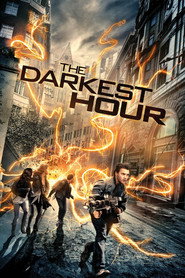
The Darkest Hour (2011)
A flawed film with one genuinely great idea: an enemy you literally cannot see. The aliens are pure energy, sheathed in shimmer, and the survivors' only weapon at first is attention — learning to read flickering bulbs, drifting ash, a crackle in the dead grid. Watch how the film makes you lean toward the screen, scanning for a ripple of heated air, in the tradition of Predator's heat-shimmer camouflage. Its best passages are the emptied ones: a crowded, recognizable Moscow gone silent, abandoned cars, ash, a metropolis with its power cut.
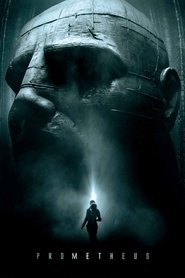
Prometheus (2012)
Cool, architecturally precise images that dwarf humans against vast structures — the contemplative-awe grammar inherited straight from 2001. But start with the opening: an android alone on a sleeping ship for two years, riding a bicycle, watching Lawrence of Arabia on a loop, shaping his mouth around Peter O'Toole's vowels, bleaching his hair to match. Nobody programmed the vanity. Watch how the film nests its question — makers making things that make things — and how the entire $130-million machine is engineered to carry a believer toward a meeting with her maker and then withhold the answer. This blockbuster stages a problem rather than resolving a plot. Sit with the withholding.
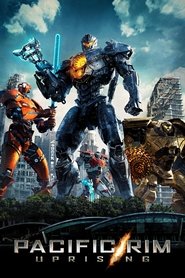
Pacific Rim: Uprising (2018)
The deliberate outlier — and instructive for exactly that reason. Where everything else in this course watches and withholds, this film is pure circuit: see the threat, act on the threat, cut to keep it all legible. Bright, clean, high-key anamorphic photography prioritizing spatial clarity — the opposite of shadow and shimmer. Watch the Drift, the neural bridge fusing two pilots into one giant body: it makes visible the exact link between perceiving and doing that the other films in this set delight in breaking. Its DNA is openly Japanese — kaiju city-scale destruction, giant-robot anime's pilot-machine mind-meld — and its sub-bass sound design treats monsters as seismic events.

Alien: Romulus (2024)
Watch — or rather, listen — for what happens before anything happens: a motion tracker's slow beep, and you're already afraid, because you've heard that sound before, in a corridor you may never have walked but somehow remember. This film is built almost entirely out of inherited signals: low-key source-motivated lighting from 1979, tactical siege staging from 1986, a score that quotes the original outright, practical animatronic creatures. Its sharpest new note is class: the protagonists are indentured laborers whose lives are literally company property. The film frightens you with your own memory — notice when it's doing it.

Leviathan (1989)
End with the honest journeyman version — a film that copies Alien's blueprint (working crew, isolated installation, indifferent corporation, thing loose in the habitat) and The Thing's paranoia, shot far more handsomely than its budget tier suggests by the cameraman of Excalibur, who'd go on to shoot Alien³. Its one real, haunting idea belongs to this course: a creature that absorbs the people it kills and keeps wearing them — a familiar face surfacing in something that is no longer a person. For a few seconds, a second-hand movie touches something genuinely disturbing about drives that hollow people out from inside.
Why watch these together? Because seen in sequence, they teach each other. Jaws shows you how absence becomes pressure; The Shining shows you space itself thinking; the two 28 films and I Am Legend show three different cameras confronting the same emptied world — vérité panic, controlled grief, widescreen loneliness. Signs and Romulus reveal how much of horror is played on your memory and attention, planting objects and sounds you complete in your own head. Prometheus and Dark City ask what a self is made of; Uprising shows you, by cheerful contrast, what all the others gain by slowing down and withholding. By the end, you'll have developed the one skill this whole set rewards: watching the edges of the frame, the quality of the light, the sound before the image — the places where these films actually live.