Sightlines · a mini film course
Built Selves, Watching Eyes: A Science-Fiction Course in Twelve Films
Every film in this set asks a deceptively simple question: what is a person made of — memories, a body, a deed? And each one answers with the camera as much as the script. Some of these films are engines of pure action, where a hero reads the world and changes it, and the editing carries you along like a current. Others deliberately snap that current: the hero can see everything and do nothing, and the film asks you to sit inside that helplessness with them. Watched together, they become a conversation — between doers and watchers, between makers and the things they've made, between cities of light and cities that never see the sun. Notice, as you go, how often the same craftspeople recur (cinematographer Dariusz Wolski shoots three of these), how often the same ancestors are quoted (Metropolis haunts at least four), and how a photograph, a visor, or a pair of too-large eyes can carry a whole film's argument.
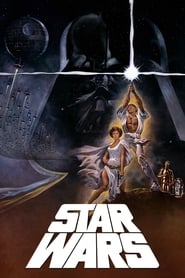
Star Wars (1977)
Watch for the one moment the film stops: Luke at the edge of the homestead, twin suns setting, nothing to do but yearn. Everything else is the opposite — a machine of decisive action built at exactly the moment serious cinema had turned toward heroes who could only watch. Gilbert Taylor's photography splits the film into two worlds, warm dust-soaked naturalism on Tatooine and hard high contrast aboard the Empire's ships, and Lucas borrows his screen-wipes and bickering comic duo straight from Kurosawa's The Hidden Fortress.
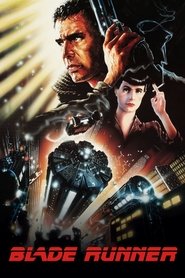
Blade Runner (1982)
Watch the photographs. They're everywhere — hoarded, propped on pianos, offered as proof of a life — and the film quietly asks whether a memory you can hold in your hand is worth anything at all. Jordan Cronenweth's images are among the most influential ever shot for science fiction: deep pools of darkness cut by sodium light and venetian-blind striping lifted directly from 1940s crime pictures, draped over a vertical city inherited from Metropolis. Let it be slow; the slowness is the point.
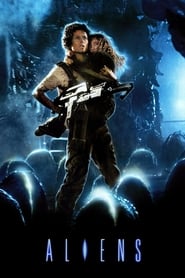
Aliens (1986)
Cameron begins with a heroine who has seen too much and can act on none of it — disbelieved, dismissed, stranded in her own nightmares — and then spends the film rebuilding her capacity to do. Watch how Adrian Biddle's high-contrast industrial lighting, strobing practicals, and wide lenses turn corridors into pressure, and how the siege structure descends from war films like Zulu and monster pictures like Them!. It's an action movie about earning the right to take action.
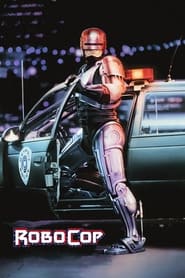
RoboCop (1987)
Watch through the visor: Verhoeven repeatedly drops you inside a machine's point of view — targeting grids, readouts, a street rendered as data — and every visit asks how much of a man survives inside the hardware. Then notice the fake newscasts and ads that keep interrupting, snapping the story shut and holding up a satirical mirror to it. A Dutch director and a German cinematographer bring a sly outsider's eye to the American corporate future; the film is savage and funny in the same breath.
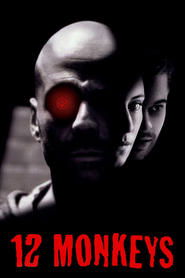
Twelve Monkeys (1995)
Gilliam takes Bruce Willis, an actor built for action, and makes him a witness — a man sent through time not to fix anything but merely to look and report. Watch Roger Pratt's distorting lenses, low institutional angles, and cold desaturated palette do the work of a fractured mind, and notice one scrap of memory the film keeps circling back to, refusing to let you read it fully. The whole architecture is inherited, lovingly expanded, from Chris Marker's La Jetée.

Dark City (1998)
A noir with no sunrise. Dariusz Wolski shoots in near-total night — hard, sourced light carving figures out of blackness — while the camera cranes and cants through a city whose geometry never quite settles. Watch how the film treats memory as something that can be handled, moved, questioned, and how one sunlit place-name keeps surfacing like a prayer. Its shadows descend straight from Nosferatu and Caligari; its city from Metropolis.
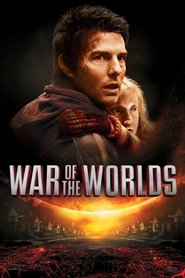
War of the Worlds (2005)
Watch what the film refuses to show you: no war rooms, no presidents, no overview. Spielberg locks the entire catastrophe to one inadequate father's eye-line, and Janusz Kamiński drains the palette to ash, smoke, and bleached sky. It's the master of the last-minute rescue deliberately building a film where heroism gets no purchase — the awe-of-the-sky grammar of Close Encounters inverted into dread.
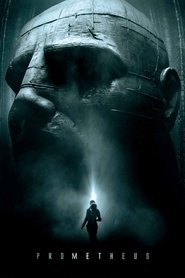
Prometheus (2012)
Watch the opening solitude: an android alone on a sleeping ship, quietly choosing who to be — bleaching his hair, borrowing a movie star's voice — before a single human wakes. Wolski's cool, architecturally precise wide shots dwarf the crew against Icelandic vastness in the contemplative key of 2001. This is a blockbuster built around a question it declines to answer out loud, and the withholding is the design.
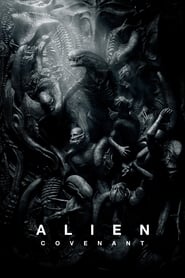
Alien: Covenant (2017)
Watch the line Wolski's light draws between two worlds: the clean, sterile glow of corporate spaceflight against the soft, naturalistic gloom of the planet. The film re-imports the body horror of the original Alien while carrying forward Prometheus's obsession with makers and the made — creation as a chain in which each link resents the last. Notice how often the imagery is composed like painting: this is horror staged as an old master's studio.
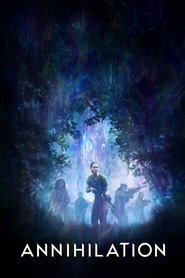
Annihilation (2018)
Two deer step from the brush moving in perfect mirrored unison, and nobody explains it; the watching is the whole event. Garland's film keeps disarming its capable heroine — a soldier-scientist a thriller would normally weaponize — until looking replaces doing. Rob Hardy shoots the Shimmer as a soap-bubble world of toxic greens and oily refractions, and the whole structure — a rule-governed forbidden zone entered by a small expedition — descends from Tarkovsky's Stalker. Its finale trusts image and sound almost entirely; let it wash over you.
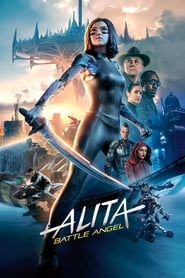
Alita: Battle Angel (2019)
Start with the eyes: Weta built them deliberately too large, and they are the film's whole argument — a face enlarged until wonder itself becomes the subject, every flinch and glance of Rosa Salazar's captured performance transferred onto a not-quite-human surface. Watch, too, the vertical city — elite sphere above, laboring streets below — quoting Metropolis by way of Blade Runner's polyglot signage and layered detritus. A coming-of-age story asked in flesh and chrome: does the body you wake up in decide who you are?
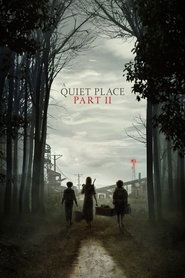
A Quiet Place Part II (2021)
Watch the prologue: a gold Saturday afternoon, a baseball game, a soda sweating in someone's hand — warmth engineered specifically to be taken from you, staged in the family-in-peril grammar Spielberg perfected in War of the Worlds. Then notice how the franchise's great idea persists: that what looks like vulnerability — deafness, enforced silence — keeps turning out to be a resource. This is the set's purest survival engine: situation, response, force against force, executed with total confidence.
Watch these twelve