Sightlines · a mini film course
Cities of the Mind: Twelve Films Where Space Becomes a Trap
Somewhere in each of these films, the ground stops being trustworthy. A city rebuilds itself overnight. A hotel's hallways refuse to add up. A motel in the rain starts to feel like the inside of someone's skull. This is a program about films where the place is the psyche — where architecture, weather, and light do the work that dialogue and plot do elsewhere. It's also a program about watching: nearly every one of these films puts a watcher at its center — a detective, a profiler, a driver, a dealer in other people's memories — and then quietly asks what looking costs. Expect cameras that observe rather than chase, time that's allowed to stretch, and violence that matters less than the dread that precedes it.
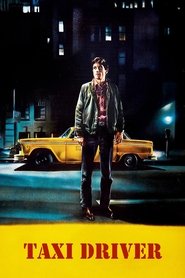
Taxi Driver (1976)
The founding text here. Notice how the film keeps you inside the cab — windshields fogged and streaked, pedestrians caught and lost in headlight beams — then steps outside to watch its driver from across a diner, never quite letting you settle into his head or fully escape it. Scorsese and Schrader borrow the shape of the vigilante picture and hollow out its motor: a man who perceives everything and can convert none of it into meaningful action, just loops through the city. Listen for the diary voiceover, adapted from Bresson, running alongside the images — sometimes agreeing with them, sometimes not.
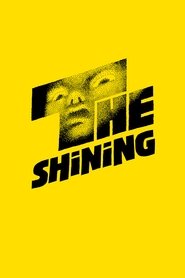
The Shining (1980)
Watch the floor. The brand-new Steadicam glides inches above it, trailing a boy on a trike, and the sound — carpet, hardwood, carpet — makes you brace before every corner. Kubrick composes the hotel in ruthless one-point perspective, every corridor receding to a vanishing point, and then builds a geography that famously cannot be mapped: rooms and windows that shouldn't connect the way they do. Don't try to draw the floor plan. The impossibility is the design.
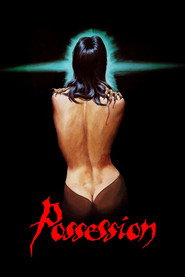
Possession (1981)
Bruno Nuytten's camera behaves like an anxious participant — wide-angle, close, circling the actors, refusing the calm back-and-forth grammar most dramas rest on. Żuławski directed his performers to the edge of collapse on purpose, treating operatic intensity as a system rather than excess. Watch for the scenes where a body keeps going past anything the story strictly needs — where a person isn't acting on the world but simply enduring something, and the film lets it run. Marriage rendered as catastrophe, in a walled Berlin that mirrors the split.
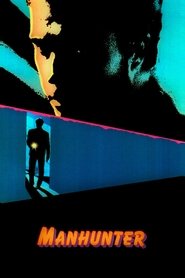
Manhunter (1986)
Mann and cinematographer Dante Spinotti build a world of cold blues, teals, and clinical whites — glass, symmetry, hard horizons. The subject is a profiler whose gift is standing where a killer stood and seeing what he saw, and the film's real drama is perception itself: the camera forever watching a watcher. Notice how often someone is looking at a screen, a photograph, a home movie — and how the film makes empathy feel like a contagion you can catch.

Angel Heart (1987)
A hardboiled private-eye picture crossed with occult horror, filmed through perpetual smoke and dust — cold, verminous New York against humid, rotting Louisiana. Watch the ceiling fans; they're in almost every room, and they're not decoration. Notice too how the standard detective machinery keeps running — hire, clue, interview, next town — while somehow never resolving anything. Parker seeds the film with near-subliminal flashes, a trick inherited from The Exorcist, so keep your eyes open in the quiet moments.
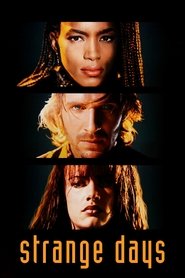
Strange Days (1995)
The opening puts you inside someone else's eyes before it tells you whose — a custom-rigged first-person camera years before GoPro and bodycam footage made that view ordinary. Bigelow splits the film into two ways of seeing: the grimy, neon-soaked "real" Los Angeles, and the immersive playback of recorded experience sold like a street drug. The film is about that split — about whether watching a recording of something makes you complicit in it — and it makes you test the question on yourself.
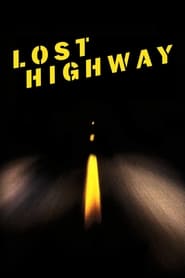
Lost Highway (1997)
Peter Deming photographs rooms defined by what you can't see; characters walk into blackness and dematerialize. Lynch takes the full noir kit — the fatal woman, the gangster, the surveillance tapes — and strips out motive, explanation, and detection. Watch how the film refuses the cut that would tell you whether what you're seeing is real, remembered, or dreamed. Its ancestors are Vertigo's doubled woman and Persona's dissolving identities; come prepared to hold two contradictory things at once.
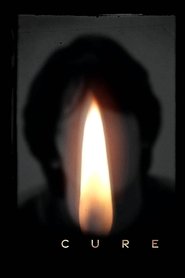
Cure (1997)
Kurosawa's masterstroke is distance: wide, held shots in desaturated grays that keep figures embedded in their environments, letting dread accumulate in the frame's empty corners. A man asks a question that sounds like nothing at all — who are you? — while a lighter flickers, and the film half-confesses that hypnosis is built from the same materials as cinema: a point of light in the dark, a patient voice, a watcher. An answer to the flashy serial-killer films of its decade by way of subtraction: no grand design, no spectacle, just erosion.

Dark City (1998)
Shot in near-total night, with hard, sourced light — lamps, neon, shafts through blinds — carving figures from darkness like 1940s noir pushed toward the grotesque. Its DNA runs straight back to silent German cinema: Metropolis's stratified miniature city, Caligari's spaces that bend to match the mind, Nosferatu's shadows as menace. Watch for the moments when the city itself seems to breathe, and for one word — Shell Beach — that everyone can name and no one can find. A sealed world, and the small human insistence that there must be an outside.

Identity (2003)
Ten strangers, one rain-lashed Nevada motel, and a countdown borrowed openly from Agatha Christie — numbered keys where the tallying rhyme used to be. Papamichael shoots it in sodium amber and cold blue, rain silvering every surface, the identical doors lined up like a multiple-choice question. Notice how deliberately stagey and sealed the place feels; that artificiality isn't a budget limitation, it's a clue about what kind of space you're really in. The most purely fun entry here, and slyer than its studio-thriller packaging suggests.

You Were Never Really Here (2017)
Ramsay knows Taxi Driver down to its grain — she even shoots on 35mm for the same bruised texture — and then quietly pulls the spark plugs from its engine. Watch how the camera works in extremes: hands, eyes, and surfaces in huge close-up, or wide shots that swallow the figure; almost never the neutral middle distance a thriller would supply. Fragments of memory flare up without dates or explanations and refuse to assemble into the backstory the genre owes you. Violence, when it comes, arrives obliquely — often as aftermath, an object, a sound — inherited from Bresson.

Annihilation (2018)
Rob Hardy shoots the Shimmer as a soap-bubble membrane tinting everything inside it — greens pushed toward the toxic, water given an oily refraction — a clean, slightly clinical eye turned on something lush and wrong. The structure descends from Tarkovsky's Stalker: a small expedition entering a zone whose logic warps as you go deeper. Watch for the moments when the characters — soldiers and scientists, people built for action — can only stand and look, and the looking becomes the whole event. The climax trades narrative for pure image and sound, a deliberate echo of 2001.
Watched together, these films teach a single lesson from a dozen angles: that a movie can locate its horror, its grief, or its mystery not in what happens but in where you are — and that the most unsettling spaces on screen are the ones that behave like minds. You'll start noticing rhymes: the flickering lighter in Cure and the ceiling fans in Angel Heart; the rented eyes of Strange Days and the borrowed gaze of Manhunter; the sealed city, the sealed hotel, the sealed motel, the sealed marriage. Each film trains you to watch the next one better. Trust the images over the explanations, let the slow ones be slow, and pay attention to anything the camera keeps returning to that no character remarks on. That's usually where the film is keeping its heart.