Sightlines · a mini film course
Seeing and Doing: Twelve War Films and the Space Between Them
Every classic war movie runs on a simple engine: a soldier sees a danger, acts on it, and the world changes because of what he did. The twelve films on your list are a secret history of that engine — some run it at full throttle, some remove a crucial part and let it roar uselessly, and some shut it off entirely so that all a person can do is watch, listen, and endure. Watched together, they become a single long argument about what a camera should do when human action stops being enough. Notice, film by film, whether the camera chases the action or simply watches — and what floods into the frame when the doing stops.
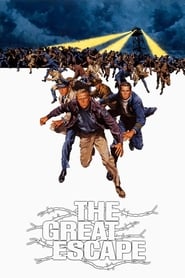
The Great Escape (1963)
Start here, with the machine running clean. Sturges spends his opening reels building the camp itself — the warning wire, the towers, the huts raised off the ground — until the situation is total, and then answers it with pure organized doing: every scene is a task, a tool, a step in a process. Watch how the film inherits its loving fixation on method — improvised implements, incremental labor — from quieter European escape films, and turns it into ensemble momentum. And hold onto the image of McQueen throwing a baseball against a cell wall: the one still point in a film made entirely of motion.
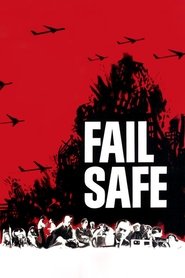
Fail Safe (1964)
Now watch what happens when a thriller keeps all its machinery — generals, bombers, a ticking clock — and quietly removes the enemy. There is no villain here; the safeguard system itself is the antagonist, and the more elaborate the safeguard, the more elaborate the failure. Lumet, working from his live-television chamber-drama roots, shoots it flat and plain, high-key institutional light, the camera surveilling faces under pressure rather than dramatizing anything. Feel how strange it is to watch powerful men built to act discover there is nothing to act against.

Rome, Open City (1945)
This is where the old grammar first cracked, in the actual rubble of an occupied city. Rossellini shoots with off-center framings, figures caught mid-gesture, focus chasing available light — every choice suggesting discovery rather than staging. Watch for the moments when the film refuses the melodramatic rules you've absorbed from a lifetime of movies: here, brave action and just outcomes are no longer connected, and the picture simply keeps going. Its spine is the alliance between a Communist and a priest — solidarity across every peacetime divide, forged by a common enemy.
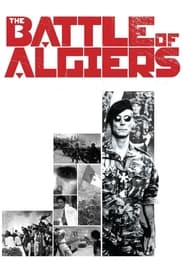
The Battle of Algiers (1966)
Pontecorvo opens with a printed confession: not one foot of newsreel has been used. Then he spends the whole film making you forget it — grainy pushed film stock, long telephoto lenses finding faces in crowds as if catching them unaware, a camera kept slightly unsettled even where it could be locked down. Every frame performs the condition of having witnessed something, and the honesty of the forgery is the point. Watch how the rough texture, inherited straight from Rossellini's neorealism, makes a meticulous reconstruction feel like testimony.
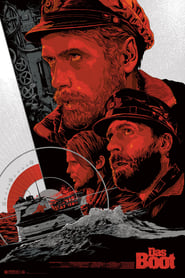
Das Boot (1981)
The great confinement film: a war movie in which diving is not a counter-attack but hiding, and "silent running" makes stillness the only available move. Watch — and above all listen — during the sonar sequences: a ping crawling along the hull, a dripping valve suddenly loud enough to kill everyone, an entire crew reduced to held breath. Vacano's mobile handheld camera and the sickly available-feeling light (green instrument panels, amber bunks) make the boat a lived-in machine rather than a lit set. Almost every submarine movie since inherits its conventions from this one.
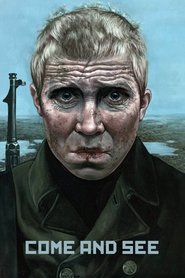
Come and See (1985)
Klimov takes the Soviet war film's heroic template and violates nearly every convention: no epic geography, no legible tactics, no redemptive sacrifice. Rodionov's wide-angle lenses press within centimeters of the young lead's face, so that atrocity often reaches you through his reactions before — or instead of — direct depiction. Watch that face across the film: nothing in the story ages him, and yet the aging is the most literal fact on screen, shot into the actor's body over months. This is a film about a person who can no longer act and can now only see, and it is built entirely around that seeing.
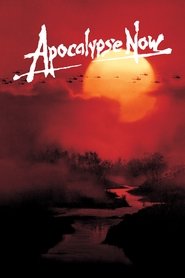
Apocalypse Now (1979)
The opening tells you everything: a ceiling fan becomes helicopter blades, jungle burns, a rock song bleeds into the hiss of insects — and you're being told to stop watching for plot and start watching for a state of mind. Storaro organizes the whole film as a color journey, from the amber rot of Saigon into blue-grey murk and finally near-total darkness. Notice how deliberately hollow the central performance is: a man carried by a river, watching, narrating, registering — the flatness is the design, not a flaw.

Full Metal Jacket (1987)
Watch this film as two visual languages at war with each other. The boot-camp half is all order: symmetrical frames, geometric drill formations, long lenses flattening recruits into interchangeable ranks — the look of a world where the civilian self is being systematically dismantled and replaced. Kubrick made it from self-imposed exile in England, and that distance shows: an America intensely imagined rather than observed. Listen too for his signature move, inherited from his own earlier films — pop songs and ironic cultural artifacts set against images they should never accompany.
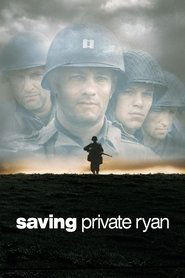
Saving Private Ryan (1998)
In the opening minutes, seeing a danger and acting on it come uncoupled — and the filmmaking enforces it. Kamiński, who studied Huston's wartime documentary footage, refuses you an establishing shot: no master saying the bunkers are there, the waterline here. The handheld camera sits at body level, mid-crowd, your sight line constantly broken by soldiers, spray, debris — space cut into fragments that never add up to a map, so you can no more orient yourself than the men can. The film's deeper question hums underneath: whether the exchange rate of lives can ever be made to cohere.
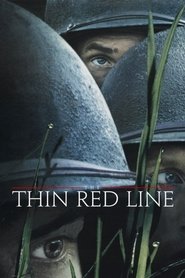
The Thin Red Line (1998)
Malick keeps the mission — take the ridge — and quietly drains the resolution out of it. The signature move: mid-battle, with men dying in the grass, the camera leaves them — for a bending stalk of kunai grass, a parrot, light on a river — and the cut back comes late or not at all. Toll's camera is permitted to detach from human action entirely and attend to the natural world, while voiceover drifts uncoupled from what's on screen, asking whether the violence is alien to nature or part of it. Watch for the moments the film looks away; they're where it does its thinking.
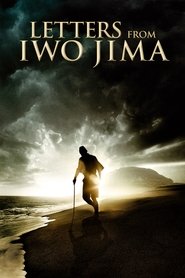
Letters from Iwo Jima (2006)
An American studio film in Japanese, told entirely from the other side of the gun — a near-unprecedented inversion. The framing image is an exhumation: buried letters lifted out of the ground years later, telling you from the start that what survives here is not the action but the writing. Stern lights the cave interiors with only motivated pools of lamp and tunnel-mouth daylight, leaving vast areas in shadow; the bombardment is heard before it is seen, concussion arriving through rock. Watch how men who know no relief is coming stop strategizing and simply look.
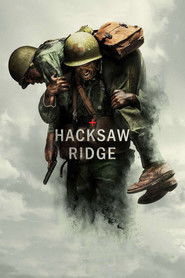
Hacksaw Ridge (2016)
Gibson builds the most classical machine in the set — situation, decisive action, transformed situation, force against force up a literal cliff between earth and void — and then plants something inside it the machine cannot digest: an unarmed medic whose only act is a rope, a prayer, and the next body. Watch how cleanly the photography splits along the film's fault line, golden pastoral Virginia against the smoking escarpment. And listen for the debt to Come and See: concussive distortion and post-blast ringing rendered subjectively, sound as psychological horror.
Watched as a set, these films teach you to feel the war movie's engine the way a mechanic hears a motor — to notice when a cut serves a deed and when it serves a face; when space is a map for action and when it's a trap; when time is compressed toward a goal and when it's allowed to stretch until you can feel it pass. The pleasure of The Great Escape and the dread of Das Boot, the forged authenticity of Algiers and the looking-away of Guadalcanal, are all answers to the same question: what should a camera do with human beings caught inside events larger than any action they can take? Every one of these twelve answers it differently — and once you start watching for the answer, you'll never watch a war film the same way again.