Sightlines · a mini film course
Seeing vs. Doing: A Dozen Ways to Film a War
There's a secret current running under this watchlist. The classic war movie runs on a simple engine: a soldier sees a danger, and he acts — the cut carries you from threat to response to result. Some of these films run that engine at full throttle, and it's thrilling. But most of them, in one way or another, unplug it. They give you characters who can only watch — and cameras that watch with them, refusing the map, the master shot, the tidy resolution. Time is allowed to stretch. Faces are allowed to hold. Space stops being a backdrop and becomes a pressure. Seen together, these twelve films become a conversation across seven decades about what a camera owes to catastrophe: should it choreograph the war, or witness it?
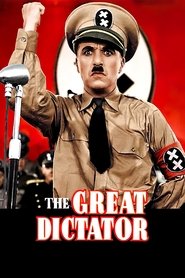
The Great Dictator (1940)
Chaplin builds his tyrant's palace as a shot-for-shot parody of Nazi rally films — the podium angles, the crowd geometry, the banners — so the architecture of power becomes the joke. Watch the famous scene where the dictator, alone, plays with a balloon painted like the earth: for nearly four minutes, nothing advances any plot. The man goes still and rapt while the world floats around him — a comedian's diagnosis of what megalomania feels like from the inside, delivered as pure movement.

Rome, Open City (1945)
Shot in a barely liberated Rome, this is where a new kind of filmmaking gets born in the rubble. Notice the framings: off-center, figures caught mid-gesture, focus adjusted on the fly — everything suggests discovery rather than pre-planning, a camera present at events instead of staging them. Watch, too, how the film builds its moral spine out of an unlikely alliance between a Communist and a priest, refusing to sentimentalize either. Be warned: this film will break rules you didn't know movies had.
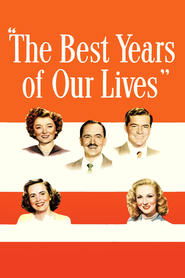
The Best Years of Our Lives (1946)
Three veterans fly home in the glass nose of a bomber — the one place on the aircraft built for nothing but looking down — and that image is the whole film: men trained to act, returned to a world that only asks them to look at it. Gregg Toland's deep-focus photography keeps foreground and background simultaneously sharp, so whole dramas can unfold across a single room without a cut. Watch the drugstore sequence, where one story plays close to the lens while another matters just as much far in the distance. The film asks you to do what its characters must: pay attention to everything at once.
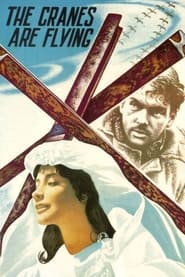
The Cranes Are Flying (1957)
The camera here is the star — Urusevsky's spiraling staircase ascent is one of the most breathtaking sustained movements ever filmed, urgency and architecture compressed into a single breath. This is the great Soviet war film that relocated the war from the battlefield to the wounded heart, and its signature move is letting the camera keep dancing when a human being no longer can — the world taking over the motion a body surrenders. Watch for the moments when fantasy and reality share a single frame.
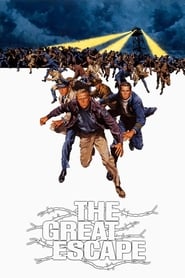
The Great Escape (1963)
Here's the engine at full roar — the purest doing-movie on this list, and a joy for exactly that reason. Sturges spends his opening reels building the camp as a total machine — the wire, the towers, the huts raised off the ground — so that every subsequent act of ingenuity registers as defiance. Watch the loving, procedural attention to how things get done: tools improvised, dirt hidden, specialists interlocking like gears. And notice the one still point: a man alone in solitary, throwing a baseball against a wall, marking time so he can go make more trouble.
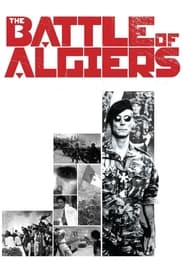
The Battle of Algiers (1966)
Pontecorvo opens with a confession: not one foot of newsreel has been used. Then every frame performs the look of footage grabbed under fire — grainy stock, long lenses finding faces in crowds as if unnoticed, a camera kept slightly unsettled even where it could lock down. He tells you the image is a construction so that you will trust it, and it works: this is a forgery that carries a true force. Watch how rough texture becomes an argument about authenticity itself.
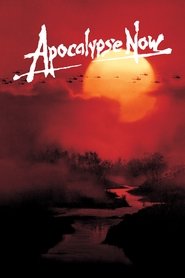
Apocalypse Now (1979)
Stop watching for a plot; you're going to get a state of mind. Storaro's photography follows a deliberate color arc — amber and orange heat draining into blue-grey murk and near-total darkness — so the river journey is legible in light alone. And notice the protagonist's strange passivity: he reads, narrates, watches, while the boat and the river do the moving. That flatness is the point, not a flaw — a man to whom things happen, floating through duration itself.
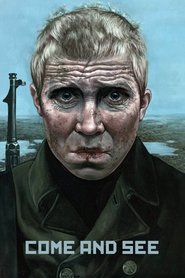
Come and See (1985)
Klimov takes the humane Soviet war film — the tradition of The Cranes Are Flying — and demolishes its every consolation. The camera refuses battlefield geography and cleaves instead to a boy's face, so close that atrocity often reaches you through his reactions before, or instead of, its direct depiction. Watch that face across the film: it's where the movie does its thinking, a portrait of a person reduced to pure witnessing. Not too gentle a warning: this is one of cinema's most harrowing experiences, and one of its most necessary.

Full Metal Jacket (1987)
Kubrick splits the film into two visual worlds, and the split is the argument. In the boot camp: symmetry, geometric drill formations, long lenses flattening recruits into interchangeable ranks — the visual logic of a machine for erasing selves. Watch how the frame itself enforces uniformity, echoing the trench tracking shots of Kubrick's own Paths of Glory, and listen for his signature move of pop music set ironically against images it should never accompany.
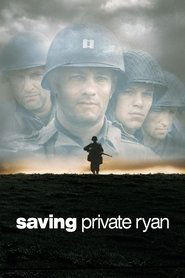
Saving Private Ryan (1998)
The Omaha Beach opening teaches its lesson in about four seconds: here, seeing a danger and acting on it are no longer connected. Watch what Kamiński's handheld camera refuses to give you — no establishing shot, no master, no map. The beach arrives in fragments: a strip of sand, a tangle of steel, a face, your sightline constantly blocked by bodies and spray. You cannot orient yourself, and that disorientation, borrowed from actual combat documentary, rewired the entire genre.
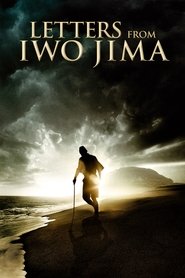
Letters from Iwo Jima (2006)
Eastwood's inversion — the Pacific War from the Japanese side, in Japanese, by an American director — begins not with a battle but with an exhumation: letters dug from black sand years later. From the first reel, the men on this island know no relief is coming; watch how they receive the American armada not as strategists but as witnesses, the bombardment heard through rock before it's seen. Tom Stern lights the caves with small motivated pools of lamp and daylight, leaving vast darkness around every face — a war film built out of shadow, endurance, and the written word.
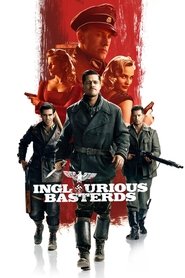
Inglourious Basterds (2009)
After all that witnessing, Tarantino makes a film about watching — where cinema itself is a weapon and every character is both performer and audience. His method is the long, unhurried scene: sustained wide shots that let actors occupy space in real time, suspense built not from action but from micro-behavior — a pause, an accent held like a breath, the way a hand moves. Watch hands. Watch how people order drinks. In this film, reading a performance correctly is a matter of life and death — for the characters, and as a skill the movie is quietly teaching you.
Watched together, these films train your eye. You'll start noticing when a camera chases and when it merely watches; when space is a playing field and when it's a trap; when a cut serves an action and when it holds a face past the point of comfort. The oldest films here still believe a decisive act can transform a situation; the later ones increasingly give us people who can perceive everything and change nothing — and find that this, too, is a truth about war worth an entire cinema. By the time you reach the end of the list, you won't just have seen twelve war films. You'll have watched the war film argue with itself about what it means to see.