Sightlines · a mini film course
Acting and Watching: Twelve War Films Between the Deed and the Gaze
Every war movie has to answer one question before it shoots a single frame: is war something people do, or something that happens to them? The films on this list, taken together, map the entire spectrum of answers. At one end are gleaming machines of purposeful action — plans, tools, tunnels, deeds that change the world. At the other are films where the camera simply watches alongside people who can no longer act at all: faces at windows, ears pressed to hulls, boys who can only see. The pleasure of this set is feeling the dial turn from film to film — noticing when a director hands the story to his characters' hands, and when he hands it to their eyes.
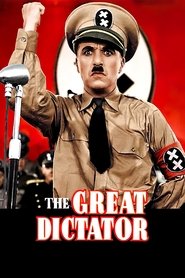
The Great Dictator (1940)
Chaplin builds two visual worlds — monumental halls for the powerful (staged as deliberate parody of Nazi rally footage), warm intimate spaces for the persecuted — and lets the architecture do the satire. Watch the famous scene of the dictator alone with a globe-painted balloon: for nearly four minutes, a man stops acting and simply floats, rapt, while the world seems to dance around him. It's a comedy scene that doubles as a diagnosis — what megalomania feels like from the inside.

Rome, Open City (1945)
Shot in a barely liberated city, this film looks caught rather than composed: off-center framings, figures grabbed mid-gesture, light taken as found. Its spine is an unlikely alliance — a Communist and a priest bound by a common enemy — and its deepest innovation is a refusal to protect you with the usual rules of who matters and what stories owe their characters. Watch for the moments when the film breaks a promise you didn't know movies had been making to you for forty years.
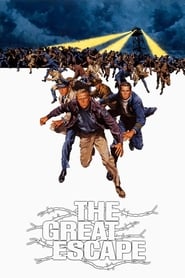
The Great Escape (1963)
Here is the pure machine of doing, run at maximum voltage. Sturges spends his first reels building the camp as a total, escape-proof system — the wire, the towers, the raised huts — precisely so that every act of ingenuity against it lands with weight. Watch the loving, procedural attention to how things are done: the tools, the dirt, the division of labor. And notice the one still image amid all that motion — a man alone in a cell, throwing a baseball against a wall, again and again.
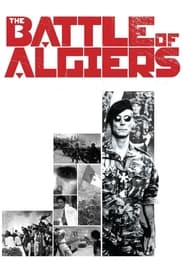
The Battle of Algiers (1966)
The film opens with a confession: not one foot of newsreel has been used. Every frame performs the look of footage grabbed under fire — pushed grain, long lenses finding faces in crowds, a camera that never quite settles — and not one frame is real. Pontecorvo tells you the image is a forgery so you'll trust it, and the gamble is the whole film. Watch how a fabricated texture becomes a form of testimony.
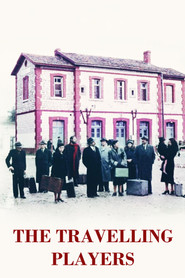
The Travelling Players (1975)
Angelopoulos builds a four-hour history of Greece out of roughly eighty shots, some many minutes long — and inside a single unbroken shot, years can pass. The camera drifts down a wet grey street, loses a crowd at a corner, waits, and when people return the era has changed. No cut, no warning: the street itself does the time-travelling. Watch a troupe of actors forever trying to finish a simple pastoral play while history keeps walking on stage.
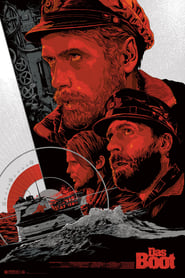
Das Boot (1981)
A war film in which the decisive tactical move is holding still. Petersen's submarine is lit like a lived-in machine — sickly instrument-green, amber bunk-gloom — and the camera hurtles through it at crew-body height. But the great scenes are the frozen ones: engines dead, a sonar ping crawling along the hull, every face tilted up at a sound. Listen as much as you watch; the film's terror lives in the ears.
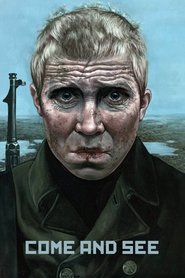
Come and See (1985)
Klimov keeps his camera centimeters from the face of a teenage boy, and lets the war reach you through his reactions before — or instead of — direct depiction. Made against the heroic Soviet war-film tradition, it strips out redemption and sacrifice-as-meaning and replaces them with pure witnessing. Watch that face across the film's running time: no years pass in the story, and yet something ages before your eyes. It is one of cinema's most extreme experiments in making seeing itself the event.
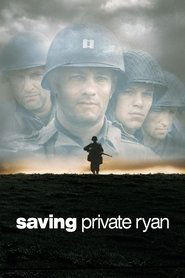
Saving Private Ryan (1998)
In the opening beach assault, watch what the camera refuses to give you: no establishing shot, no map, no clean geography of where the bunkers are. Kamiński shoots at body level, mid-crowd, your line of sight constantly blocked by soldiers, spray, debris — space broken into fragments joined only by dread. Then notice the film's real question, argued all the way through: the exchange rate of lives, and whether survival can ever be "earned."
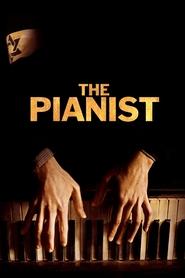
The Pianist (2002)
Watch the windows. Again and again, a man stands back in the dark of a room, looking down at a street he cannot enter, watching a city's catastrophe unfold below. Polanski — who spent a career filming minds besieged inside apartments — turns that architecture into history itself, and Edelman's cool, ash-grey, steadily observing camera refuses both warmth and melodrama. This is a film where witnessing, not doing, is the protagonist's true vocation.
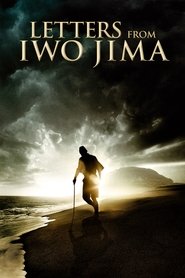
Letters from Iwo Jima (2006)
An American studio film told entirely from the Japanese side of the Pacific War — in Japanese, about men defending an island everyone, including their commander, knows is already lost. Stern shoots the cave interiors in almost unworkably low light, small pools of lamp-glow in vast shadow. Watch how the film begins: not with battle but with an excavation, letters lifted out of the ground. What survives here is not the action; it is the writing.
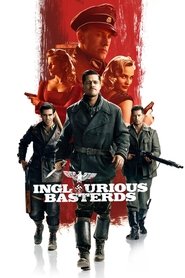
Inglourious Basterds (2009)
Tarantino's real subject is performance under mortal stakes: nearly every scene is people acting a part while someone across the table reads the act. Watch the details that carry life-and-death weight — how someone pronounces a word, which fingers they raise to order three drinks. And watch Richardson's patient wide shots, which let scenes run unhurried for twenty minutes before the camera reveals, with one quiet move, exactly how much it knew all along.
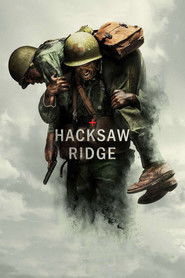
Hacksaw Ridge (2016)
Gibson splits the film down the middle: golden pastoral light for Virginia, then a battlefield staged as a literal threshold between earth and void. The war-film machine here is utterly classical — force against force, assault against escarpment — but planted inside it is something the machine can't digest: an unarmed medic whose heroism consists of refusal. Watch the sound design, which inherits from Come and See the idea that a blast is something you experience from inside a skull.
Watch these together and the through-line becomes a kind of secret history of the war film. The Great Escape and Hacksaw Ridge show you the genre's classical engine at full power — situation, deed, transformed situation. Rome, Open City shows the moment, in the actual rubble of 1945, when that engine first stalled. And Come and See, The Pianist, Das Boot, Letters from Iwo Jima, and The Travelling Players show what floods in when it does: films built around people who can only watch, listen, endure, and remember — where the camera stops chasing and starts keeping vigil. The influences even loop back on themselves: Sturges feeds Tarantino, Rossellini feeds Pontecorvo, Klimov feeds Gibson. Seen in company, each film teaches you how to watch the next.