Sightlines · a mini film course
Seeing and Doing: The War Film's Two Speeds
Every war film has to answer one question before it answers any other: when a person sees something terrible, can they do anything about it? The twelve films on this list split beautifully along that fault line. Some of them — the classic engines — run on the old contract of action: a character sizes up a situation, acts, and the world answers. Others cut the wire between the eye and the hand, leaving a character who can only watch, and letting the camera watch with them. Watching this set together, you'll feel the genre argue with itself: motion against stillness, deeds against witness, the escape plan against the face that has seen too much. Here's what to look for in each.
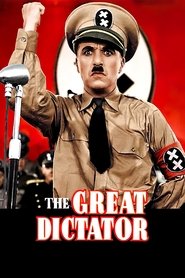
The Great Dictator (1940)
Start with Chaplin, who understands motion better than anyone, and notice the moment he stops it. In the famous scene where the dictator dances with a balloon painted like the globe, nothing advances any plot for nearly four minutes — a man goes still and rapt while the world floats and turns around him. Chaplin built his rally sequences as direct parody-inversions of Nazi propaganda spectacle, and Karl Struss (who shot Sunrise) brings luminous intimacy to the ghetto scenes. Watch how the film gives the tyrant weightlessness and the oppressed warmth.
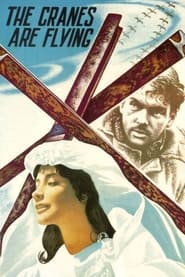
The Cranes Are Flying (1957)
This is the film that taught the Soviet camera to fly. Sergei Urusevsky built custom rigs and circular tracks so the camera could spiral up a staircase with a running lover, sprint through crowds, and turn with the sky itself — the camera becomes the thing that moves when a human being no longer can. Watch for the moments when feeling, not story, dictates the cut: grief and fantasy allowed to share a single frame. It made the war a matter of the home front and the wounded heart, and half the films below are answering it.
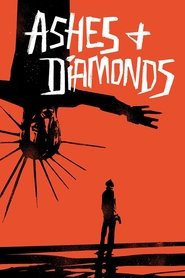
Ashes and Diamonds (1958)
A young man wears dark glasses indoors, at night — and that image tells you his whole predicament. He's a soldier built to see an enemy and act, and the film catches him at the exact historical instant when that circuit stops working: the war ending around him in a single compressed night. Jerzy Wójcik's black-and-white photography pools shadow like American noir crossed with Welles — faces half-consumed by darkness. Watch how the hotel becomes a whole country in miniature.
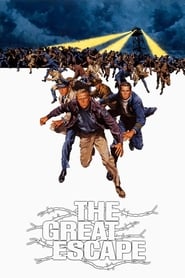
The Great Escape (1963)
Here the old machine runs at full voltage, and it's glorious. Sturges spends his opening reels building the trap with almost pedagogical care — the wire, the towers, the huts raised off the ground — so that every act of ingenuity afterward reads against it. This is escape-as-process, inherited from Bresson's A Man Escaped: a loving fixation on tools, method, division of labor. Watch McQueen alone with his baseball in the cooler — the one still point in a film made of pure motion.
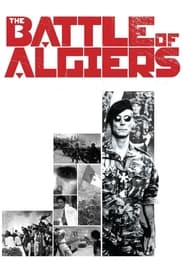
The Battle of Algiers (1966)
Pontecorvo opens with a confession: not one foot of newsreel has been used. Then every frame performs the look of footage grabbed under fire — pushed grain, long lenses finding faces in crowds, a camera that never quite settles. He tells you the image is constructed so that you'll trust it. Watch how the telephoto lens flattens space and makes everyone look caught rather than staged; this grammar has been imitated for sixty years, and you'll recognize its descendants all over this list.
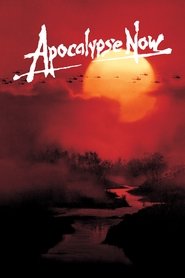
Apocalypse Now (1979)
Don't watch for a plot; watch for a state of mind. The opening superimposition — ceiling fan, helicopter rotor, burning jungle, a rock song bleeding into insect hiss — is the whole film folded into ten seconds. Storaro's color scheme is a journey in itself: amber corruption at the start, draining to blue-grey murk, then near-total darkness. And notice Martin Sheen's deliberate flatness: a protagonist who mostly watches while the river does the moving. That's not a flaw. That's the design.
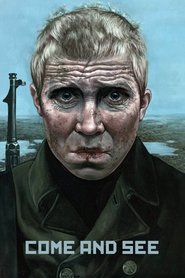
Come and See (1985)
Klimov keeps the camera centimeters from a boy's face, and the war reaches you through his reactions before — or instead of — direct depiction. Compare the boy's face in the first reel to the last: no years pass in the story, yet the aging is real, shot into the actor's own body over months of production. The film takes the humane Soviet war-film tradition of The Cranes Are Flying and deliberately demolishes it: no redemptive arc, just a consciousness being overwhelmed by what it's forced to witness. The hardest watch here, and the one the others orbit.
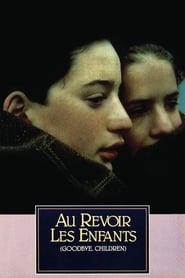
Au Revoir les Enfants (1987)
Malle rebuilt a morning from his own boyhood, and everything in the film is engineered around watchfulness. Renato Berta's palette is cold and narrow — greys, browns, the bluish white of winter light in an unheated wartime school — and the young lead performs almost entirely through looking rather than doing. Watch how much the film trusts small ritual: dormitories, refectories, schoolyard games, with history pressing in at the edges. The quietest film on this list, and one of the most devastating in method.
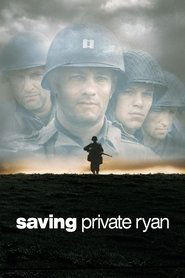
Saving Private Ryan (1998)
In the first seconds on Omaha Beach, seeing a danger and acting on it come uncoupled — and Spielberg sustains that for twenty-seven minutes. Watch what Kamiński's camera refuses you: no establishing shot, no map, no geography of who is where. Just a strip of sand, a tangle of steel, a face, with your sightline constantly blocked by bodies and spray. He studied Huston's actual wartime documentary footage to design it, and the sequence reset the entire genre's expectations overnight.
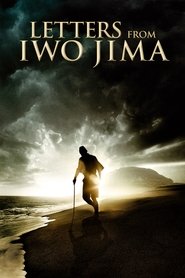
Letters from Iwo Jima (2006)
The film begins with an exhumation — letters dug out of black sand years later — and that image tells you its priorities: what survives is not the action but the writing. Eastwood and Tom Stern shoot the cave interiors at light levels most crews would call unworkable, faces emerging from pools of lamplight and darkness. Watch how the beachhead bombardment arrives from inside the rock — heard before seen, concussion first. A Pacific War film told from the Japanese side by an American director: an almost unprecedented act of imaginative crossing.
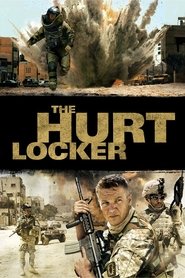
The Hurt Locker (2008)
The opening title card calls war a drug, and then the film proves it behaviorally rather than argue it — no explaining flashback, no diagnostic monologue. Barry Ackroyd's long lenses turn heat shimmer into a weapon: figures in the middle distance become unstable, depth impossible to judge, so that every space feels loaded. Watch how suspense is built from procedure — hands, wire, tools — the way The Wages of Fear did, and notice which environments make the hero calm and which make him lost.
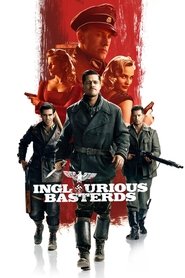
Inglourious Basterds (2009)
Tarantino's war is fought with performances, and everyone in the film is reading everyone else's. The celebrated tavern sequence is essentially a card game played with identities, where the cards are micro-behaviors — an accent held like a breath, the wrong fingers raised to order three glasses. Richardson's camera favors long, unhurried takes that let dread accumulate in real time. And notice the film's obsession with cinema itself: projection, propaganda, flammable film stock — the movies as literal weapon.
Watched together, these films become a conversation about what the war film is for. The Great Escape and the tavern scene in Inglourious Basterds show the machinery of action running perfectly — situation, deed, consequence — while Come and See, Au Revoir les Enfants, and Letters from Iwo Jima show what happens when that machinery is confiscated and a person is left with only their eyes. In between sit the great in-betweens: the assassin in dark glasses, the bomb tech who can't choose a cereal, the officer drifting up a river. Pay attention to the cameras as much as the characters — when they chase and when they simply watch, when space is a map and when it's a trap, when time is spent and when it's allowed to stretch. By the twelfth film, you'll find you can feel the difference in your body before you can name it. That's the course.