Sightlines · a mini film course
The Watching Eye: Spy Cinema and the Art of Perception
Every film on this list is nominally about espionage — assassins, moles, stolen lists, men in control rooms. But watch them together and something deeper emerges: these are all films about seeing, and about the gap between seeing and doing. Some of them close that gap with breathtaking speed — a body reacting faster than the eye can follow. Others pry it open and make you sit inside it, knowing everything and able to do nothing. The camera itself becomes a character: sometimes it chases, sometimes it watches, sometimes it deliberately refuses to show you the one clean angle that would explain everything. Trace that single question — who sees, who knows, who can act — across seventy years and you have a secret history of the thriller.
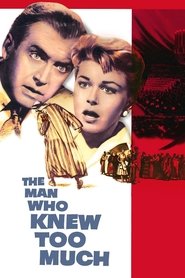
The Man Who Knew Too Much (1956)
The foundation stone. Watch the Albert Hall sequence: a printed concert program passes from hand to hand, and once you learn what one cymbal crash will conceal, the music stops being music and becomes a clock. Hitchcock runs the sequence near real time and makes you suffer every bar of it — you know exactly what's coming, the characters don't, and that gap between your knowledge and their innocence is the engine. Notice too how the espionage machinery is really a delivery system for something more intimate: a strained marriage and pure parental terror.
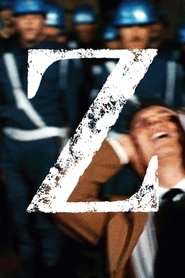
Z (1969)
When the political killing happens, Costa-Gavras throws the camera into the crowd at ground level — bad angles, fast cuts, no clean overhead view. This is not sloppiness; it's the film's argument. Officials will soon insist that nobody could possibly say what they saw, so the camerawork is staged to feel like the cover-up. Watch how Raoul Coutard's handheld, available-light photography — inherited from the French New Wave — tracks figures through dense crowds while withholding the map, and how the investigation afterward tries to reassemble, piece by piece, what the opening deliberately shattered.
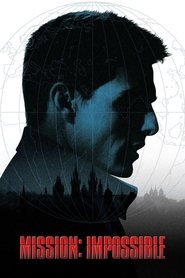
Mission: Impossible (1996)
De Palma is Hitchcock's most devoted student, and the famous vault sequence is the proof: near-silent, almost dialogue-free, and utterly comprehensible because you've been told the rules in advance — heat, sound, pressure. Watch a single bead of sweat carry more tension than any explosion. Notice the tilted "Dutch" angles whenever Hunt's world destabilizes, and the recurring masks and doubles: this is a film obsessed with the unreliability of surfaces, where the camera's own point of view can be a trap.
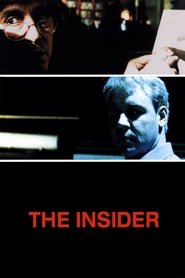
The Insider (1999)
The odd one out — and the key to the whole set. Mann takes the grammar of the procedural thriller (phone calls, documents, editorial meetings) and quietly removes the payoff. His men know everything, and knowing is precisely what they cannot discharge into action: confidentiality agreements become muzzles, testimony becomes liability. Watch Dante Spinotti's restless, searching camera — handheld long lenses isolating a face from its surroundings, focus that drifts and hunts — turning a tobacco-industry drama into something as tense as any chase film, built entirely from the agony of enforced stillness.
Mission: Impossible III (2006)
Abrams opens on the story's worst moment, ripped out of sequence and bolted to the front, then flashes back — so you spend two hours dreading what you've already glimpsed. Watch how Dan Mindel's handheld, face-hugging camerawork and long lenses keep you close to the human cost, and how the film's masks and impersonations mirror its real subject: a man who cannot be honestly present in his own marriage because his vocation is deception.
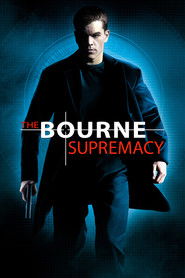
The Bourne Supremacy (2004)
Watch Bourne in a crowded market before anything happens: he's reading exits, sightlines, a car parked a beat too long. Greengrass builds the entire film out of one man's attention, and Oliver Wood's camera makes you attend the same way — long lenses smearing crowds into static, focus drifting and resettling, no God's-eye view because Bourne never gets one. The frame chases the world rather than composing it, and that jitter is the film's thesis, not a flourish.
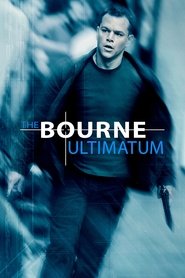
The Bourne Ultimatum (2007)
The style reaches its fullest expression — descended from The Battle of Algiers' faked-newsreel grain and The French Connection's inside-the-chase photography. The sequence to study is Waterloo Station: three layers of seeing stacked on top of each other — a man watching operatives, operatives watching him through CCTV, a third man who can hear but cannot see. Nobody fires a shot for most of it; the whole drama runs through eyes and earpieces, and it's the most frightening thing in the film.
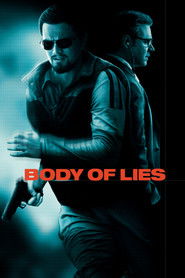
Body of Lies (2008)
Ridley Scott organizes the film around one recurring cut: from a man sweating through a crowded street to the cold geometry of a drone feed, where that same man becomes a pale shape on a monitor in Virginia. The same human being shown twice — once as a body in danger, once as information. Watch how the film weighs those two ways of seeing against each other, and how it argues that the overhead eye sees everything and understands nothing.
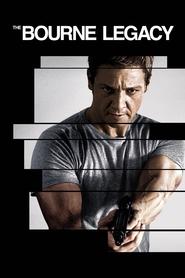
The Bourne Legacy (2012)
Gilroy inherits the Bourne franchise and does something quietly strange with it: he hands the camera to Robert Elswit, who shoots with depth, stability, and readable geography. You can follow Aaron Cross in a way you never quite could follow Bourne. Then notice the opening image — the most capable body in the film alone in the Alaskan wilderness, checking a vial of rationed pills. Watch how legibility and dependency play against each other: the clearer the body, the more precarious its foundation.
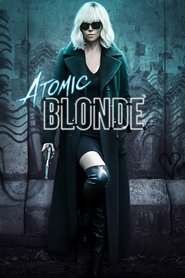
Atomic Blonde (2017)
The stairwell fight is the reason this film is here: a sustained take (built with concealed seams, in the tradition of Children of Men) that refuses to cut away from exhaustion. Guns empty, improvised weapons, breath running out — the choreography registers accumulating depletion rather than triumph. Watch how the color-coding works too: cold blues for surveillance and dread, hot pinks and reds elsewhere, all of it wrapped in a debrief frame that keeps you asking whether testimony and truth are the same thing.
Mission: Impossible - Fallout (2018)
The purest expression of the opposite pole from The Insider: a film in which seeing flows into doing with no gap, ever. Watch Rob Hardy's discipline — handheld immediacy in the fights, clean legible wides in the chases, so you always know where everything is (a lesson inherited from De Palma). And watch the London rooftop sprint, where Tom Cruise's real broken ankle stays in the finished film: a real body's cost, kept inside the fiction, as the whole argument for this kind of cinema.
Mission: Impossible - Dead Reckoning Part One (2023)
The set's culmination and its most anxious entry. The enemy is an artificial intelligence that can model what people will choose before they choose it — which turns the franchise's entire faith in decisive human action into the thing under threat. Watch the mountain jump: a real body in real air, staged in the lineage of Buster Keaton riding real trains, offered as a kind of defiance. If every move can be predicted from your past course, the film asks, were you ever choosing? The stunt is the answer.
Watched together, these films become a conversation. Hitchcock hands you the bomb under the table; De Palma scales that contract to a blockbuster; Costa-Gavras weaponizes confusion itself; Greengrass builds whole films from the texture of one man's attention while Gilroy and Leitch and McQuarrie push back toward clarity, endurance, and the visible body at risk. Mann shows you what happens when knowing everything buys you nothing, and Dead Reckoning asks whether the whole game — perceiving, deciding, acting — can survive an eye that sees your move before you make it. The pleasure of the set is watching a single question get answered a dozen different ways: not what happens, but how we're allowed to see it — and what it costs, on screen and in your seat, to know.