Sightlines · a mini film course
Eyes Everywhere, Hands Tied: Twelve Films About Watching
Every film on this list is secretly about the same thing: the act of looking, and what looking costs. Some of these are about being watched — by a killer with a tape recorder, a satellite, an agency, a memory. Others are about characters who can see everything and do almost nothing about it: the analyst who notices the anomaly, the agent kept at the doorway, the parent trapped in a concert hall. Across sixty years, these filmmakers keep discovering the same unnerving truth — that the scariest scenes aren't the ones where somebody acts, but the ones where somebody sees. Watch them in order and you'll see a whole grammar of surveillance being invented, refined, and turned inside out.
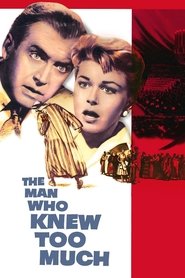
The Man Who Knew Too Much (1956)
Hitchcock's great trick is to hand you the dangerous knowledge and then make you sit with it. In the Royal Albert Hall sequence, a printed concert program becomes a countdown: you learn that a single cymbal crash is coming, and what it will be used to conceal, and then the music plays out nearly in real time while you suffer every bar. Notice how the suspense lives not in any deed but in what you know and can't stop knowing — the audience becomes a third character in the room.
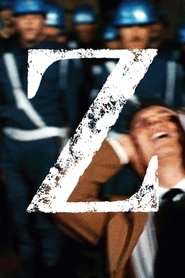
Z (1969)
A political killing staged to look like an accident — and Costa-Gavras stages the camerawork to feel like the crime itself. Raoul Coutard's handheld camera plunges into the crowd at ground level, cutting fast, deliberately denying you the clean overhead view that would let you say what you saw — just as every official will soon swear that nobody could possibly say what they saw. The image withholds the overview the way the state withholds the truth. This is the film that proved a political thriller could grip a mass audience, and half the movies on this list descend from it.
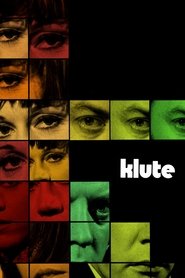
Klute (1971)
It opens with a sound: breathing on a tape, an intimacy converted into a weapon. Gordon Willis lights the film so darkly the lab panicked — half of every frame falls into absorbing black, doorways hold shadow, and the camera itself seems to stalk Bree Daniels along with her unseen listener. Watch where your sympathy actually goes: the detective gets the title, but the film belongs to the woman who knows she's being watched and must simply live inside that knowledge.
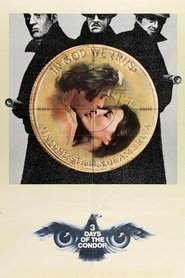
Three Days of the Condor (1975)
A junior CIA analyst — a reader, a man whose whole job is noticing things in books — steps out the back door for lunch and returns to a rearranged world. Pollack turns New York into a labyrinth of narrow sightlines: phone booths, staircases, service entrances. The dread comes from the gap between what this man can perceive (everything) and what he can push against (nothing with an edge). It's the wrong-man chase film remade for the Watergate era, where the pursuer has no face at all.
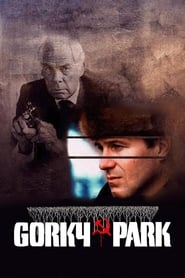
Gorky Park (1983)
Three bodies in the Moscow snow, their faces and fingertips removed so no one can ever say who they were — and the whole film is organized around that absence. Watch the quiet centerpiece: a professor rebuilding the dead's faces in clay, bone by bone, using a real Soviet forensic technique, filmed with flat, patient fascination. It's a thriller about restoring identity where power tried to erase it — shot, fittingly, in a surrogate Moscow, a Russia performed by Helsinki.
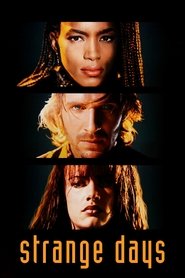
Strange Days (1995)
You don't watch this film's opening — you wear it. Bigelow built custom camera rigs to put you literally inside someone else's eyes, extending a lineage that runs back to Peeping Tom and Lady in the Lake, years before GoPros and bodycams made first-person vision ordinary. Notice the two distinct kinds of image: the grimy, neon-wet Los Angeles of the "real world," and the borrowed-eyes footage that asks what it means to buy, sell, and get hooked on someone else's experience. Few films implicate the viewer this directly in their own watching.
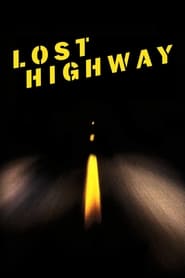
Lost Highway (1997)
Lynch and cinematographer Peter Deming photograph a house as a place of engulfing darkness — characters walk into blackness and simply dematerialize. Don't watch this for answers; watch how the film refuses the cut that would settle things: whether two women played by one actress are two people or one, whether what you're seeing is happening or being dreamed. It keeps the whole apparatus of noir — the femme fatale, the gangster, the surveillance — while removing motive and explanation. Let it stay strange; the strangeness is the point.
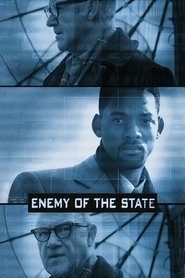
Enemy of the State (1998)
Tony Scott's masterstroke is mixing image formats until you feel the difference in your gut: clean, saturated 35mm for how Will Smith's lawyer sees the world, and grainy, crosshair-stamped satellite and CCTV footage for how the apparatus sees him. Watch for the overhead shot of a man reduced to a dot on a city block — nobody is holding that camera, and that's the horror. It deliberately revives the 1970s paranoia cycle (Gene Hackman's casting is a knowing wink at The Conversation) and updates it for the digital state.
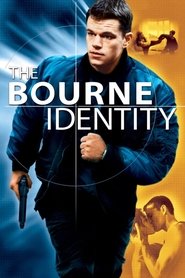
The Bourne Identity (2002)
The uncanny image at this film's heart: a man in a diner calmly cataloguing exits, license plates, and threats — and being frightened by his own inventory, because he doesn't know where the competence comes from. His body knows what his mind cannot reach. Notice how Oliver Wood shifts the camera's behavior: restless and searching in public spaces, still and warm in the few private moments — the visual style itself tells you when this man is a weapon and when he's a person.
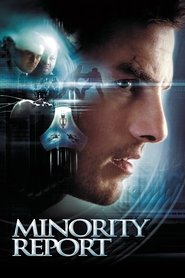
Minority Report (2002)
Spielberg's future D.C. is shot through a silver-retention process that drains the color to cold steel — a noir palette wearing science-fiction clothes. The film's truest image is a man before a wall of glass, conducting fragments of a crime that hasn't happened yet: he can sort, scrub, and read the images, but not yet act on them. Watch how detection here becomes an act of interpretation — the visions arrive out of order, like raw time, and must be deciphered rather than chased.
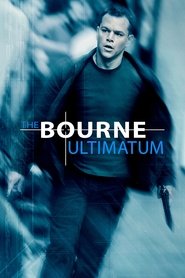
The Bourne Ultimatum (2007)
The famous restless camera — descended from The Battle of Algiers and Z — never fully settles, even in dialogue, as though the film itself can't stop scanning the room. But save your closest attention for the Waterloo Station sequence: three layers of seeing stacked on top of one another — a man on the ground, a control room full of monitors, and a third figure moving blind through the crowd. Almost nothing "happens" in the action-movie sense, and it's the most frightening passage in the film. The whole drama is conducted through eyes and earpieces.
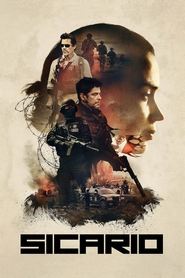
Sicario (2015)
Watch where Villeneuve keeps placing Emily Blunt's Kate: in a doorway as things start, in the back seat of a convoy that won't say where it's going, at the edge of the briefing where the real decisions get made. The film's entire argument is encoded in that blocking — a competent, clear-eyed agent who is made a witness to her own operation. Roger Deakins shoots the border landscape geologically, dwarfing human figures in vast desert frames, refusing the Western's mythic glow. It's a genre picture that quietly tears up the genre's contract: seeing everything, changing nothing.
Watched together, these twelve films form a single long conversation. Hitchcock hands the audience the bomb under the table; Costa-Gavras makes the camera lie the way the state lies; Pakula and Pollack build the 1970s out of shadow and dread; Scott and the Bourne films wire that paranoia into the digital grid; Bigelow and Spielberg ask what happens when vision itself becomes a technology you can record, sell, or scrub; Lynch and Villeneuve push it past the point where looking resolves anything at all. The through-line is a simple, unsettling question each film answers differently: what is the distance between seeing and doing — and who profits from that distance? Notice the cameras. Notice who has the overview and who is denied it. By the end, you'll never watch a surveillance shot — or feel yourself watching one — the same way again.