Sightlines · a mini film course
The Space Between Seeing and Doing: A Short Course in the Cinema of Watching
Spy movies are supposed to be about action — chases, fights, escapes. But line these twelve up and something stranger emerges: this is a genre obsessed with looking. With surveillance and being surveilled, with the trained eye that reads a room before anything happens, with the terrible gap between knowing something and being able to do anything about it. Some of these films close that gap at full sprint — see, decide, move, no hesitation. Others pry it open and make you live inside it. Watch them together and you're really watching a fifty-year conversation about attention itself: how a camera can chase, or compose, or simply stand and witness — and how each choice changes what a body on screen means.
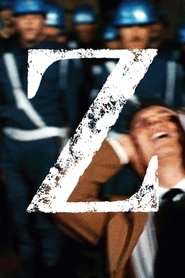
Z (1969)
The founding document. When violence erupts in a crowd, Costa-Gavras drops the camera down into the legs and the panic, cutting so fast you never get the clean overhead view that would explain everything — and that confusion is engineered, because the whole film is about officials who will swear nobody could possibly say what they saw. Notice how the image withholds the overview exactly the way power withholds the truth. Raoul Coutard shoots it with the fast, handheld, available-light energy of the French New Wave, put to furious political purpose.
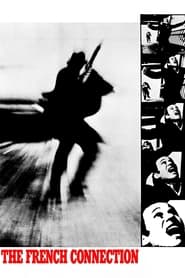
The French Connection (1971)
Watch the surveillance scenes, not just the famous chase. Friedkin builds his film out of small acts — a tail, a hunch, a wiretap — each one lighting up one more inch of a picture nobody can see whole. And watch for the moment a detective stands freezing on a sidewalk, eating cold pizza, watching his quarry dine behind restaurant glass: no dialogue explains it, the film just lets you stand on the cold side of the window. That trust in the viewer's eye is pure New Hollywood.
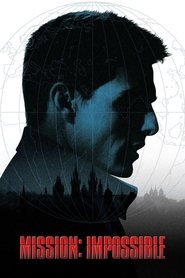
Mission: Impossible (1996)
De Palma's great trick, inherited from Hitchcock: tell the audience the rules in advance, then let silence do the rest. The vault sequence runs on almost no dialogue, yet you understand every stake — heat, sound, pressure, a single bead of sweat — because you know what the character risks. Notice the tilted frames whenever the hero's world destabilizes, and how masks and surfaces keep asking whether you can trust anything you're shown.
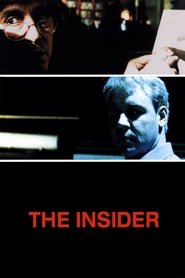
The Insider (1999)
The quietest thriller here, and maybe the most devastating formally. Mann takes the machinery of the journalism procedural — phone calls, documents, editorial meetings — and drains away the promise that knowing the truth lets you act on it. Spinotti's restless handheld long lenses isolate faces from dim, lamp-lit rooms, so the visual language itself feels like a man being slowly cut off from his own life. Watch for a hotel-room shot where a wall seems to dissolve into something only the character can see; hold onto it.
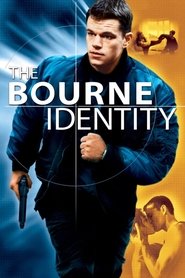
The Bourne Identity (2002)
The diner scene is the key to everything. A man who doesn't know his own name discovers he has already memorized the exits, the license plates, the potential threats — and he's frightened by his own competence, arriving from somewhere he can't reach. Notice how Oliver Wood's camera shifts registers: restless and searching in public space, quieter and stiller in moments of intimacy. The film asks what a self is when the body remembers what the mind cannot.
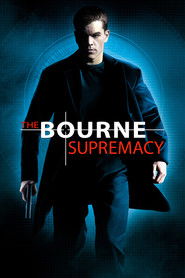
The Bourne Supremacy (2004)
This is where handheld camerawork becomes a thesis rather than a flourish. Greengrass, trained in British documentary, builds the entire film out of one man's scanning attention — long lenses smearing crowds into colored static, focus drifting and resettling — and makes you attend the way he does. Notice that you're never given the God's-eye view, because the character never gets one either. The frame chases the world instead of composing it.
Mission: Impossible III (2006)
Watch the architecture. Abrams opens on a moment of crisis torn from late in the story and bolts it to the front, then flashes back — so you spend two hours dreading what you've already glimpsed. It's a television showrunner's toolkit scaled to the big screen, and it's in the service of the series' most intimate question: what deception costs a shared life. The face-swapping masks aren't just gadgets here; they're the marriage's problem made literal.
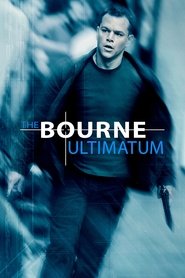
The Bourne Ultimatum (2007)
The Waterloo Station sequence is one of the great set pieces of modern cinema, and almost nobody in it throws a punch. Three layers of seeing stacked on top of each other — a man in a crowd, watchers on a wall of monitors, someone caught blind between them — with the score dropping away so earpiece chatter carries the drama. Notice that the camera is never still, even in dialogue: it drifts and reframes as though it, too, is surveilling. The whole film is conducted through eyes.
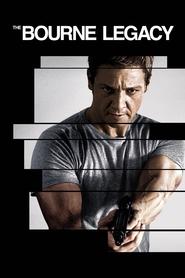
The Bourne Legacy (2012)
The fascinating counter-move. Gilroy hands the camera to Robert Elswit, who shoots with depth, stability, and readable geography — you can follow this body through space in a way you never quite could follow Bourne. And yet the film's opening image is its thesis: the most capable body in the movie, alone in the Alaskan wilderness, checking a rationed vial of pills. Capability, it suggests, is manufactured — and what's manufactured can be recalled.
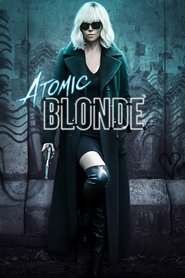
Atomic Blonde (2017)
The stairwell fight is the reason to come, and the reason to stay is why it works: the camera refuses to cut away from the cost. Built from concealed seams into an apparently unbroken take, it lets exhaustion accumulate on screen — the gun empties, the improvisation gets desperate, winning turns into merely outlasting, and you feel your own lungs. Notice, too, the color-blocking: cold blues for surveillance, hot pinks for danger, neon doing the work of narration.
Mission: Impossible — Fallout (2018)
Watch for the cut nobody was supposed to keep: on a London rooftop jump, Tom Cruise genuinely broke his ankle, and McQuarrie left the take in the film. That's the whole project in miniature — a real body at real risk inside the fiction, an argument that analog, physical stunt cinema still matters in a digital age. Rob Hardy's photography keeps every chase geographically legible: you always know where everyone is, which is precisely what makes the danger land.
Mission: Impossible — Dead Reckoning Part One (2023)
The old contract gets its most direct challenge: what happens to the man of instant action when the enemy is an intelligence that predicts what he'll choose before he chooses it? The title is the clue — dead reckoning is how sailors fixed their position with no landmark, purely from where they'd already been. Watch how the film stages its most breathtaking physical feat (a real motorcycle, a real cliff) as an answer: the leap nobody, human or machine, can fully calculate.
Why watch these together? Because they argue with each other. Z and The French Connection invent a grammar of urgent, ground-level looking; the Bourne films push it to its limit; Atomic Blonde and the later Mission: Impossible entries answer back with long takes, legible space, and bodies whose exhaustion the camera refuses to hide. De Palma trusts what you know; Greengrass trusts what you can barely glimpse; Mann shows you a man who knows everything and can say nothing. Every one of these films is secretly asking the same question: what is the distance between seeing the world and being able to change it? Watch for how each camera answers — whether it chases, composes, or simply witnesses — and a dozen thrillers become one long, thrilling argument about attention.