Sightlines · a mini film course
Seeing Through the System: Paranoia, Perception, and the Machinery of Power
There's a particular kind of thriller that isn't really about danger — it's about knowledge. Who has it, who's denied it, and what it costs to close the gap. The films gathered here, spanning six decades and several continents, are all preoccupied with the same uncomfortable territory: individuals who discover, usually too late and always at great personal cost, that the institutions around them are not what they appeared to be. Some of these films are propulsive and kinetic; others are slow, almost meditative. But all of them ask you to pay attention not just to what is happening, but to who can see it — and what seeing, or failing to see, does to a person.
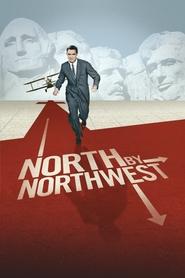
North by Northwest (1959)
Hitchcock's sun-drenched masterpiece is the ur-text for almost everything else on this list, and the thing to watch for is how carefully it manages what you know versus what the hero knows. Roger Thornhill spends most of the film chasing a person who doesn't exist — the gap between his frantic action and the invisible web of relations surrounding him is where all the suspense lives. Robert Burks's cinematography is worth studying for its dramatic shifts in scale: cramped Manhattan interiors give way to the radical, terrifying openness of the Indiana prairie, where a man in a gray suit has nowhere to hide and nowhere to run. Hitchcock gives you the full picture; his hero gets almost none of it. Sit with that asymmetry — it's the engine.
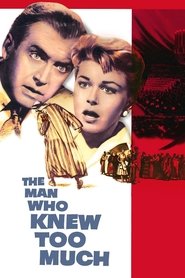
The Man Who Knew Too Much (1956)
Made three years before North by Northwest with many of the same collaborators, this is Hitchcock in a more intimate, more unsettling register. Where Thornhill is a comic hero who gradually grows into the situation, the McKennas are ordinary tourists for whom the espionage machinery is simply a catastrophe that lands on their marriage. Watch what Hitchcock does with the Royal Albert Hall sequence: he tells you, in advance, exactly where the danger is hidden in the music, and then makes you sit through every bar of it. Robert Burks shifts palette dramatically between the bleached-out Moroccan heat of the early sequences and the plush enclosure of the London concert hall — two kinds of trap, differently lit. Notice, too, how the film keeps measuring Ben and Jo's competence against each other. The spy plot is almost beside the point.
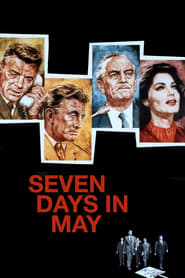
Seven Days in May (1964)
John Frankenheimer shoots this political thriller in crisp black-and-white with wide-angle lenses that do something quietly alarming: they keep the foreground and the far background in the same sharp focus simultaneously, so a face looming huge in front of you and a figure standing small across the room occupy the same plane of reality. There's no soft-focus refuge anywhere in the frame — the whole room is always watching. The film's drama is almost entirely verbal and procedural; its weapons are memoranda, phone logs, a mistress's letters. Watch how Frankenheimer makes paperwork feel like a countdown. Ellsworth Fredericks's deep-focus compositions make every institutional space — offices, corridors, hearing rooms — feel slightly off-balance, as if the architecture itself is under strain.

Chinatown (1974)
Roman Polanski lit Los Angeles in amber and dust — sunshine as menace, daylight as the place where terrible things happen in plain sight. John Alonzo's cinematography inverts everything classical noir taught you to expect: instead of rain-slicked streets and shadows concealing evil, here the California sun floods every frame and reveals nothing useful. Watch how the film handles J.J. Gittes's detective work as a series of quiet, confident procedural moves — each one executed with complete professionalism — and watch what happens to each disclosure. Notice the bandage on Nicholson's nose that he carries through most of the film. Polanski put it there deliberately, and it's worth thinking about what a damaged nose means for a man whose job is to follow his.
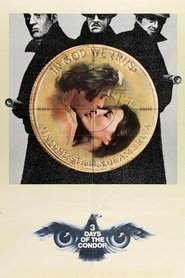
Three Days of the Condor (1975)
Owen Roizman's cinematography turns New York City into a labyrinth of narrow sightlines and dead ends — phone booths, service entrances, brownstone staircases, the constricting geometry of Manhattan streets. The opening sequence establishes a warm, ordinary workplace with the ease of a documentary; remember what that ease felt like, because the film is going to take it away from you completely and permanently. What's worth watching in Joe Turner is the specific shape of his helplessness: he's extraordinarily good at reading situations — noticing anomalies, making connections — and nearly useless at acting on what he reads, because every handhold the thriller normally provides keeps coming away in his hand. Sydney Pollack builds dread not from action but from the repeated failure of action to take hold.
The Parallax View (1974) — wait, that's not on the list. Let's continue.
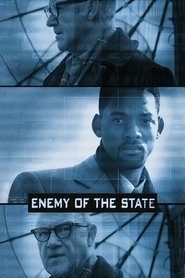
Enemy of the State (1998)
Tony Scott and cinematographer Dan Mindel build this film around a deliberately jarring mixture of image formats: clean, saturated 35mm principal photography cut against footage from satellites, traffic cameras, thermal scopes, and surveillance drones. Pay attention to the grain — it's doing argumentative work. The surveillance images have a slightly wrong, slightly inhuman quality because they genuinely aren't anyone's point of view. No character is looking through those lenses. The apparatus is looking, indifferently, from everywhere at once. When the film cuts between how Will Smith's character sees the world (partial, ground-level, panicked) and how the state sees it (from orbit, comprehensive, cold), that contrast between image textures is the film's whole thesis about power made visible as style.
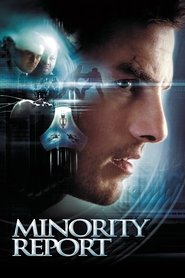
Minority Report (2002)
Janusz Kamiński overexposed the film and used a silver-retention process on much of it, draining the color and pushing the future-Washington palette toward cold blues and steel grays — a world that looks like it's been bleached of warmth along with crime. Watch the sequences where John Anderton works at his glass display wall, pulling and sorting fragments of future events with gloved hands: it's a strange image for a thriller, a man doing something that looks more like reading than acting. The film is genuinely interested in what it would mean to treat a vision of the future as evidence — how you'd assemble it, sequence it, argue from it. Notice how Spielberg frames the precogs' visions when we see them: fragmented, non-linear, looping back on themselves. They arrive as raw images to be deciphered, not instructions to be followed.
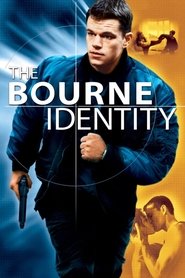
The Bourne Identity (2002)
Doug Liman and cinematographer Oliver Wood use handheld movement selectively rather than uniformly — the restless, searching camera marks moments of surveillance and urban anonymity, while the film's rare moments of stillness carry their own charged weight. The thing to watch for is Jason Bourne's relationship to his own competence: his body performs complex, lethal assessments of every room he enters, cataloguing threats and exits before his conscious mind has a chance to catch up. The film is very precise about the horror of that — he's frightened by his own inventory. This is what makes the amnesia more than a plot convenience: it's a way of staging the question of whether you are what you can do, or whether there has to be a self somewhere behind the actions that owns them.
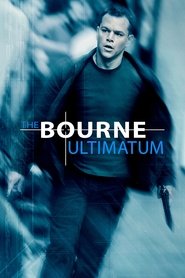
The Bourne Ultimatum (2007)
By the third film, Paul Greengrass and Oliver Wood have pushed the handheld vérité approach to its furthest point — the camera almost never fully settles, even in dialogue scenes, creating a persistent low-level sensation of surveillance and pursuit. The set piece to watch most carefully is the Waterloo Station sequence, which Greengrass stages as a puzzle of overlapping sight lines: one man watching from a control room through CCTV monitors, another man navigating the crowd below, a third person moving through it blind. Nobody fires a weapon. The entire sequence runs on the question of who can see whom, and the sound design — John Powell's score dropping away to leave only earpiece chatter — makes the act of listening feel as dangerous as being seen. It's the most purely architectural thriller sequence in the series.
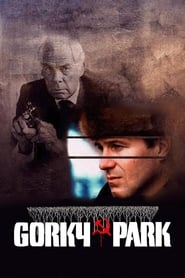
Gorky Park (1983)
Ralf Bode's muted, wintry palette — grey skies, sodium-lit interiors, the particular quality of Helsinki standing in for Moscow — does something important: it removes glamour from the Cold War geography entirely, leaving a world that looks bureaucratic and exhausted and cold in every sense. The film opens with an absence: three bodies in the snow with their faces and fingerprints removed, identity itself surgically excised. Watch the forensic reconstruction sequence — the actual Gerasimov technique, shot with documentary patience — as a kind of counter-argument to the killers' logic. The procedural method is almost meditative in its slowness. Arkady Renko's stubbornness in pursuing a case everyone above him wants closed is the film's moral center, and Bode keeps framing him in ways that emphasize his isolation within the institutional spaces he nominally belongs to.
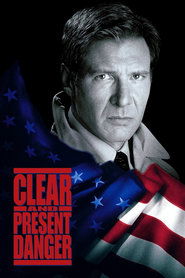
Clear and Present Danger (1994)
Donald McAlpine builds a visual grammar of contrast between the film's two worlds: Washington rendered in cool, controlled, shadow-edged light — wood-paneled offices, the blue dark of situation rooms — and the Colombian jungle sequences shot with more kinetic energy and heat. The film's most interesting tension is procedural rather than physical: watch how it treats the act of finding things out as genuine suspense. Jack Ryan at a keyboard, a progress bar crawling, two people effectively typing at each other across hemispheres — this is staged with the same deliberate tension as any action sequence, and it's worth thinking about why it works. The film is fundamentally about what it means to be the person in an institution who insists on following the rules everyone above him has quietly stopped following.
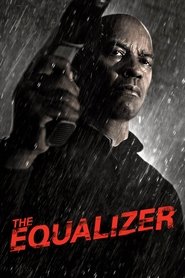
The Equalizer (2014)
Robert McCall's first act is almost perversely slow for a film in this genre. Mauro Fiore's camera is patient, holding Washington in static or slow-drifting compositions, finding him repeatedly behind glass — framed in the diner window, reflected in surfaces, separated from the world by a pane he won't yet step through. The visual grammar of the opening is the argument: here is a man who watches everything and acts on nothing, by choice, by will, by discipline. Notice the ritual precision of his table arrangement, the timed tea steeping, the squared book. This isn't characterization decoration — the film is proposing that the rituals and the violence come from the same source, that both are forms of absolute control over the immediate environment. Watch how Fuqua's camera changes when McCall finally moves. The stillness was deliberate, and so is its ending.
Watching these films together, something emerges that no single film makes quite so clearly on its own: the spy thriller and the paranoid conspiracy film are not really about plots and counterplots. They're about the gap between what a person can perceive and what they can do about it — and the different ways that gap can be opened, exploited, or closed. Hitchcock hands you information and makes you suffer knowing it. Polanski gives his detective every tool and rigs the situation against their use. Greengrass turns the act of looking into the action itself. These are films that reward a particular kind of attention: not just what happens next, but who knows, who's watching, and what seeing costs.