Sightlines · a mini film course
Watchers, Watched: Twelve Thrillers About the Distance Between Seeing and Doing
Every film in this set is, in one way or another, about looking — who gets to look, who is being looked at, and the terrifying space between noticing something and being able to do anything about it. Some of these movies put you behind surveillance monitors; some trap you inside the head of a person who knows too much and can act too little; some simply let a face fill the screen while a decision slowly assembles behind it. Watched together, they form a sixty-year conversation about paranoia as a visual condition: the sense that the world is a room full of eyes, and that knowledge itself can be the heaviest thing a person carries.
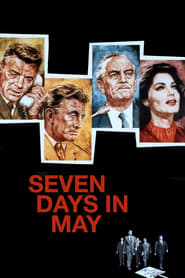
Seven Days in May (1964)
Frankenheimer and cinematographer Ellsworth Fredericks build the whole film out of black-and-white deep focus: a face looms huge in the foreground while, far behind it, another figure stands small but perfectly sharp — two distances, one quarrel, held in a single frame. Notice how rarely the camera cuts to tell you who is dangerous; the composition has already told you. And notice the weapons of this thriller: not guns but documents, phone logs, scraps of paper. A tiny disclosed detail keeps opening onto a much larger hidden picture.
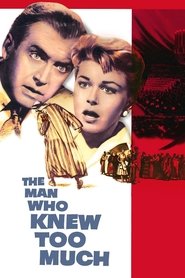
The Man Who Knew Too Much (1956)
Hitchcock's great trick is to hand you the knowledge his characters lack, then make you sit with it. The Albert Hall sequence — built around a printed musical score and a single cymbal crash — runs in near real time, and the music itself becomes a ticking clock. Watch how suspense here has nothing to do with action and everything to do with what you know while being unable to move. Also worth watching: the marriage underneath the espionage, which is where the film's real tension lives.
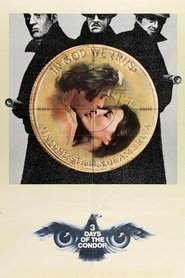
Three Days of the Condor (1975)
A junior CIA analyst — a reader, whose whole job is noticing things in books — steps out for lunch and comes back to a rearranged world. Owen Roizman shoots New York as a labyrinth of narrow sightlines: staircases, phone booths, service entrances. The film's dread comes from a simple imbalance: its hero can perceive beautifully but has nothing solid to push against. Every familiar handhold of the spy movie comes away in his hand.
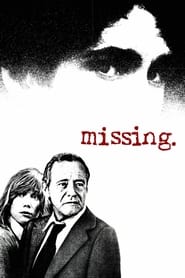
Missing (1982)
Costa-Gavras, the inventor of the modern political thriller, runs suspense on disclosure rather than chases: each interview, each requested document, reveals one more piece of a picture someone wants hidden. Watch the two visual registers — a mobile, embedded camera for the search through crowds and stadiums, and a colder restraint for the machinery of bureaucracy. The film's grief and its detective work are the same activity.
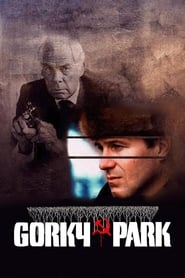
Gorky Park (1983)
Three bodies in the snow, deliberately made unidentifiable — the whole film is organized around that absence, and around the patient, documentary-fascinated labor of restoring faces to the dead. Watch the sequence where a skull is rebuilt in clay, bone by bone: the procedural literally manufactures a human face, and a feeling, where someone tried to erase both. Ralf Bode's wintry palette turns Helsinki into a persuasive Moscow — a story of Russia made entirely without Russia.

The Postman Always Rings Twice (1981)
Bergman's great cinematographer Sven Nykvist lights this Depression roadhouse with plain, diffused daylight, and that choice is the whole film: appetite for bread, appetite for the body, appetite for escape, all filmed as one continuous hunger. This is a thriller driven not by plans but by drives — the dumb pull toward ruin. Watch how desire and economics are never separable; wanting someone and wanting a different life are the same wish.
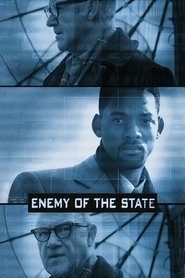
Enemy of the State (1998)
Tony Scott mixes film formats on purpose: clean, saturated 35mm for the hero's embodied, panicked point of view, and grained, degraded video for the satellite and camera feeds that see him from above. Notice that those surveillance images belong to no one — no hand holds that orbiting camera. The texture of the image is the argument: this is how you see, and this is how the apparatus sees you.
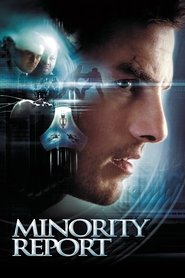
Minority Report (2002)
The film's truest image is a man in front of a wall of glass, conducting fragments of a crime that hasn't happened yet — watching, sorting, reading, unable to act. Spielberg and Janusz Kamiński drain the color with a silver-retention process, crushing the future into cold blues and steel grays: noir texture on science fiction bones. Watch how detection becomes an act of reading — images that arrive out of order and demand to be deciphered rather than chased.
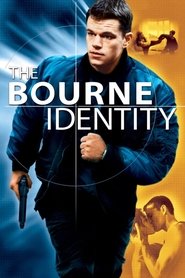
The Bourne Identity (2002)
The uncanny heart of this film is a man watching his own competence arrive from somewhere he can't reach — cataloguing exits and threats in a diner and being frightened by his own inventory. Oliver Wood's camera shifts registers to match: restless and searching in public space, quietly still in the rare moments of human connection. The body knows; the self doesn't. That gap is the movie.
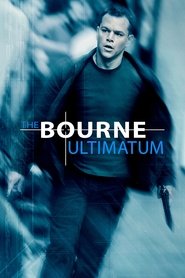
The Bourne Ultimatum (2007)
Here the handheld style reaches its fullest expression — the camera almost never rests, drifting and reframing even through dialogue, an inheritance from pseudo-documentary political cinema of the '60s. Watch the Waterloo Station sequence: three layers of seeing stacked on top of each other, a whole drama conducted through eyes, earpieces, and CCTV monitors, with hardly a shot fired. Notice how the score drops away and surveillance chatter fills the silence.
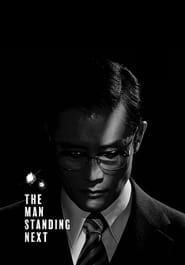
The Man Standing Next (2020)
A Korean political thriller built almost entirely on a face that does almost nothing — a flicker at the jaw, a held glance — as a man formed by an authoritarian apparatus calculates something he can't say even to himself. Jo Young-jik's compressed, desaturated palette (amber interiors, cold blue nights) refuses period-film nostalgia. Watch the two-men-across-a-table scenes, where power transfers through posture and eyeline rather than dialogue.

Relay (2025)
Mackenzie builds a thriller whose suspense engine is not a gun or a clock but a delay: a fixer who communicates only through an anonymous relay service, every message passing through an intermediary, every reply arriving as text read in silence. Watch the pause itself — the film lives inside it. Compositions frame the protagonist through glass and across streets, so you're constantly placed as someone watching, or being watched, and his anonymity registers as both armor and solitude.
Watched together, these films teach you to read the screen the way their characters read the world — nervously, closely, alert to what's in the corner of the frame. You'll see one grammar of paranoia passed hand to hand across six decades: deep-focus rooms give way to handheld crowds, printed documents give way to satellite feeds, but the fundamental situation never changes. Someone sees something. Someone is seen. And in the gap between knowing and acting — the gap every one of these films stretches, weaponizes, or mourns — is where the real suspense lives. Start anywhere; by the third film you'll notice you've started watching differently.