Sightlines · a mini film course
The Watcher and the Runner: Spy Cinema's Great Divide
Every spy film makes a quiet decision before the first frame: is this a story about doing or about seeing? Some of these films are machines of pure motion — a scream becomes a train whistle, a glance becomes a gearshift, and the hero converts every danger into an escape before you can blink. Others do something stranger: they take a capable person, show them everything, and then hold them just short of being able to act on it. The camera watches rather than chases; space becomes a trap; time is allowed to stretch. This dozen spans the whole spectrum, from the fastest chase pictures ever cut to films where the most gripping thing on screen is a man listening to a tape. Watch for where each one sits on that line — and notice how often the most suspenseful moment is the gap between noticing a threat and being able to answer it.
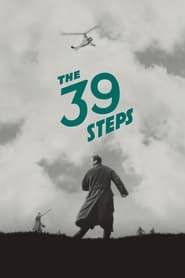
The 39 Steps (1935)
This is the fountainhead: the innocent man on the run, invented at full sprint. Watch how Hitchcock refuses to let anything sit still — the famous cut where a landlady's scream becomes a train whistle yanks you three hundred miles in a single frame. Notice too the atmosphere he borrows from German shadow-cinema for the film's darker corners, and how romance and comedy get fused to the chase at a tempo the genre never forgot.
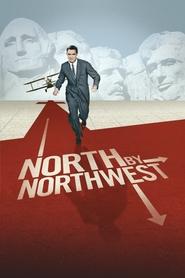
North by Northwest (1959)
Here Hitchcock's great trick is that you almost always know more than the hero does — your knowledge is the suspense engine. Watch how Robert Burks's photography shifts registers: cramped Manhattan interiors, the formal geometry of the UN, then the terrifying openness of the prairie, where a man in a gray suit stands exposed on a flat horizon with nowhere to hide. The film's deepest joke is about identity: an ad man who manufactures images for a living gets trapped inside an identity someone else invented.

The Conversation (1974)
The opposite pole: a film about a man whose entire life is watching and listening, and who almost never acts. Notice the opening — a long lens high above a crowded square, picking out a couple for reasons you don't yet know — and how it makes you complicit in the surveillance before a word is explained. Coppola frames Harry Caul behind frosted glass, at the edges of rooms, a master technician whose expertise resolves nothing. Ask yourself, all the way through, what listening this closely costs.
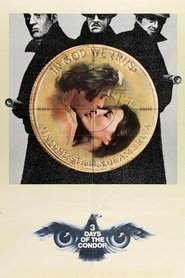
Three Days of the Condor (1975)
A reader, not a fighter: the hero's job is literally noticing patterns in books, and the film's dread comes from the distance between what he can perceive and what he can push against. Watch how Roizman shoots New York as a labyrinth — phone booths, staircases, narrow sightlines — and how every familiar handhold of the thriller (call your handler, trust the badge) is made to feel unreliable. It borrows Hitchcock's wrong-man structure and drains it of glamour, replacing it with 1970s institutional suspicion.
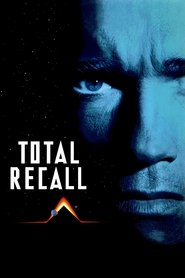
Total Recall (1990)
Verhoeven builds a film where two mutually exclusive explanations of what you're watching are both coherent — and he keeps them running in parallel. Watch for the hotel-room scene with the red pill, shot so evenly that you genuinely cannot tell who's telling the truth. Vacano's restless handheld camera (honed in the corridors of Das Boot) keeps the ground unstable under your feet, which is exactly the point.
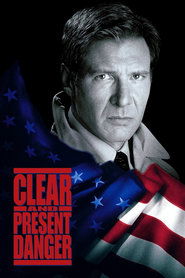
Clear and Present Danger (1994)
Notice how this film generates action-movie tension out of information: one of its most gripping sequences is two people typing at each other — a file being copied while it's being deleted. McAlpine's photography splits the film into two lit worlds, cool shadowed Washington offices versus the harsh brightness of the field, and the real battle runs between them. It's a film about accountability, where the legal phrase of the title gets quietly turned back on the institutions that use it.
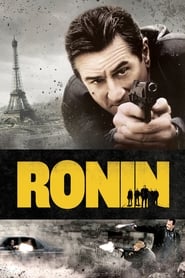
Ronin (1998)
Frankenheimer, who invented modern speed-photography on Grand Prix, delivers car chases through Nice and Paris with real vehicles at real velocity — and cuts them for coherence, never confetti, so you always know where hunter and hunted stand. Watch the briefcase everyone bleeds for: the camera shows you exactly who controls every room, and never what's in the case. That withholding is the film's whole argument about men whose codes have outlived their masters.
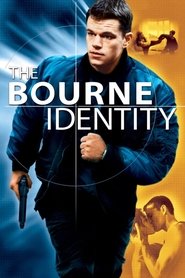
The Bourne Identity (2002)
The uncanny center of this film is a man watching his own competence arrive from somewhere he can't reach — in a diner, he inventories exits, plates, threats, and is frightened by his own fluency. Watch how Oliver Wood's camera splits registers: restless, searching handheld in the surveillance passages, unexpected stillness in the quiet exchanges between Jason and Marie. Shot on real European locations rather than backlots, it inherits the cold, institutional-betrayal mood of the great sixties spy pictures.
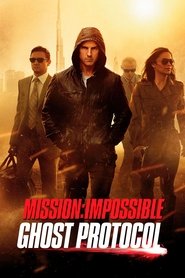
Mission: Impossible – Ghost Protocol (2011)
Brad Bird hired Robert Elswit — Paul Thomas Anderson's cinematographer — to shoot a stunt picture, and it shows: wide, clean frames that hold the performer and the hazard in the same shot. Watch the running gag of gadgets that fail at the worst moment: every malfunction pries open that gap between seeing danger and answering it, and suspense pours into the stutter. It's a comedy of a body that has to decide, half a mile up on real glass.
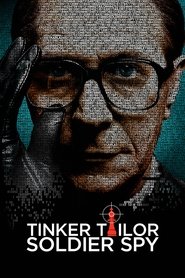
Tinker Tailor Soldier Spy (2011)
The purest watcher's film in the set. Smiley reads files, listens to tapes, remembers a party — and it's gripping, which is the puzzle worth sitting with. Van Hoytema frames everyone through glass, doorways, and partitions, a secret service turned inward on itself, and Oldman plays stillness so precisely that a flicker behind the spectacles becomes an event. Let its slowness work on you; it's the anti-glamour tradition at its most refined.
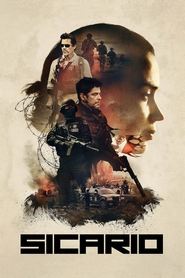
Sicario (2015)
Watch where Villeneuve puts Kate Macer: in doorways as things start, in back seats of convoys that won't say where they're going, at the edge of briefings where the real plan is decided elsewhere. The film's whole argument is in that blocking — a competent, clear-eyed agent who can change nothing. Deakins shoots the border landscape geologically, dwarfing human figures without romanticizing the space, and the dread accumulates through what you're only permitted to watch.
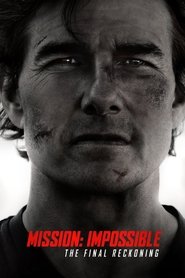
Mission: Impossible – The Final Reckoning (2025)
The endpoint of the practical-stunt tradition: a real hand on a real strut of a real biplane, against a villain — an AI — whose entire nature is fabrication. The film stages a duel between a body that cannot be faked and an enemy made of faked images. Watch how Taggart's photography splits between the confined, eerie low light of the deep and the vertiginous openness of the air, twin descendants of the series' oldest suspended-body set pieces.
Watched together, these twelve films become a conversation about the same question asked at different speeds. The runners — Hitchcock, Frankenheimer, Bird — show you how thrilling it is when seeing flows instantly into doing, and how much craft it takes to keep that current legible. The watchers — Coppola, Alfredson, Villeneuve, Pollack — show you what happens when that current is interrupted: when a person perceives everything and can act on almost none of it, and the film asks you to sit inside that helplessness with them. And the strangest films here — Bourne's body remembering what his mind can't, Quaid unsure which life is his, Thornhill wearing a name that doesn't exist — suggest the genre's deepest worry: that identity itself might just be a set of trained reflexes and borrowed stories. Watch for doorways, thresholds, glass, and hands. Watch for who gets to act and who only gets to see. Once you notice the divide, you'll see every thriller you watch afterward taking a side.