Sightlines · a mini film course
Twelve Ways to Steal: The Heist as a Machine for Watching People
Every film in this set is built around a plan — a job, a score, a scheme — and every one of them knows that the plan is never really the point. The heist is cinema's most honest genre: it's about competence you can see, work performed under a clock, and the gap between what people intend and what the world does to them. Watch these twelve films together and you'll notice the same drama returning in different clothes: control colliding with chance, identity worn like a disguise, and the moment when the machinery of action — plan, execution, getaway — hesitates, stalls, or gets hijacked by something wilder underneath. Some of these films run the machine at full polish. Some slow it down until you can hear it think. And some let something feral crawl up through the floorboards.
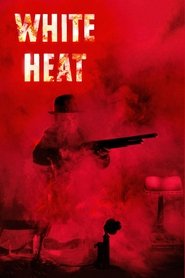
White Heat (1949)
Start here, with the genre at its fault line. Raoul Walsh stages the daylight procedural material with documentary crispness, then plunges the prison interiors and hideouts into deep noir shadow — two visual languages in one film. Watch Cagney: the film keeps asking whether this is a man who acts or a man who erupts, a professional criminal or a creature of raw compulsion barely held together by his bond with his mother. The famous prison mess-hall scene — news traveling down a long table like a current through water — is worth savoring shot by shot: nobody in the room does anything except watch a man come apart, and the camera rides the shock outward.
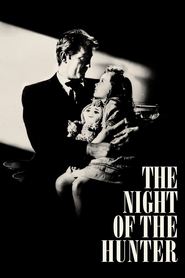
The Night of the Hunter (1955)
Charles Laughton, an actor directing his only film, understood that a predator is scariest not as a psychology but as a shape. Stanley Cortez's photography — the lineage runs straight back to German Expressionism, Nosferatu's looming silhouette, Sunrise's moonlit dream-spaces — builds the film out of enormous shadows, storybook tableaux, and images that think the way a frightened child thinks: too large, too clear. Notice how the Depression-era town feels like a thin crust over something primal and fairy-tale dark, and how the casting of silent-film icon Lillian Gish deliberately summons an older, more innocent American cinema to stand against the darkness.
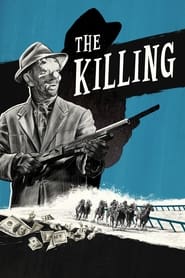
The Killing (1956)
Kubrick's heist is a model of rational design — and so is the film itself, which scrambles chronology and replays the same window of time from multiple angles, a structure inherited from The Killers and Citizen Kane. Watch the tension between the plan's clockwork and everything the clockwork can't account for: resentments inside a marriage, a stranger's prejudice, sheer dumb accident. Note too the deep-focus, wide-angle tracking shots gliding through cramped apartments — Kubrick famously overruled his veteran cinematographer to get exactly the lens he wanted. The film's whole subject is control versus chance, and its own tidy structure is part of the argument.
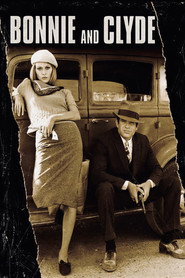
Bonnie and Clyde (1967)
The film that cracked Hollywood open. Penn takes the outlaw-couple tradition and shorts out its circuitry: robberies that fumble, a bank with no money in it, editing (Dede Allen, channeling Godard's jump cuts) that refuses to settle into the genre's usual rhythms. Watch the tonal whiplash — sun-bleached comedy pivoting into sudden brutality — and watch the gang stop mid-crime-spree to pose for photographs. This is a film about people who would rather become an image than stay alive, and the gap between their legend and their squalid, frightened reality is where all the feeling lives.
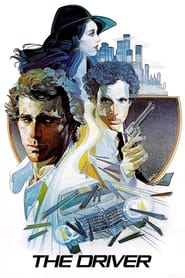
The Driver (1978)
Walter Hill strips the getaway thriller down to near-allegory: no proper names (the Driver, the Detective, the Player), almost no dialogue, Los Angeles photographed as a depopulated nightscape of wet asphalt and parking garages. The debt is to French crime cinema — Melville's silent professionals defined entirely by ritual and craft. Watch the early scene where the Driver proves his skill to skeptical clients by methodically demolishing their car, one concrete pillar at a time: the act stands in for speech. And notice how legible the chase geography stays — you always know where the cars are and why a maneuver works. Competence here is something you watch, not something you're told about.
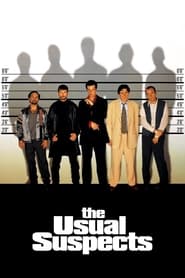
The Usual Suspects (1995)
Everything you see may be testimony. The film's structure descends from Double Indemnity's confession-to-an-authority-figure and Hitchcock's Stage Fright, which first dared to film a narrator's account as if it were fact. Notice the visual split: the interrogation room is a deliberately drab, bureaucratic white box, while the flashbacks it generates are baroque, shadowed, fully scored — the film gives a spoken story all the sensory authority of reality. That's the game. Pay attention to how identity is performed here — posture, voice, weakness — and to what visual cues you find yourself trusting, and why.
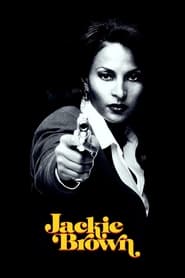
Jackie Brown (1997)
Tarantino's most patient film. The opening shot holds on Pam Grier gliding along an airport travelator, doing nothing, for far longer than any thriller would dare — and that hold is the film's whole philosophy. The camera is observational, almost anthropological, tracking characters through the unglamorous corridors of a Torrance shopping mall. Watch how Jackie, squeezed from every side, can't act her way out of her predicament with any single decisive move; she can only watch, wait, and measure people. Her weapon is being underestimated, and the film honors that as accumulated skill, not trickery. The Bobby Womack song bookending the film is a direct citation of the blaxploitation tradition the film lovingly inherits.
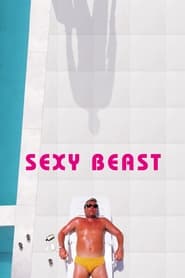
Sexy Beast (2001)
The art-cinema wing of the British gangster cycle. Jonathan Glazer shoots the Spanish sun so hard it becomes oppressive — flesh like leather, sky bleached white, paradise as a place with nowhere to hide. Hold onto the opening image of a boulder crashing unbidden into a swimming pool: the whole film is in it — the savage thing that was always up the hill, arriving in paradise. Watch how menace here works through domestic space and implication (the lineage runs to Losey and Pinter's The Servant), and how the film splices realism with dream-images of dread. The question underneath: can a man ever actually shed the world that made him?
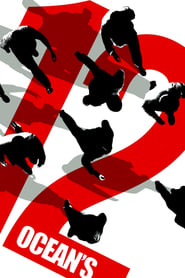
Ocean's Twelve (2004)
The caper turned inside out. Soderbergh — shooting under his pseudonym "Peter Andrews," cutting as "Mary Ann Bernard" — deliberately breaks the heist genre's contract: instead of showing you the plan and letting you watch reality click into its shape, he withholds, digresses, and quotes. The style is pure late-60s European crime cinema: long lenses, sudden zooms, jump cuts, each city color-tagged with its own filtered palette. Watch the famous sequence where a movie star plays a thief who plays a movie star — a con made not of lies but of truth, with no way to slide a knife between the two. Identity as disguise is the film's real subject; the theft is almost a pretext.
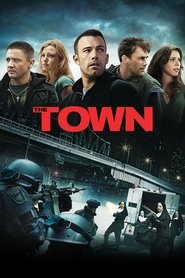
The Town (2010)
Ben Affleck opens on a ritual of erasure — the crew bleaching every surface after a job, no swagger, pure housekeeping — and that's the manifesto: crime as skilled labor, competence as the only glamour. Robert Elswit (who shot Heat, and it shows) calibrates two registers: granular handheld immediacy for the robberies, and something steadier for the life around them. But the real subject is the neighborhood itself. Watch how Charlestown functions as a closed system — loyalty enforced by proximity, criminal vocation inherited rather than chosen, departure treated as betrayal. The place presses on the man until something has to give.
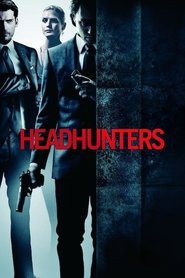
Headhunters (2011)
Nordic Noir running Hitchcock's machinery at full throttle. The school here is The 39 Steps and North by Northwest: an imperfect civilian trapped in an impossible situation, surviving through improvisation, with innocuous early details planted like time bombs. Watch how the first act's gleaming surfaces — corporate lobbies, an oversized house, a too-perfect breakfast table — are shot with an aspirational clarity that is itself a performance, and then watch how thoroughly the film strips its curated man down to a scrambling animal. The camera's refusal to flinch, even at the film's most abject moments, is the point: catastrophe played simultaneously as horror and black comedy, in the Blood Simple tradition.
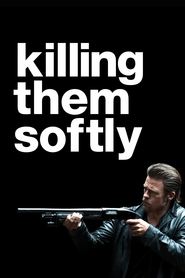
Killing Them Softly (2012)
The gangster film by negation. Where the heist genre celebrates competence, Dominik gives you men who are underpaid, squeezed by middlemen, and complaining about it across cramped two-shot tables — talk, not action, is the real transaction here. The lineage is The Friends of Eddie Coyle: gangsters as weary tradesmen. Then notice what happens when violence does arrive: one killing is staged in luxuriant slow motion, rain and glass and a pop standard on the soundtrack, held so long it turns into something you're meant to feel queasy about admiring. The underworld here runs exactly like a market — confidence, panic, enforced discipline — and the film wants you to notice the resemblance.
Why watch them together? Because this set is secretly a conversation across sixty years about the same question: what happens when the plan meets the world? Kubrick's clockwork and a gust of wind; Hill's wordless professional and Dominik's grumbling tradesmen; Hitchcockian traps in Oslo and Melvillean cool in Los Angeles; narrators you can't trust and cameras that refuse to look away. Watch for the moments when action pauses — a held shot, a photograph posed for, a woman standing still on a moving walkway — because that's where each film shows you its real hand. The heist gives every one of these directors the same clean machine. What each one does to it — polishes it, slows it, breaks it, lets something animal loose inside it — is a signature. By the twelfth film, you'll be reading those signatures on sight.