Sightlines · a mini film course
The Best-Laid Plans: Crime Cinema and the Art of Watching Things Come Undone
Every film in this set is, at heart, about competence meeting the world — careful men (and one careful woman) who build plans, alibis, identities, retirements, empires, and then discover that the world has other ideas. A stray dog, a jammed elevator, a hummed tune, a boulder rolling downhill into a swimming pool. What connects these twelve films isn't just their shared underworld of heists, hitmen, and crooked cops. It's a way of making movies about control and its limits: cameras that watch rather than chase, plans laid out with clockwork clarity precisely so we can feel them tick, and small objects — a suitcase latch, a white card, a chalked X — given the weight of verdicts. Watch how these filmmakers use light, duration, and the placement of the frame to tell you things the characters can't see. That's the course.
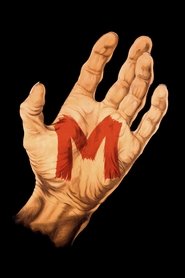
M (1931)
Fritz Lang teaches the founding lesson: what a film withholds can hit harder than what it shows. Watch how he uses empty spaces and abandoned objects — a ball, a balloon caught in wires, a mother calling up a stairwell — to make you assemble what the frame refuses to depict. Notice, too, the whistled tune: Lang, at the dawn of sound cinema, realized a melody could announce a presence before any face appears, turning your own ears into an alarm system. Shot by Fritz Arno Wagner (of Nosferatu), the film keeps Expressionism's shadows but cools them into something more like documentary — the city itself becomes the main character.
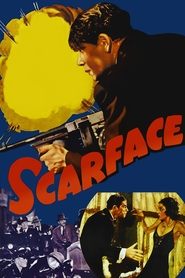
Scarface (1932)
Howard Hawks and cinematographer Lee Garmes hide a game in plain sight: an X — in rafters, in signage, chalked on walls — slides quietly into the frame whenever death is near. You don't have to consciously spot it for it to work on you, which is the point: it makes the whole city feel marked, fated. Watch Paul Muni play Tony Camonte not as a businessman but as pure appetite — grinning, grabbing, never deliberating — and notice how Garmes's pools of hard light against deep black anticipate the entire look of film noir a decade early.
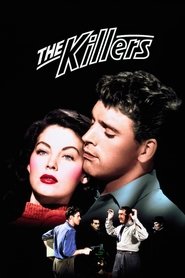
The Killers (1946)
The film opens with something crime movies almost never allow: a man who knows the killers are coming and simply waits. Hold on that stillness — the whole film is an autopsy of it, reconstructing a dead man's life through non-chronological, multiple-witness flashbacks (a structure borrowed from Citizen Kane). Watch Woody Bredell's lighting, some of the most aggressive in all of noir: hard light raking down onto diner counters while faces sink into shadow, rooms lit like coffins. Siodmak's Weimar training shows in every geometric shadow.
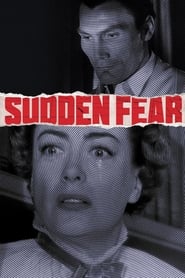
Sudden Fear (1952)
The centerpiece here is a listening scene: a woman alone in a dark room, hearing something she was never meant to hear, and Charles Lang's Oscar-nominated camera holds on Joan Crawford's face as it travels a whole arc — contentment, horror, cold calculation — nearly wordless. Watch how the film's photography changes register on you: the warm, open San Francisco courtship of the first half slowly darkens into deep shadow and oppressive interiors. And notice the elegant premise: an actor and a playwright married to each other, in a story about whether feeling is genuine or staged.
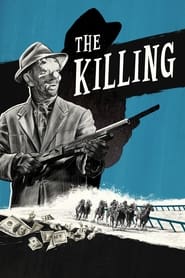
Rififi's American cousin — The Killing (1956)
Kubrick builds a heist film like a clock and lets you admire the gears. Watch the structure itself: the timeline is deliberately scrambled, doubling back to show the same stretch of racetrack afternoon from different men's positions, with a narrator imposing tidy chronology on events that resist tidiness. Watch also the camera physically tracking sideways through apartment walls in deep-focus wide-angle — Kubrick famously overruled his veteran cinematographer Lucien Ballard to get the lens he wanted. The film's real subject is the collision between a perfect plan and everything a plan can't include.
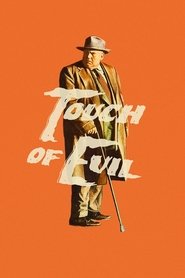
Touch of Evil (1958)
It opens with one of the most famous shots ever made: a bomb goes into a car trunk, and the camera lifts off the ground and follows for three unbroken minutes over rooftops, through traffic and neon and drifting music, binding a whole border town into a single breathing motion. Then watch what Welles does with proximity: instead of cutting, he and Russell Metty stage scenes in sustained wide-angle takes where actors move toward and away from the lens, faces swelling grotesque in the foreground, ceilings pressing down from low angles. This is noir pushed to its outer limit — every element of the style exaggerated into something operatic.
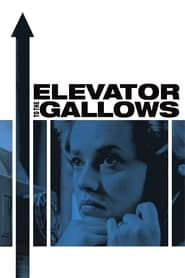
Elevator to the Gallows (1958)
Louis Malle's debut runs on a beautiful irony: a soldier plans a murder with tactical precision, and then a watchman flipping a light switch on his way home undoes everything. Watch how Henri Decaë's photography splits into two registers — controlled, hard-edged shadow for the confined spaces (the elevator, the office), and something looser and more alive for the Paris night outside. Notice how every modern convenience — car, elevator, camera — turns into a trap for its user. Made just before the French New Wave, on real streets instead of studio sets, it's a film impatient with artifice.
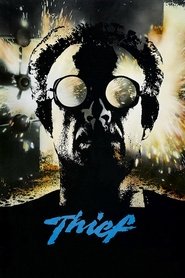
The Friends of Frank — Thief (1981)
Michael Mann shoots a safecracker the way you'd shoot a master craftsman: real tools, real heat, real duration, a thermal lance throwing fountains of white sparks against steel while a Tangerine Dream synthesizer pulse keeps time. Watch the film's nocturnal grammar — wet streets that return light, neon smearing across asphalt and car hoods, deep blacks against saturated color — a visual language Mann would refine for decades. And watch the tension between the film's obvious love of competence and its harder question: what is being superb at your job actually worth?
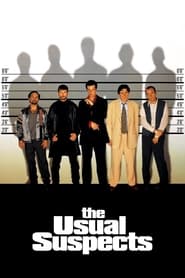
The Usual Suspects (1995)
The whole film is narration — a man in a deliberately drab, fluorescent-lit interrogation room telling a story, which the film renders as fully lit, fully scored, fully convincing flashbacks. Watch the contrast Newton Thomas Sigel builds between that stripped, bureaucratic white box and the baroque atmosphere of the story being told inside it. Watch, too, how identity is performed: the film is fascinated by which visual and behavioral cues we trust when we decide who someone is. Its lineage runs through Double Indemnity's confession-to-an-authority-figure and Rashomon's equal photographic weight given to contradictory accounts. Trust nothing. Enjoy everything.

Sexy Beast (2001)
Jonathan Glazer opens with a boulder crashing unbidden into a retired criminal's Spanish swimming pool, and the whole film is in that image: the savage thing that was always up the hill, coming down into paradise. Watch Ivan Bird's two-register photography — exteriors deliberately overlit, flesh turned to leather, luxury made oppressive under glare, because paradise here means exposure, nowhere to hide. Then watch what happens when Ben Kingsley's Don Logan arrives and a sun-drenched villa becomes a pressure chamber, power reorganized through implication and silence in the tradition of The Servant.
Killing Them Softly (2012)
Andrew Dominik takes the gangster picture and drains the romance out — then stages one murder with such slow-motion, rain-jeweled, pop-scored beauty that it's meant to make you slightly sick at being moved. Watch that tension: violence displayed rather than deployed. Greig Fraser's desaturated, bilious palette — wet asphalt, sodium light, institutional greens — traps weary men across tables in cramped two-shots, because talk is the real transaction here. The underworld runs exactly like a market: confidence, panic, enforced discipline. Everyone complains about being underpaid.
The Batman (2022)
Greig Fraser again — and watch what he carries forward: a blockbuster famously underlit by blockbuster standards, near-monochrome darkness cut with sodium orange and blood red, faces falling into shadow in the tradition of The Godfather's "Prince of Darkness" lighting. Watch how Reeves builds the film on watching: everyone in Gotham is under observation, and the hero is simply the most patient observer of all. The Riddler's cipher-laden crime scenes, addressed directly to the detective, make you a co-investigator — you decode over Batman's shoulder, in the lineage of Zodiac and Se7en rather than the action set-piece.
Why watch them together? Because they form a ninety-year conversation. Lang's whistled tune becomes the Riddler's white card; Kubrick's clockwork heist becomes Mann's thermal lance; Welles's roving crane shot and Siodmak's shadow-carved faces flow forward into Fraser's underlit Gotham. Watched in sequence, you'll start seeing the inheritances — the tracking shots, the marked frames, the plans laid out lovingly so their unraveling can devastate — and you'll start noticing how each film earns its dread: through duration, through light, through what the camera refuses to show. These are films about people who thought they had accounted for everything. The pleasure of watching them, together, is learning to spot the thing they missed — usually seconds before they do.