Sightlines · a mini film course
The Camera on the Shoulder: Twelve Films About Bodies, Places, and What It Costs to Get Out
What connects this watchlist isn't a genre — it's a way of looking. In almost every one of these films, someone is boxed in: by a neighborhood, a family, a job market, a motel, a marathon dance floor. And in almost every one, the filmmakers decide that the most honest way to show that is not through speeches or plot mechanics, but through proximity — a camera that rides inches from a person's neck, or watches a body dance, run, scrub, and wait, or frames a place so tightly that the geography itself starts to press on the people inside it. Watch these films for how they use the frame as a wall, the body as a language, and place as a character. The dialogue is often the least important thing on screen.
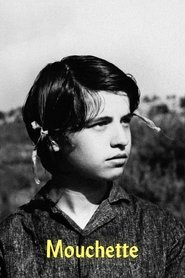
Mouchette (1967)
Bresson is the ancestor of half the films on this list, and here his method is at its purest: non-professional performers stripped of theatrical emotion, a steady black-and-white camera that isolates hands and gestures rather than faces emoting. Notice how much of the film arrives through sound — noises from off-screen carry as much story as the images do. Watch how often the film simply holds on a girl watching, and how that patience makes small acts (a bumper-car ride, a shared glance) land with enormous force.
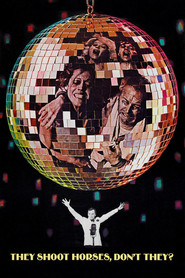
They Shoot Horses, Don't They? (1969)
Pollack locks you inside one seaside ballroom for a Depression-era dance marathon and barely lets you out. Philip Lathrop's camera doesn't observe from a fixed distance — it enters the floor, circling and weaving among the exhausted couples so you share their disorientation. Watch how the widescreen frame crowds itself with propped-up bodies, and how the emcee's relentless cheerfulness works against everything the images show you. It's a film about spectacle that makes you feel complicit in watching one.
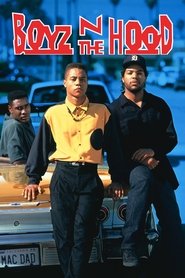
Boyz n the Hood (1991)
Singleton's landmark works in a deliberately restrained, legible style — Charles Mills's camera observes the Styles household with a steadiness that gives weight to ordinary domestic moments and refuses to turn violence into spectacle. Listen for the helicopter: the sky here is policed, and its drone runs under barbecues and porch talk. Watch how the film keeps framing people inside the architecture of the neighborhood — corners, yards, fences — until the geography becomes a character pressing on everyone in it.
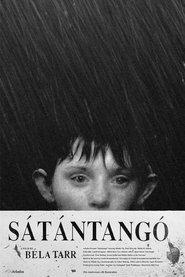
Satantango (1994)
The famous opening — several unbroken minutes of cows shuffling through a ruined farmyard — is a lesson in how to watch the next seven hours. Tarr builds the film from extreme long takes, some running past ten minutes, so that you stop waiting for events and start experiencing time as the villagers do: as weather, mud, and duration. Don't fight the pace. The film is teaching you to notice what a shot accumulates when it refuses to end.
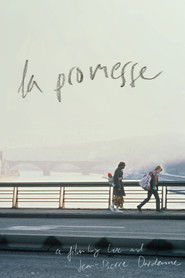
La Promesse (1996)
The Dardenne brothers' breakthrough puts the camera a few inches behind a fifteen-year-old boy's neck and keeps it there — no overviews, no establishing shots, no more knowledge than the boy has. Watch how the drama lives in tiny adjustments: a glance held a beat too long, a hand hesitating over money. Jérémie Renier barely emotes; he attends, and the film trusts you to read a moral education off a body rather than out of dialogue.

The Celebration (1998)
The founding masterpiece of Dogme 95, shot on a handheld Mini-DV camera in available light. Watch the camera itself: it lurches on staircases, leans across dinner tables, occupies chairs it has no business in — a guest at the party rather than a window onto it. That recorded instability, never smoothed away, is the film's whole argument: a household losing its balance, filmed by an eye that refuses to pretend otherwise. Notice, too, the machinery of politeness — how a formal gathering keeps trying to reset itself.

Rosetta (1999)
The Dardennes again, further intensified: the camera is yoked to a young woman's back as she walks, runs, and fights for a job, so close you sometimes lose her in the frame. Watch the rituals — the boots, the water, the fishing line. The film shows you the full physical cost of survival every time, no shortcuts. Rosetta is almost nothing but verbs, and the question the film poses is whether all that furious action can actually change anything. Its influence runs straight through several other films on this list.
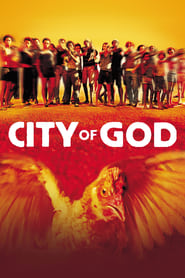
City of God (2002)
Meirelles and cinematographer César Charlone shoot a Rio favela with dazzling designed energy — whip pans, snap zooms, ramped speeds, color graded hot gold for the good years and souring as things darken. Watch the opening chicken chase and the 360-degree spin that launches the film into its past: the whole movie's structure is coiled inside it. The tension to notice is between the exhilarating style and what it's depicting — a machine of poverty and violence that consumes each new generation of children.
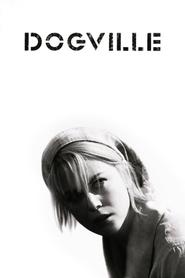
Dogville (2003)
Von Trier removes the town entirely: chalk lines on a black floor, mimed doors, a hand-lettered sign where a dog should be — while sound effects (a latch clicking on a door that isn't there) fill in the world. Watch how the handheld camera hunts restlessly among the actors, refusing the composed stage tableau the set seems to invite. With the scenery subtracted, every gesture and every act of kindness-with-strings becomes something you have to read, and the reading makes you complicit.
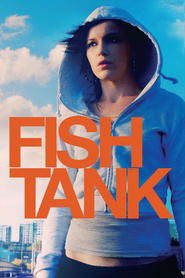
Fish Tank (2009)
Robbie Ryan shoots in a nearly square frame that crops the wide world away, boxing fifteen-year-old Mia into tall, narrow compositions — the fish tank of the title made visible. The camera trails her close and handheld, in the Rosetta tradition, without judgment. Watch the dancing: Mia has no words for her situation, so the film routes everything — class, hunger, the wish to be truly seen — through how she moves. Trust the body over the dialogue; Arnold does.
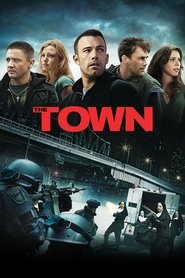
The Town (2010)
The classical Hollywood engine, running beautifully. Robert Elswit (who shot Heat, and it shows) calibrates two registers: granular handheld immediacy for the robberies, and something steadier elsewhere. Watch the opening ritual of bleach and burned evidence — crime as competent housekeeping, not swagger — and watch how legible the heist geography stays, so every cut tracks a decision. Then notice Charlestown itself: a square mile where loyalty is enforced by proximity and leaving is treated as betrayal.

The Florida Project (2017)
Alexis Zabe parks the camera at a six-year-old's eye level, so stairwells and parking lots loom at the scale they have for a child, and shoots on 35mm so the motel's violet walls and cotton-candy skies glow like a storybook. Watch the doubleness: the same golden light that makes the highway strip enchanted also shows you it's falling apart. Baker never resolves that tension — he holds wonder and precarity in a single frame and lets you feel both at once.
Watched together, these films become a conversation across sixty years about the same question: how do you film a person the world has stopped answering? Bresson's answer (hands, sounds, patience) flows into the Dardennes' (a camera welded to a body), which flows into Arnold's; Singleton's steady neighborhood geography echoes in Charlestown and the favela; von Trier and Vinterberg strip the house down to its social machinery; Tarr and Pollack let time itself do the pressing. You'll start to notice how much each film tells you in its first five minutes — a herd of cows, a knock on an invisible door, a girl dancing alone in an empty flat — before a word of story arrives. That's the reward of this set: it retrains you to watch how people stand, wait, run, and hold on, and to see the frame itself as part of the story. By the last film, you won't need anyone to explain what a place is doing to a person. You'll see it.