Sightlines · a mini film course
Every film in this set carries a wound — a murdered father, a lost daughter, a dead brother, a vanished child — and every one of them puts a weapon within reach. What connects them isn't the vengeance itself. It's what these filmmakers do with the waiting. Again and again, the camera watches rather than chases. Faces are studied in half-darkness until they become landscapes. Time is allowed to stretch — over a cup of tea, a coffin in a front room, a grey sea that doesn't care. These are films that take the fastest genre in cinema and deliberately slow its pulse, so that when action finally comes, you feel exactly what it costs and what it can't buy back. Watch them together and you'll start noticing the same quiet argument in eleven different accents: the deed is easy; living on either side of it is the hard part.
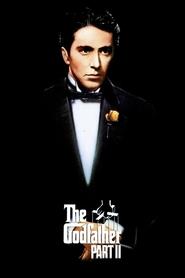
The Godfather Part II (1974)
Watch how Gordon Willis's light changes as the film travels: harsh Mediterranean sun in the Sicilian scenes, then shadows and enclosure gathering as the story moves into New York tenements — as if darkness were something the family builds around itself, room by room. Notice too how Coppola braids two timelines, a father's rise against a son's reign, letting each comment silently on the other. And borrowing from Visconti's The Leopard, powerful men are framed small against grand interiors — pay attention to how often authority looks like isolation.
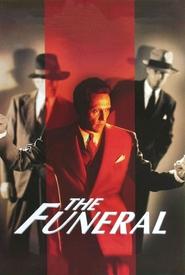
The Funeral (1996)
Ferrara opens where a gangster picture is supposed to end: a coffin in the front room, candles burning, the living arranging themselves around a still point. Ken Kelsch's photography lets faces emerge from near-total darkness in browns and cold blues, and the effect is closer to religious painting than crime movie. Watch how the wake in the present keeps being interrupted by the past, and how the dialogue takes on an almost liturgical weight — this is a mob film arguing with itself about free will and damnation, and refusing every consolation the genre usually offers.
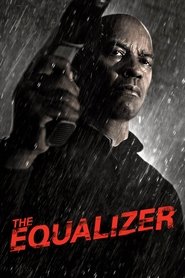
The Equalizer (2014)
The first hour is the film's secret masterpiece: a man, a diner, a folded napkin, a book, tea steeped to the minute. Fuqua and cinematographer Mauro Fiore hold Denzel Washington in static or slowly drifting frames, letting stillness carry all the meaning — and notice how often he's seen behind glass, in windows and reflections, watching a street he won't step into. The lineage here is Melville's Le Samouraï: character built entirely from ritual and routine. When the camera finally becomes kinetic, you'll understand why the patience mattered.
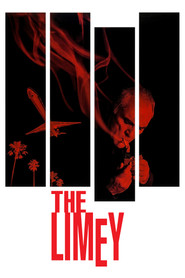
The Limey (1999)
Soderbergh does something no other film here can: he uses real footage of a young Terence Stamp from a 1967 Ken Loach film as the older Stamp's memories — an actual cinematic past folded into the present. Nothing is labeled as flashback; images simply surface the way memory does while you're doing something else. Ed Lachman shoots Los Angeles in bleached, unglamorous sunlight, an alien landscape for a grieving Englishman, while the editing fractures around him like a mind that can't stop returning to what's lost.
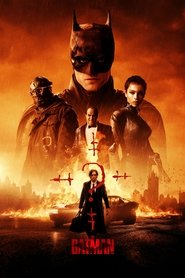
The Batman (2022)
Greig Fraser's cinematography is famously underlit by blockbuster standards — faces fall into shadow, the city runs on sodium orange and blood red — and the direct model is Gordon Willis's work on The Godfather. But the real innovation is structural: this is a detective picture, built like Zodiac and Se7en on ciphers, clues, and obsessive reading rather than set-pieces. A killer addresses his crime scenes to the detective, and you decode over Batman's shoulder. Notice how much of the film is simply watching — and how watching becomes the plot.
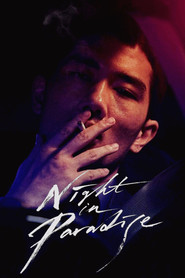
Night in Paradise (2020)
Kim Young-ho's camera keeps returning to the volcanic coast of Jeju Island — wide, becalmed frames of sea and stone, beautiful and completely indifferent to the man standing in them. For a revenge thriller, that's a strange center of gravity, and the whole film tilts toward it. Watch how Park Hoon-jung stages violence without relish or catharsis, and how the "paradise" of the title becomes a bitter kind of refuge. This is the Korean gangster noir at its most elegiac.
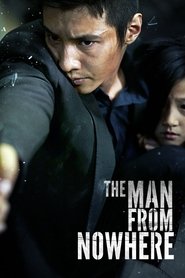
The Man from Nowhere (2010)
Lee Jeong-beom pushes Won Bin's face so close to the lens it stops looking like a movie star's and starts looking like evidence — no soft light, no flattering distance. The first act builds character entirely through observed routine, in the Melville tradition: a near-mute pawnbroker, a cramped shop, a neglected girl drifting in and out. The palette is nocturnal blues and sickly amber, Seoul's back streets rendered without picturesque poverty. Watch how deliberately the film earns its way from stillness back into motion.
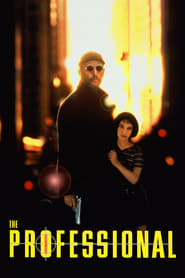
Léon: The Professional (1994)
Before Léon kills anyone in front of us, we watch him tend things — a houseplant, a glass of milk, a body kept in monastic discipline. That's the film's whole argument in miniature. Thierry Arbogast's photography splits the world into warm ambers for the refuges and cooler tones for the violent spaces, and he lets faces dominate the frame. Notice how Jean Reno plays stillness behind those round black glasses: a face that holds one steady note rather than reacting, childlike and unreadable at once.
Sicario (2015)
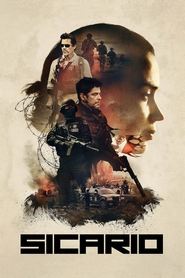
Watch where Villeneuve keeps putting Emily Blunt: in doorways, in back seats, at the edges of briefings where the real decisions are being made without her. The blocking is the argument. Roger Deakins shoots the border landscape geologically — vast frames that dwarf human figures without romanticizing them — and the film converts what should be action into something you can only watch, with mounting dread. It's a thriller about being near power rather than holding it.
Prisoners (2013)
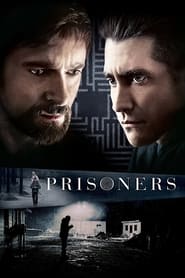
Deakins solves a real problem here: how to be oppressive without being inert. The camera rarely announces itself, yet the cumulative pressure of the image is enormous — rain, low light, a suburb turned moral landscape. Watch the opening minutes closely: a prayer, a rifle, a father teaching his son to be ready. Everything after is the patient study of what that readiness becomes when it has nowhere righteous to go. Two kinds of pursuit run in parallel — a detective's and a father's — and the film weighs them against each other without blinking.
Irreversible (2002)
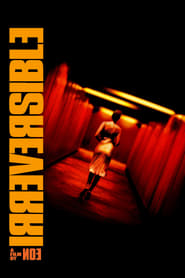
Noé runs his dozen long sequences from last to first — even the credits scroll backwards — and Benoît Debie's camera corkscrews and tumbles through space in unbroken movements, unmoored from any human point of view, calming only as the film travels toward its beginning. The structure's cruelty is its meaning: nothing anyone does can change what you've already seen. Le temps détruit tout — time destroys everything — isn't a theme here so much as a mechanism you're locked inside. A demanding film, but a genuinely singular experiment with what order-of-telling does to feeling.
True Grit (2010)
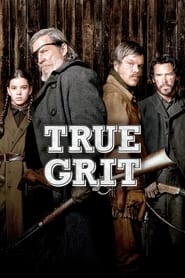
The Coens frame the whole story as memory — a grown woman recalling the year she was fourteen and rode into the Territory to see her father's killer answer for it. Deakins strips out the golden-hour sentimentality the Western usually wears: muted ochres, grey winter skies, a frontier before it was burnished into myth. Listen to the dialogue, lifted from Charles Portis's novel with its archaic formality intact — Mattie's speech is its own kind of armor. And watch the gap the film keeps measuring between justice as she imagines it and justice as the world delivers it.
Why watch these together? Because they teach each other. Willis's shadows resurface in Fraser's Gotham; Melville's silent professional reappears in a Seoul pawnshop, a New York apartment, a Boston diner. Once you've seen one film hold a face in stillness instead of cutting to the gun, you'll feel every other film making the same choice — or refusing it. This is a set about the distance between seeing a wrong and answering it, and each film measures that distance differently: with braided timelines, with reversed ones, with a coffin placed where the climax should be, with a memory that won't stay in the past. Watched in sequence, they become a single long meditation on the oldest promise in movies — that action fixes things — and eleven different, beautiful ways of doubting it.