Sightlines · a mini film course
The Long Fuse: Twelve Films About Waiting, Watching, and the Cost of Striking Back
Every film on this list runs on revenge — or on its close cousins: rescue, restoration, the settling of accounts. But what actually connects them is something subtler than the payback plot. Each of these movies is fascinated by the space before action: the stillness of a man reading in a diner, a swordsman kneeling in formal silence, an agent standing in a doorway while decisions are made without her. Some of these films let their heroes finally act, and stage that action as ritual, ballet, or eruption. Others quietly ask whether acting changes anything at all. Watch them together and you'll start to feel the fuse burning in every frame — and notice how differently each director decides when, and whether, to light it.
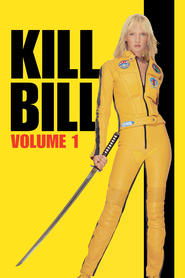
Kill Bill: Vol. 1 (2003)
Watch how Tarantino builds a film almost entirely out of climactic poses — the frozen standoff, the ritual stillness of two duelists before anyone moves, blood staged as a stylized geyser against snow. Robert Richardson's hot, near-vertical top-light halos hair and shoulders, giving even grimy rooms a graphic crispness, like panels from a comic or frames from history painting. Every image is quoting something — Lady Snowblood's chaptered revenge ritual, Bruce Lee's yellow tracksuit from Game of Death — so notice how the film feels less like a story than a densely packed anthology of peak moments, each honoring the exploitation cinema it descends from.
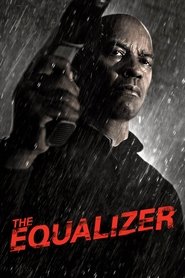
The Equalizer (2014)
The revelation here is patience. For most of the first act, the camera simply holds on Denzel Washington in static, slowly drifting compositions — the same diner, the same folded napkin, the tea steeping the exact right number of minutes — and the film trusts that stillness to carry meaning. Watch how often he's framed behind glass, in windows and reflections: a man studying a world he refuses to enter. The film's power comes from how long it delays throwing the switch from watching to doing.
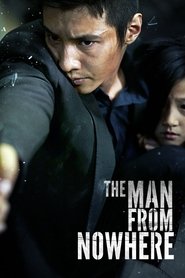
The Man from Nowhere (2010)
Lee Jeong-beom pushes Won Bin's face so close to the lens it stops looking like a movie star's and starts looking like evidence — no soft light, no flattering distance, and for a long while, almost nothing given back. Notice the palette of nocturnal blues and sickly amber, and how Seoul's cramped back-corridors are shot without picturesque poverty. The slowness of the first act isn't dead weight; it's a portrait of grief as a kind of living entombment, and the film's whole design turns on what it takes to pull a man back out of that state.
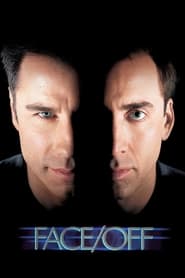
Face/Off (1997)
Keep your eye on mirrors, glass, and doubled compositions: John Woo keeps arranging Travolta and Cage in frames that reflect each other, because the film's real subject is a self that won't resolve into an original and a copy. The action carries Woo's Hong Kong signatures wholesale — slow-motion doves, church candles, dual pistols, gunfights staged as emotional crescendos rather than breaks from character. Watch how sentiment and spectacle fuse: the operatic violence is never separate from grief and brotherhood, and that's the whole Hong Kong sensibility smuggled into a Hollywood blockbuster.
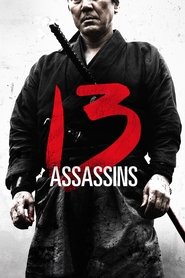
13 Assassins (2010)
Notice the film's two-part architecture: roughly ninety minutes of controlled restraint — mid and long shots honoring the formal geometry of men kneeling, bowing, speaking at measured distance — before physical eruption. Watch Kōji Yakusho's face when the commission arrives; something in him settles, and everything the film believes about purposeful death is in that expression. Miike is deliberately rebuilding the classical machinery of Seven Samurai and the 1960s group-mission films — specialists introduced through single defining acts, outnumbered men and defended ground — with full conviction and no irony.

The Last Samurai (2003)
John Toll's painterly cinematography renders landscape as both beauty and argument: the film's central collision — tradition against industrial modernity, sword against rifle — is staged visually before anyone speaks it. Watch how the battle tableaux borrow directly from Kurosawa: massed cavalry against entrenched gunfire from Kagemusha, color-coded banners advancing across landscape from Ran, rain-and-mud combat from Seven Samurai. The film asks you to feel courage and futility in the same image.
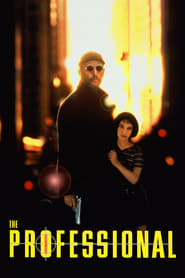
Léon: The Professional (1994)
A hit man drinks milk, does sit-ups in the dark, and waters a houseplant he calls his only friend. Before Besson shows you what Léon does for a living, he shows you a man who tends things — and the film's whole argument lives in that gap. Watch how Thierry Arbogast splits the palette: warm ambers and golds in the interior refuges, cooler tones in institutional and violent spaces. And notice Jean Reno's near-wordless minimalism, inherited straight from Le Samouraï: character built entirely from routine, discipline, and a face that holds one steady note.

The Grandmaster (2013)
Wong Kar-Wai shoots a fight the way you'd remember it rather than the way it happened: a droplet hanging, a hatbrim shedding a thread of water in slow motion before the blow lands. Philippe Le Sourd's images are extraordinarily dense — rain hammering a courtyard, lamplight on wet stone and fur collars — and the high-frame-rate camera doesn't speed the body up so much as slow the world down until combat becomes something held and beheld. This is a kung-fu film converted into elegy: watch how the fights are less about winning than about what passes between people, and what tradition costs to carry.
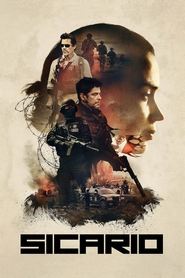
Sicario (2015)
Watch where Villeneuve keeps placing Emily Blunt: in doorways, in back seats, at the edges of briefings where the real plan is decided somewhere she is not. The blocking is the argument — she is the person things happen near. Roger Deakins shoots the border landscape geologically rather than romantically, wide frames dwarfing human figures, refusing the Western's mythic register. The genre promises a competent investigator who acts and resolves; notice how quietly, and how deliberately, this film tears up that contract.
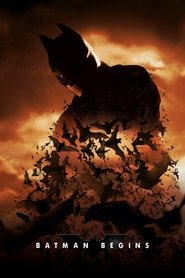
Batman Begins (2005)
The boldest choice here is the editing of the first hour: fragments of the past keep surfacing uninvited — the well, the bats, the murder — intercut with the present, so that fear, guilt, and resolve arrive associatively, as memory, before they ever harden into a plan. It's the shattered-chronology instinct of Nolan's Memento applied to an origin story. Watch also how Wally Pfister's desaturated, tactile Gotham — sodium-vapor orange, steel gray, deep shadow — deliberately corrects the comic-book primaries of earlier Batman films toward something plausible and decaying.
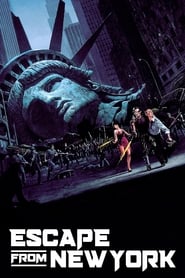
Escape from New York (1981)
The famous wireframe Manhattan on Snake's cockpit screen wasn't computer-generated: the crew wrapped scale models in reflective tape and lit them so only the glowing edges came back — a handmade fake of a digital image, and the whole film works that way. Dean Cundey's anamorphic frame is built around darkness, a prison-city lit by fires, headlights, and sodium pools. Notice the elegant architecture: a walled island, a ticking deadline, one silhouette of a man against a whole hostile organism — genre machinery pared down to its cleanest possible form.
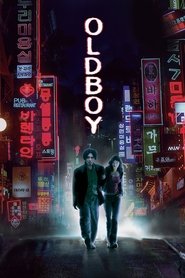
Oldboy (2003)
The corridor fight is the film in miniature: shot flat from the side in one unbroken take, the camera gliding along the wall like an eye reading a line of text, the frame permitting exactly one direction of movement. Watch what that insists — this man is not choosing his path; he's moving along a track someone else laid down. Chung Chung-hoon treats the frame as a moral instrument throughout: canted angles, overhead views reducing a man to a figure in a maze. The film wears the costume of pure action cinema while quietly asking whether revenge is liberation or just a deeper form of imprisonment.
Watched together, these twelve films become a conversation about the same held breath. Some of them — 13 Assassins, Escape from New York, The Last Samurai — believe in the decisive act, and stage it with classical conviction. Others — Sicario, The Grandmaster, Oldboy — press on the ache underneath: what if seeing clearly and striking hard aren't the same thing, and what if striking changes nothing? In between sit the watchers — Léon with his houseplant, McCall with his tea, the pawnbroker in his shop — men who have subtracted themselves from the world and must decide whether to re-enter it. Pay attention to the stillness in each of these films, to what the camera does while nobody is acting yet, and you'll find that the quiet stretches aren't the wait before the movie starts. They're where the movie lives.