Sightlines · a mini film course
When Action Fails: A Course in Watching, Waiting, and the Sword That Won't Draw
Every film on this list orbits a single, quietly radical question: what happens when doing something is no longer enough? These are pictures full of assassins, ronin, gangsters, and getaway drivers — people built for action — and yet again and again the films slow down, hold on a face, refuse to cut away, and ask you to feel time passing instead of watching a problem get solved. Some of these films are gleeful machines of climax and payoff; others let their heroes become watchers, stranded inside situations they can see perfectly and cannot change. Watched together, they form a conversation across sixty years of cinema — mostly Japanese, or made under Japan's spell — about the difference between the camera that chases and the camera that simply witnesses.
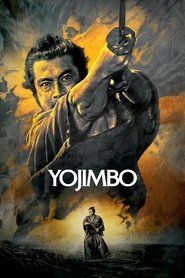
Yojimbo (1961)
Watch how much of this film is spent watching. Mifune's ronin perches on watchtowers, rooftops, and sake barrels, assessing a corrupt town before he lifts a finger — and when asked his name, he invents one from a mulberry field glimpsed out a window. Miyagawa's harsh, dust-filled daylight photography gives the village a sardonic, documentary edge, a deliberate departure from his lyrical work on Rashomon. Notice how the film grafts American hardboiled crime plotting and Western iconography onto the samurai picture — a hybrid that was unprecedented and hugely contagious.
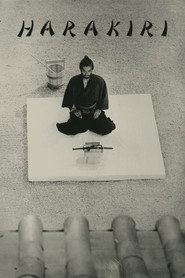
Harakiri (1962)
A samurai film that keeps the sword in its scabbard for two-thirds of its running time — and is more gripping for it. Miyajima's deep-focus widescreen compositions turn the clan compound's raked gravel and receding corridors into an instrument of power: one man kneeling inside a geometry he didn't build and can't leave. Watch Nakadai work almost entirely through breath and voice, converting action into testimony. The film's structure of nested, competing accounts comes from the same screenwriter as Rashomon, and the pressure it builds through stillness is extraordinary.
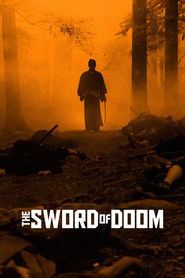
The Sword of Doom (1966)
The dark mirror of the classical samurai film. Watch Nakadai's eyes in medium shot: where the genre's heroes act from motive, his swordsman kills the way water runs downhill, and the face that should register feeling registers nothing at all. The disciplined widescreen framing makes that vacancy the film's true subject — mastery hollowed out, technique with no one home behind it. Part of the 1960s "dark samurai" cycle that turned the genre's own weapons against its ideals.

Ran (1985)
Kurosawa organizes an entire epic around color: each son's army banners in yellow, red, or blue-green, legible across vast telephoto landscapes, while the old warlord is stripped down to white. Watch for the burning-castle sequence, where the sound of battle drops away entirely and only mourning music remains — the moment Kurosawa turns against the cinema of decisive action he himself perfected, leaving his most powerful character able only to look. Noh theater's masks and geometric blocking haunt the performances.
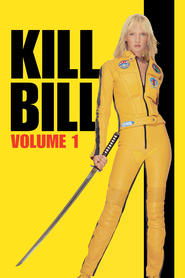
Kill Bill: Vol. 1 (2003)
Where most of these films drain the climax away, Tarantino builds a film out of nothing but climaxes — every frame a stylized peak, every duel a ritual pose held and savored. Watch Robert Richardson's signature top-light haloing hair and shoulders, giving even grimy rooms a graphic crispness. Then trace the quotations: the chaptered revenge structure and snow-against-blood palette from Lady Snowblood, the yellow tracksuit from Bruce Lee's Game of Death, Sonny Chiba himself imported from The Street Fighter. It's a transnational collage — Hong Kong, Japan, Italy — assembled from the export cinemas of grindhouse theaters and video stores.
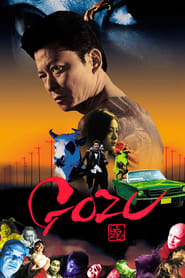
Gozu (2003)
The strangest trick here is the camera's refusal to flinch. Miike shoots grotesque, dreamlike material with the same flat, daylight-bright, patiently observing frames he uses for a café or a roadside diner — no expressionist shadows, no signal that anything is wrong. Watch a yakuza errand quietly stop working about twenty minutes in, and a corpse-disposal job become a wandering trip through a provincial city where nobody answers a question straight. The lineage runs through Lynch: Eraserhead's deadpan industrial dread, Blue Velvet's ordinary surfaces hiding perversion.

The Last Samurai (2003)
A Hollywood epic that consciously rebuilds itself from Kurosawa's blueprints: the village-defense staging of Seven Samurai, the cavalry-into-gunfire tableau of Kagemusha, the color-coded banners and static wide battle framing of Ran. Watch John Toll's painterly natural light on landscape — he shot The Thin Red Line — and notice how the film stages its central conflict as a collision of pure forces: sword against rifle, ritual against machine. It's the West looking at Japan, and knowing it.

Millennium Mambo (2001)
The famous opening: a young woman walks down a curving overpass in slow motion, glancing back at the camera, while her own voice — speaking from years in the future — narrates her in the third person. Everything you watch is already memory. Watch Mark Lee Ping-bing's long lenses and shallow focus turn cramped, neon-lit interiors into pools of drifting light, and notice how little "happens" while everything is felt. This is time allowed to stretch until you can sense it burning.
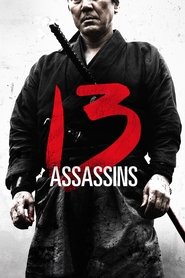
13 Assassins (2010)
Watch the film's deliberate two-part architecture: roughly ninety minutes of formal restraint — measured compositions honoring the kneeling, bowing geometries of Edo-period space — before everything erupts. Miike, the wild surrealist of Gozu, here rebuilds the classical mission-movie machine with total conviction: recruitment scenes straight out of Seven Samurai, moral pressure built through stillness straight out of Harakiri. Watch Kōji Yakusho's face when he receives his commission — a man greeting a death sentence like good news. The whole film's belief system is in that expression.

The World of Kanako (2014)
Kōji Yakusho again — but here his gravitas is conscripted for a detective whose every violent act deepens the rot instead of clearing it. Nakashima's camera is aggressive to the point of assault: whip-pans, strobing close-ups, hard neon, clinical wide shots collapsing into smeared chaos, a nonlinear timeline that refuses stable footing. Watch how the film lights beauty and horror with the same seductive gloss, making the camera an accomplice rather than a witness — a style inherited from his own Confessions and Stone's Natural Born Killers.
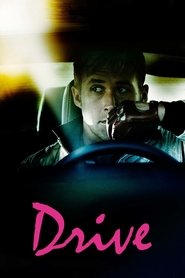
Drive (2011)
Watch the faces — specifically, how long the film holds on Gosling's without letting anything discharge. Sigel shoots him at surveillance-camera nearness, past the point where a normal film would cut, and the face becomes pure surface: a toothpick rotating, eyes tracking before the body moves. The Driver has no name, no past, no stated want — a deliberate inheritance from Le Samouraï and The Driver — and the film's most famous scene fuses tenderness and violence in a single unbroken motion. Neon on wet asphalt, synthesizer score: neo-noir distilled to essence by a European outsider's eye.
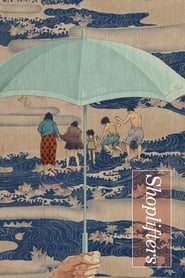
Shoplifters (2018)
Watch hands and routines. The opening shoplifting sequence is filmed as choreography — a boy's small hand-signals to his father, calm and practiced — and before a single fact is stated, the bodies have told you these people are a family. Kondo's camera holds at medium distance, a witness rather than an interrogator, and close-ups are rare enough to land hard when they come. The lineage is Ozu's tatami-level domestic framing and De Sica's neorealism: small gestures accumulating into a portrait of a marginal life.
Watch these together and you'll start to see one long argument passed between filmmakers. Kurosawa builds the perfect machine of action in Yojimbo, then dismantles it in Ran. Kobayashi and Okamoto hollow out the samurai film from inside; Miike destroys the action machine in Gozu and lovingly rebuilds it in 13 Assassins; Tarantino and Zwick raid the same Japanese vaults for opposite ends. Hou and Kore-eda abandon plot mechanics almost entirely, trusting duration and bodies to carry meaning, while Refn and Nakashima stretch and shatter the crime film respectively. The reward is a trained eye: you'll begin to notice, in every film you watch afterward, whether the camera is chasing something — or simply, patiently, watching.