Sightlines · a mini film course
The Story Told Afterward: Twelve Films Where Memory Runs the Projector
Here's the thread that stitches this watchlist together: almost none of these films simply happen. They are remembered, confessed, dictated, dreamed, replayed. A writer looks back forty years at one weekend on the railroad tracks. A dead man narrates his own story from a swimming pool. An old woman watches her drowned ship brighten back into varnish and light. Again and again, these filmmakers put the ending first — or fold it invisibly into the beginning — so that the story stops being a question of what will happen and becomes a question of what it meant, and who's telling it, and why. Watch for the frame around each story: the voice remembering, the light changing between then and now, the camera that lingers instead of hurrying to the next event. That lingering is the point. These are films where watching, waiting, and looking back are the real action.

Double Indemnity (1944)
Start here, because this is the blueprint so many of the others inherit. Billy Wilder opens with a man dictating his own story into a Dictaphone in a dark office — so everything you watch unfolds under a sense of fate already sealed. Watch John Seitz's Venetian-blind lighting: those slanted shadows striping faces and bodies turn every room into a cell before anyone has done anything wrong. The spaces look open, but notice how the house, the office, even a supermarket close around the characters like traps.
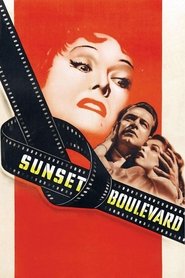
Sunset Boulevard (1950)
Wilder and Seitz again, doubling down: the narrator this time is even more compromised, and the visual grammar even bolder. Watch how the Desmond mansion is shot — low angles, deep focus, ceilings pressing down, backgrounds stretching into shadow — a house designed to feel enormous and predatory, borrowing tricks from Citizen Kane and German silent cinema. And keep an eye on the projector scene: an aging star running her own old films in the dark, her younger self thrown by a beam of light into the room where she sits. Past and present sharing one light source — few images in Hollywood say more with less.
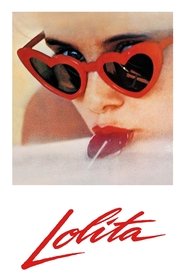
Lolita (1962)
Kubrick opens with the ending — a bizarre, theatrical confrontation in a cluttered mansion — then circles back through four years to reach it. That reordering is his invention, not Nabokov's, and it changes everything: the story doesn't unfold, it's confessed, by a narrator with every reason to lie. Watch how Oswald Morris's long takes let scenes play out in real duration, trusting the performances, and listen to how Humbert's silky voice-over keeps rationalizing while the images quietly contradict him. The gap between what he says and what you see is where the film lives.
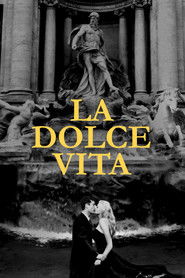
La Dolce Vita (1960)
The famous opening — a statue of Christ dangling from a helicopter over Rome while a journalist mimes flirtation at sunbathing women, every word drowned by rotor wash — teaches you how to watch the next three hours. This is a film about a man whose whole profession is looking, and who can't convert any of it into action. Watch Otello Martelli's wide anamorphic frames and hard, bleached light flattening celebrities into photographic surfaces, and watch Mastroianni build a performance almost entirely out of reaction: an intelligent, helpless face drifting through nights and dawns. The camera watches rather than chases, and time is allowed to stretch.
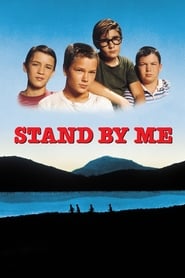
Stand by Me (1986)
A quest movie where the quest isn't the point — four boys walk the railroad tracks toward something grim, but what changes them is the walking and the talking. Watch Thomas Del Ruth's golden, hazy late-summer light and those wide compositions setting four small figures against the converging geometry of the rails. And notice the frame: an adult writer remembering, in the tradition of To Kill a Mockingbird and Summer of '42, so the whole boyhood arrives already tinged with loss. Watch for the quietest scenes — a boy alone at dawn — because the film's heart is in what's witnessed, not what's accomplished.
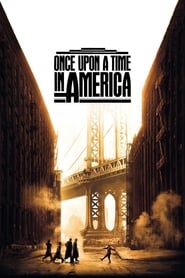
Once Upon a Time in America (1984)
Leone's four-hour gangster epic distinguishes its eras by light itself: honeyed amber for childhood and Prohibition, colder tones for the present. Watch De Niro play the aging Noodles as, in one critic's phrase, "a study in passivity" — a man who returns after decades and mostly looks: through peepholes, into lockers, across banquet tables. Notice how Morricone's music, composed before shooting, seems to dictate the rhythm of the images rather than accompany them. The whole film may be assembled inside a single held expression, and Leone trusts you to sit with that ambiguity.
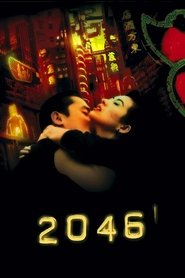
2046 (2004)
Wong Kar-Wai's film is about latency — love arriving a beat too late and replaying forever in the gap. Watch the step-printing: individual frames repeated two or three times so a second of hesitation swells into something you can almost climb inside. Notice how the amber corridors of a 1960s Hong Kong hotel and the cold blue carriages of a science-fiction train aren't flashback and present but two faces of the same feeling, trading places — and how the slatted partitions and doorways catch figures in reflection until you're never sure which image is the "real" one.
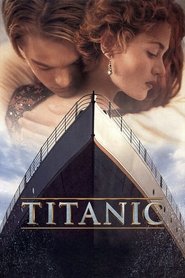
Titanic (1997)
The frame story is the most underrated thing in this very loud film. Watch the early dissolve where a submersible's lamp finds rusted wreckage and, on the same axis, the drowned wood brightens into varnish and electric light and a gloved hand on a railing. Everything you're about to see is already gone, already sunk, being lifted back up by someone remembering it. Watch Russell Carpenter's two visual registers — warm, gilded, painterly light for the ship in its glory; cold blue-black chaos for the catastrophe — and how the film keeps returning to the old woman's present, reminding you whose memory this is.
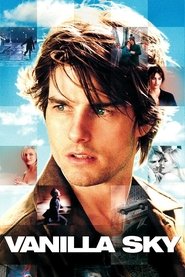
Vanilla Sky (2001)
Cameron Crowe opens with an image too beautiful to trust — Times Square, gorgeous and utterly empty — and you won't know why for two hours. This is a nested confession: a masked man narrating to a psychiatrist, and a past you're never allowed to verify. Watch how John Toll's lush, high-gloss cinematography — the sheen of wealth and privilege — becomes itself a clue, surface beauty weaponized as a warning. And listen to Crowe's song choices, which function as a second layer of narration rather than mere accompaniment. Trust nothing that looks perfect.
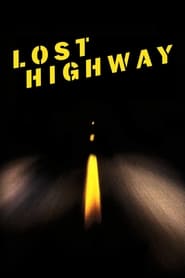
Lost Highway (1997)
Lynch's film opens with a man receiving a message over his own intercom, and by the end you'll understand that beginning very differently. Watch Peter Deming's engulfing darkness: the Madison house is a near-abstract space where characters walk into blackness and simply dematerialize, set against bleached, sun-struck exteriors. Notice the doubling — one actress, brunette then blonde — and how the film pointedly refuses the cut that would tell you whether you're watching two women or one woman dreamed twice. Space becomes a trap; time becomes a loop; the film asks you to feel that rather than solve it.

Caravaggio (1986)
Nothing here was shot in Rome — Jarman made the film inside a blacked-out London warehouse and turned poverty into doctrine. Watch Gabriel Beristain's lighting: a single hard light hauling a hand, a face, a bowl of fruit out of impenetrable black, so the screen continually rhymes with the painter's own canvases. The film's signature move is a small delay — a tired model holding a pose just long enough that you recognize it as a painting you've seen behind glass, before he breathes and becomes a body again. Watch for those seconds between flesh and image; they're the film's whole argument about art, money, and desire.
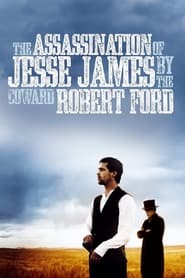
The Assassination of Jesse James by the Coward Robert Ford (2007)
The title tells you the ending; the film is about everything that ending can't contain. Watch Roger Deakins's wintry palette — slate skies, bare prairie, lamplit interiors — and his recurring blurred-edge frames that make scenes feel like memories or old photographs. The Western is the genre of decisive action, and Dominik keeps the costumes while quietly removing the engine: nobody here acts to change anything, they watch — Ford watches James, James feels himself watched and watches back, and we watch them both. The night train robbery, figures materializing out of darkness in a locomotive's headlamp, is pure image over event. Let the slowness work on you.
Why watch these together? Because they train the same muscle from twelve directions. Once you've seen Wilder's dead narrator, you'll recognize his ghost in Kubrick's confession, in Crowe's masked prisoner, in Cameron's centenarian survivor. Once you've felt Leone and Wong stretch a single moment until it holds a whole life, you'll understand why Dominik holds a room a beat past comfort, and why Reiner trusts a boy alone at dawn over any plot point. These films argue, collectively, that cinema's deepest power isn't showing what happens next — it's showing what it feels like to look back, to wait, to watch, to remember. See them in any order. But notice, each time, who is telling the story, from where, and how the light knows things the characters don't yet.