Sightlines · a mini film course
The Space Between Seeing and Doing
Every crime story is secretly a story about whether a person can act on what they see. A heist crew reads a room and moves. A boy watches an atrocity and cannot lift a finger. A woman sizes up a rigged economy and decides to cheat it back. The twelve films in this set — spanning Boston and Belgium, Detroit and Rio, a French village and a Texas desert — all live in that gap between perception and action. Some of them close it with thrilling precision: the camera chases, the cuts carry decisions, and doing something actually changes the world. Others hold the gap open and make us sit in it: the camera watches rather than chases, characters endure rather than act, and the place they live becomes a trap no gesture can spring. Watched together, these films become a conversation about competence and helplessness, about neighborhoods that manufacture their own crimes, and about what a face — or the back of a neck, or a pair of hands — can tell you when nobody explains anything.
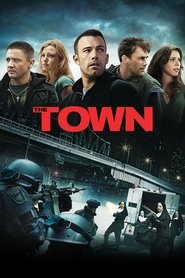
The Town (2010)
Watch the opening: before anything else, the crew pours bleach over every surface they've touched — crime as housekeeping, competence as the only glamour on offer. Robert Elswit (who also shot Heat, and it shows) keeps the geography of the robbery sequences ruthlessly legible, so every cut tracks a decision rather than just noise. And notice how Charlestown itself works: not a backdrop but a closed system where everyone knows everyone's business and wanting to leave reads as betrayal. The neighborhood does as much pressing as any villain.

City of God (2002)
Hold on the opening chase — a chicken bolting down an alley, boys with pistols after it, the camera whipping a full 360 before the film snaps into the past. Meirelles and cinematographer César Charlone shoot the favela at commercial-break velocity: whip pans, snap zooms, ramped slow motion, colors run hot gold in the good years and going sour as things darken. But watch what all that kinetic energy is for — this is a chronicle of a neighborhood that consumes each generation of children in turn, and the speed keeps circling back on itself rather than driving anywhere. Motion everywhere; escape almost nowhere.
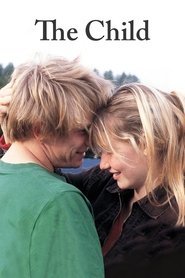
The Child (2005)
The Dardennes keep the camera a few feet behind Bruno's neck and shoulders as he half-jogs through the gray Belgian city of Seraing — close enough to feel his gait, never positioned to read his face for warning. Watch the hands instead: money passed palm to palm, objects handled, deals made. The film refuses backstory on principle; you're given a deed and left to infer the world that produced it. That withholding — inherited straight from Bresson — is what turns a small story about responsibility into something that grips like a thriller.
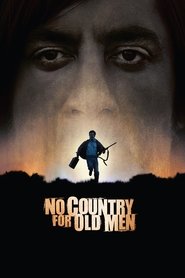
No Country for Old Men (2007)
Watch the gas-station scene: a coin on a counter, two men talking, fluorescent light, and a tension with nowhere to go — you watch the way the owner watches, unable to act. Roger Deakins shoots with strategic restraint, long lenses compressing figures against featureless desert so the landscape itself feels like exposure. And listen: the film trusts ambient sound — rustle, drone, room tone — to carry dread the way most thrillers use a score. The Coens honor every gear of the chase-thriller machine while quietly asking whether the machine still delivers what it promises.
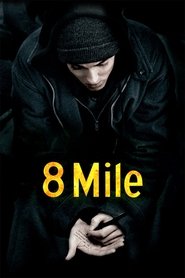
8 Mile (2002)
Open on a man mouthing words in a bathroom mirror — and then choking onstage, handing the mic back, walking into the cold. The whole film is built to carry him from that choke to the act, which makes it a proudly old-fashioned underdog machine in the Rocky mold. Watch Rodrigo Prieto's Detroit: overcast, snow-gray, sodium-orange, a city photographed so its weather and its economy look like the same condition. And watch what Eminem withholds — a glowering, mumbled restraint in the Brando lineage, a performance built on what doesn't get said until the stage finally demands it.
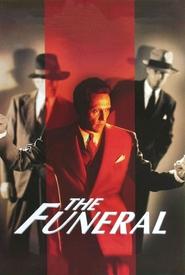
The Funeral (1996)
Ferrara opens where a gangster picture is supposed to end: a coffin in the front room, candles burning, the living arranging themselves around the dead. Watch Ken Kelsch's deep, low-key lighting — faces emerging from darkness, interiors lit as if by a few real lamps — turning a mob movie into something closer to a religious painting. This is a gangster film built to negate the gangster film: no rise, no empire, no glamour. The past keeps interrupting the wake, and every memory arrives like evidence in a theological argument about whether these men chose their violence or were born to it.
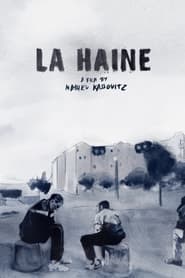
La Haine (1995)
A voice tells a joke about a man falling past a window — "so far, so good" — and the whole film happens in that suspended interval. Three friends drift through twenty-four hours, clocked off in on-screen timestamps like a countdown, while a gun circulates and nothing they do bites. Watch Pierre Aïm's black-and-white photography make the housing estate's concrete towers simultaneously harsh and monumental — the Raging Bull trick of shooting brutality in a register that ennobles it. And notice the film's structural argument: the violence here isn't imported from outside; the system generates it and then recirculates it.
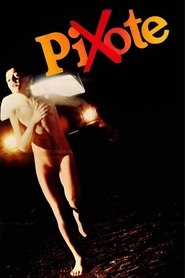
Pixote (1980)
Start with the face: Fernando Ramos da Silva, ten years old, a real street kid cast among non-professionals, watching horrors with an expression that barely moves — not shock, but a kind of waiting. Rodolfo Sánchez keeps the camera at the children's height, so every adult and every institution looms. Where a trained child actor would have softened the stillness with tears, this blankness is the point: the film reads survival in a child's watchfulness. It's the template that City of God would later inherit — Brazil filming its disposable children with documentary authority.
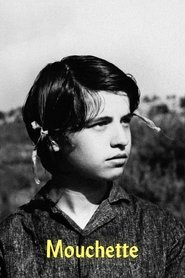
Mouchette (1967)
Start with her hands at the bumper-car rail, and a moped's whine on the soundtrack that belongs to no image you're shown — Bresson lets sound carry as much story as picture. Ghislain Cloquet's black-and-white photography is sober and unadorned: overcast light, steady framings, fragments of gestures and bodies rather than dramatized faces. Bresson worked with non-professionals he called "models," drained of performed feeling, and Nadine Nortier's famous blankness is method, not amateurism. Watch how often the film simply holds her watching — and how much moral weight a girl's stillness can bear.

Emily the Criminal (2022)
Watch the fraud runs: Emily reads the clerk, the card reader, the door, and moves — perception flowing straight into action with almost no slack. Jeff Bierman's camera crowds her face and refuses the wide shot that would let you judge her from across the parking lot; you're locked inside her tunnel vision, so her calculation becomes yours. Ford has made an unfashionably confident engine-of-action movie in a decade of drift — and pointed it at economic precarity, so that her criminality plays as a rational answer to an irrational system.
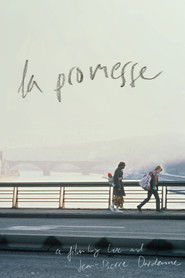
La Promesse (1996)
For most of the film the camera rides inches behind a fifteen-year-old's neck as he moves through stairwells and muddy lots and the back rooms of his father's ugly business. You're never given the overview; you see what the boy is near enough to see, and not one frame more. Watch how the drama lives in small adjustments — a glance held a beat too long, a hand hesitating over banknotes. There's no score, no speeches, no interiority explained: the Dardennes only film what a body does, and somehow that's enough to make a moral crisis feel like a thriller.
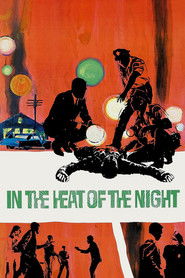
In the Heat of the Night (1967)
Watch it through the returned slap: in a greenhouse, a plantation aristocrat strikes Virgil Tibbs, and without a breath of deliberation Tibbs strikes back — and the camera goes not to the blow but to the watching faces. Haskell Wexler, fresh from documentary work, shoots the Southern town hot and close: sweat-sheened faces in tight framing, long lenses isolating figures in hostile space. Notice how the detective work operates in miniature — Tibbs reads a clue, and each reading forces the town to reveal itself. Every small confrontation over a form of address or the right to give orders is the real investigation.
Watched in any order, these twelve films start talking to each other. You'll see the same handheld camera behind a character's shoulders do opposite work in Emily the Criminal and The Child — one building momentum, one building doubt. You'll see Bresson's blank-faced girl echo forward through Pixote's watchful boy and the Dardennes' attentive teenagers. You'll see neighborhoods — Charlestown, the favela, the banlieue, Seraing, Detroit — function as engines that produce the very crimes they punish. Above all you'll start noticing the choice every one of these filmmakers had to make: does the camera chase, or does it watch? Does action change anything, or does time just stretch? The films that close the gap between seeing and doing are exhilarating; the films that hold it open are devastating. Together, they teach you to feel the difference in your body before you can name it — which is exactly what great programming is for.