Sightlines · a mini film course
When Looking Stops Working: Twelve Films About the Watcher in the Trap
There's a certain kind of thriller that hands its hero a gun, a case, a wrong to right — and then quietly cuts the wires. The world keeps shifting faster than any action can catch it. The clues dissolve when touched. The face in the mirror stops matching the man. These twelve films all share that sensibility: they wear the costumes of action cinema, noir, horror, and revenge, but underneath they're films about seeing — about characters who can no longer trust what's in front of them, and who become watchers rather than doers. What to notice, across all of them, is how the filmmaking itself performs the trap: cameras that observe rather than chase, spaces that seal shut, images too beautiful or too wrong to trust, and time allowed to loop, stretch, and run backwards.
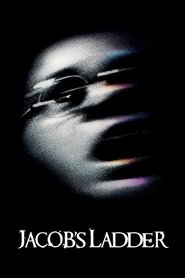
Jacob's Ladder (1990)
Watch the palette shift registers: humid, greenish swamp-light for the Vietnam sequences, sickly fluorescent whites for the hospitals and subways of civilian New York. Then watch for the film's most famous effect — a figure whose head shakes at a frequency your eye can't resolve, achieved practically, by running the camera slow while the actor moved fast, so the wrongness is printed into the photograph rather than layered on top. Notice how little Jacob acts on any of it. The film gives you conspiracy-thriller machinery, then keeps its hero looking, enduring, unable to convert what he sees into anything he can do — and that helplessness is the horror.
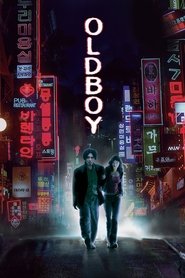
Oldboy (2003)
Chung Chung-hoon's camera treats the frame as a moral instrument: canted angles, overhead views that shrink a man to a figure on a board. The showpiece is a corridor fight filmed flat from the side in one unbroken take, the camera gliding along the wall like an eye tracking a line of text, permitting exactly one direction of travel — like a side-scrolling game, like a frieze of massed combat. Ask yourself, as it plays: is this man choosing his path, or moving along a track someone else laid down? The film is a revenge thriller built to interrogate revenge itself — whether organizing your life around an injury is escape or just a deeper cell.

Dark City (1998)
Dariusz Wolski shoots in near-total night — hard, sourced light carving figures out of darkness, straight from 1940s noir pushed toward the grotesque, with looming shadowed figures descended from the silent German horror tradition. The signature image: at midnight the city falls asleep standing up, and the buildings themselves begin to move, towers screwing up out of the pavement while no one is awake to witness it. Watch how the film builds a world with no sun, no edge, no verifiable history — and how one word, one sunlit place-name everyone remembers but no one can reach, becomes the crack of light in a sealed room.
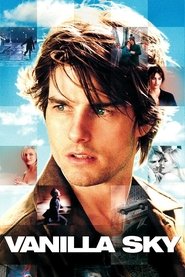
Vanilla Sky (2001)
John Toll — the painterly eye behind The Thin Red Line — gives this film a lush, high-gloss surface, and the trick is that the beauty itself is a clue. The opening sets the terms: a man drives into Times Square and finds it scrubbed of every other human being, and the panic tips into something like rapture, all before the film tells you anything is wrong. Distrust the gorgeousness. Watch, too, how Crowe uses his soundtrack the way he did in Almost Famous — songs as a layer of narration, not decoration.
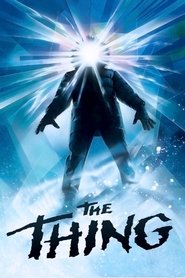
The Thing (1982)
Dean Cundey's deep-focus widescreen keeps multiple men in sharp focus at once, denying you a single reliable point of view — you're stranded in the same uncertainty as the characters. Carpenter inverts the 1951 original's faith in professional teamwork: here, the group's rationality is exactly what fails. The film's emblem is a scientific test — a heated wire lowered into blood — because a room of men who can no longer trust their eyes must build a machine to do the trusting for them. It looks like an action film, guns and flamethrowers intact, but every action is a guess, because looking has stopped delivering the truth.

Shutter Island (2010)
Scorsese builds this as a loving anthology of studio-era forms — rain-slicked noir, gothic asylum dread, the psychoanalytic detective story of Spellbound — shot in Robert Richardson's signature hard top-light that haloes faces like something out of an old B-picture. But watch the details in the margins: a glass of water that behaves impossibly, small mismatches Thelma Schoonmaker's editing lets slip through the procedural surface. Nothing is a mistake. This is a film that asks you to shift from watching images to reading them — the apparent excesses are a code.
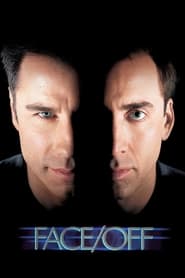
Face/Off (1997)
John Woo imports his Hong Kong grammar wholesale — the slow-motion doves, the church-and-candle imagery, the two-pistol ballet, gunfights staged as emotional crescendos rather than breaks from character. The image to hold onto is the two-way mirror: two men on either side of one pane, each aiming at his own face, because each now wears the other's. Watch how Oliver Wood's camera keeps arranging the two stars in mirrored frames, until you're no longer sure you're watching two characters rather than one surface that won't resolve into original and copy.
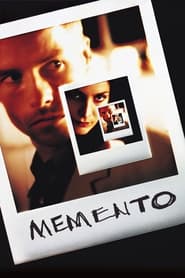
Memento (2000)
The opening gesture is the film in three seconds: a Polaroid fading backwards, the image draining into blankness — just reversed footage, and a manifesto. The color sequences run in reverse order, each scene ending where the previous one began, so you're dropped into every scene with no memory of how you got there; a black-and-white strand runs forward until the two meet at the hinge. Nolan's real invention is that the structure doesn't describe the hero's condition — it inflicts it on you. Wally Pfister shoots it with deliberate restraint and clarity, wisely, given how much work your brain is already doing.
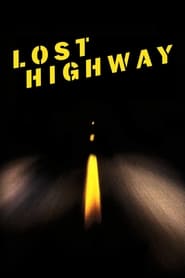
Lost Highway (1997)
Peter Deming photographs the Madison house as near-abstract shadow — rooms defined by what can't be seen, characters walking into blackness and dematerializing — set against bleached, sun-struck exteriors. The film opens with a voice on an intercom delivering a message that will only make sense as a loop with no seam. Watch how Lynch takes the full noir kit — femme fatale, gangster, surveillance, doomed Los Angeles — and strips out motive, explanation, and detection. One actress plays two women, brunette and blonde, and the film refuses the cut that would tell you whether they're two people or one person dreamed twice. That refusal is the point.
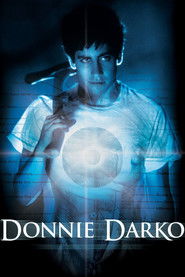
Donnie Darko (2001)
It opens on a fact that refuses to join any chain of cause and effect: a jet engine through a bedroom roof, from a plane no one can identify. Steven Poster's cool, faintly desaturated palette turns comfortable suburbia quietly sinister — the Blue Velvet trick of the slow push-in on a placid surface. Watch how the hero perceives everything (he's the smartest person in every room) but can't convert perception into any action that resolves anything; instructions arrive from elsewhere, like a script he's been handed. And keep Harvey in mind: the giant rabbit as an ambiguity engine you can read as madness or visitation.

The Sixth Sense (1999)
Tak Fujimoto chills Philadelphia into muted blues and grays, then rations the color red like a drug — a doorknob, a balloon, a sweater — marking the places where a hidden world shows through. The scares work by the old suggestion method of Cat People and The Innocents: withhold the thing, let temperature, sound, and negative space imply it. Watch the breath fogging in a warm kitchen — the ordinary turned a few degrees wrong. And notice the boy at the center: a child who sees what he can do nothing about, whose looking and listening, cut loose from acting, carry the whole film's dread and its grief.
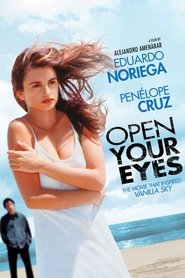
Open Your Eyes (1997)
Hans Burmann's cinematography is the opposite of expressionist: clean, glossy, naturalistic — which is exactly why the uncanny lands so hard, because the world never announces itself as unreal. The celebrated opening finds dread where horror never looks: broad daylight, sharp focus, the Gran Vía at rush hour with every human being subtracted, and a young man running down an avenue that should be impassable with nothing to chase, fight, or fix — only a world to look at. This is the Spanish original that Vanilla Sky remade; watching it here, watch how a street stops being a space for action and becomes something that can only be witnessed.
Watch these together and a pattern emerges that no single film shows alone. The corridor that permits one direction, the city that rebuilds itself at midnight, the Polaroid running backwards, the blood that must be tested by machine because eyes have failed — these are all the same discovery, made twelve ways: that cinema can strand its characters, and you, in the gap between seeing and doing. Each film builds its trap differently — a loop, a mirror, a sealed dream, a frozen station in the ice — but each asks the same thing of you: stop waiting for the hero to act, and start reading the image. The details these films plant in their margins — a color rationed like a drug, a glass that won't stay put, a surface too beautiful to trust — reward the viewer who watches the way their characters are forced to: closely, patiently, and with the growing suspicion that the frame itself knows more than anyone in it.