Sightlines · a mini film course
Watching Without a Map: Twelve Films About Seeing More Than You Can Solve
Here's the secret thread stitching this watchlist together: in every one of these films, someone looks at something they cannot fix. The thriller — the genre most of these films wear as a costume — usually promises us a hero who sees a problem and acts on it: perceive, decide, do, resolve. These twelve films quietly break that promise, each in its own way. A camera lingers where another film would cut away. A protagonist stands in a doorway while the plot happens in a room she can't enter. Time gets scrambled, stretched, or folded into a loop, so that watching becomes a kind of active deciphering rather than a ride. Don't expect the films to hand you answers on schedule. Instead, notice how they look at things — because in every case, the looking is the point.
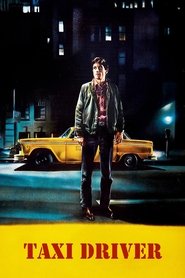
Taxi Driver (1976)
The founding document of this set. Almost everything the film knows, it knows from inside Travis Bickle's cab — windshields fogged and streaked, pedestrians caught and lost in headlight beams — and yet the camera also steps outside him, watching from across a diner, keeping just enough distance to let you judge what you're being infected by. Watch how much Travis sees and how little he can meaningfully do about it: he drives, and drives, and the city loops past unchanged. Scorsese and Schrader borrow the shape of the vigilante rescue mission and hollow out its motor, and the emptiness where the heroism should be is the film's whole disturbing argument.
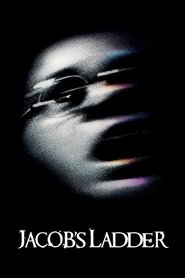
An Occurrence at Owl Creek Bridge → Jacob's Ladder (1990)
Early on, a man on a subway notices a figure whose head shakes too fast — at a speed the eye can't resolve into anything it recognizes. Lyne got that effect in-camera, having the actor whip his head while the film ran slow, so the wrongness is printed into the image itself rather than pasted on top. Watch for that technique throughout: the horror here is never a monster leaping out, but the ordinary world refusing to be readable. Notice too the palette shifting between the humid, swampy green of Vietnam and the sickly fluorescent white of hospitals and subways — two registers of the same nightmare, and a hint that this film cares less about scaring you than about what it means to endure something you can't decode.
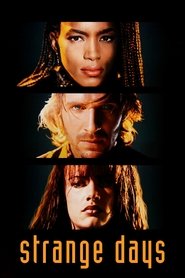
Strange Days (1995)
Bigelow opens by strapping you into someone else's eyes — a robbery experienced first-person, the gun shaking in "your" grip — before you know whose body you've borrowed. The film runs on two distinct kinds of looking: the grimy, neon-soaked noir photography of near-future Los Angeles, and the raw, immersive first-person "clips" recorded straight from a wearer's senses. Watch how the film makes you complicit in the second kind — it built this rig years before GoPro, bodycams, and VR made rented vision an everyday thing. It's a thriller about addiction to replayed experience, and it makes you the addict.
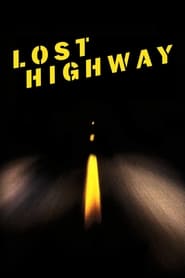
Lost Highway (1997)
Peter Deming photographs the Madison house as near-abstract darkness: rooms defined by what you can't see, characters walking into blackness and dematerializing. Don't try to solve this film — it withholds exactly the cuts and explanations that would let you. Patricia Arquette plays two women (or is it one?), brunette then blonde, and Lynch refuses to tell you which reading is real. Watch instead for how the film uses noir's furniture — femme fatale, gangster, surveillance tapes — while removing noir's engine of motive and detection. The dread comes from the structure itself, which curves back on you like a road with no exit.

Dark City (1998)
At midnight the whole city falls asleep standing up, and the buildings rearrange themselves while no one watches. Proyas builds his metropolis from German Expressionist DNA — painted shadows, canted angles, hat-and-coat figures descending straight from Nosferatu — filtered through hard, low, sourced light carved out of near-total night. Watch for the film's obsession with a sunlit place everyone remembers and no one can reach: it's the crack of longing in a sealed world. Also watch how memory works here as a removable, swappable thing, and what the film thinks survives when it's gone.

The Sixth Sense (1999)
A boy's breath fogs in a warm kitchen — nothing else has changed, but the temperature tells you everything. Shyamalan inherits the Val Lewton playbook: withhold the thing itself, let cold air, sound, and negative space do the frightening. Tak Fujimoto shoots Philadelphia in chilled blues and grays, then rations the color red like a controlled substance — track where red appears and you're tracking where the hidden world shows through. Watch the boy, too: he's a character defined by seeing what he cannot act on, and the film's real subject isn't fright but the failure and slow recovery of communication.
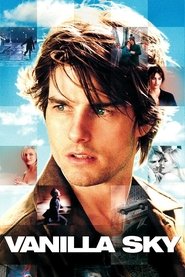
Vanilla Sky (2001)
John Toll — the painterly eye behind The Thin Red Line — gives David Aames's privileged world a lush, high-gloss surface, and that's precisely the trap: the beauty is a clue. The famous emptied Times Square arrives before the film admits anything is wrong, and from then on, treat every gorgeous image with suspicion. Watch for Crowe's needle-drops working as a second narrator, and for the small glitches in the surface — the film trains you to notice when a world is too perfect to trust. A rare Hollywood puzzle-film where the mystery is aesthetic before it's narrative.
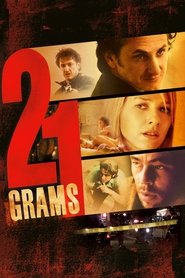
21 Grams (2003)
You meet the same characters at several points in their lives, out of order, and the film makes you do the sorting — is this before or after? Has the worst happened yet? That small ache of reaching for a sequence that isn't there is the whole designed experience. Rodrigo Prieto shoots almost entirely handheld, close and restless, in shallow focus, the frame breathing with the operator, and the desaturated palette matches the emotional register. Watch how a fragment lands without instructions — you're not riding this story, you're reading it, and the deciphering becomes strangely intimate.
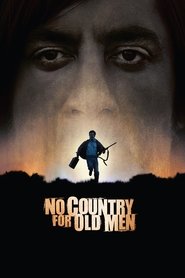
No Country for Old Men (2007)
Watch the gas station scene: a coin on a counter, a conversation, fluorescent light, and a tension that has nowhere to go — because one man doesn't know what's at stake and you do. Deakins shoots the landscape with strategic restraint, long lenses compressing tiny figures against featureless desert. Then notice what the Coens do with the crime-thriller machine itself: they run every mechanic of pursuit and evasion flawlessly, and then quietly decline to deliver the payoffs the genre exists to deliver. Where things happen — on-screen, off-screen, secondhand — is the film's boldest choice. Listen, too: ambient sound does the work a score usually would.
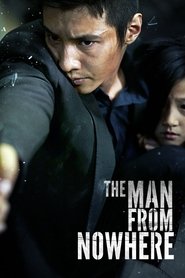
The Man from Nowhere (2010)
Lee Jeong-beom pushes Won Bin's face against the lens until it stops looking like a movie star's and starts looking like evidence — no flattering light, no soft distance. The first act is deliberately slow: a near-mute pawnbroker who watches a neglected girl drift through his shop and does nothing. Sit with that slowness; it's not padding, it's a portrait of grief as living entombment, built entirely from observed routine in the Melville tradition — a sparse room, withheld dialogue, behavior instead of backstory. Then watch what happens when a man who has stopped acting is forced to start again. Few films earn their action by making you wait for it this honestly.
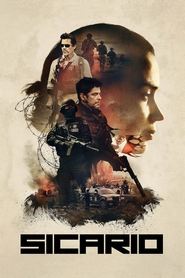
Sicario (2015)
Watch where Villeneuve puts Emily Blunt's Kate Macer: in a doorway as shooting starts, in the back seat of a convoy that won't say where it's going, at the edge of briefings where the real decisions happen elsewhere. The film's entire argument is encoded in that blocking — she is the person things happen near. Deakins shoots the border landscape geologically rather than picturesquely, wide frames dwarfing human figures. This is a competent-investigator thriller that spends two hours quietly tearing up the competent-investigator contract, and the dread comes from feeling the paper rip.
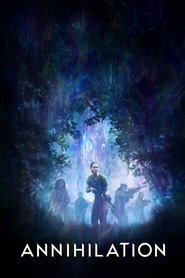
Annihilation (2018)
Two deer step from the brush moving in perfect mirrored unison, one shadowing the other like a copy that hasn't noticed it's a copy. Nobody explains it; the women just look, and the looking is the event. Rob Hardy's photography renders the Shimmer as a soap-bubble membrane — greens pushed toward the toxic, water given an oily refraction — beauty and wrongness fused in the same image. The structural template is Tarkovsky's forbidden Zone; the climax owes a deliberate debt to 2001's surrender of story to pure image and sound. Watch how the film converts a team of armed, competent professionals into witnesses, and let the final stretch wash over you without demanding it explain itself.
Why watch them together? Because this set is a two-decade conversation about what movies do when they stop letting heroes fix things. Watched in sequence, you'll see the same gesture pass between wildly different hands: Scorsese's looping cab becomes Lynch's looping highway; Bigelow's rented eyes anticipate Garland's mirrored deer; the Coens' unplugged thriller machine echoes in Villeneuve's woman at the threshold. Each film asks you to trade the pleasure of resolution for the sharper pleasure of attention — to notice a color rationed, a sound withheld, a cut refused, a face held too long. By the end of this list, you won't just have seen twelve films. You'll have retrained your eyes — and the next thriller that hands you a tidy ending will feel, pleasantly, like it's hiding something.