Sightlines · a mini film course
The Camera That Knows More Than You Do
Here is a set of films bound not by genre — though noir shadows fall across nearly all of them — but by a shared conviction: that the most frightening thing in cinema is not what happens, but what the image knows. In each of these films, the camera holds knowledge the characters cannot bear, cannot access, or cannot act upon. A wife listens in the dark to her own murder being planned. A detective's every discovery tightens a noose he can't see. A herd of cows teaches you how to watch seven hours of rain. Across eighty years and four national cinemas, these directors keep making the same discovery from different angles: when action stalls — when a person can only watch, wait, suspect, or remember — the film doesn't die. It deepens. Watching becomes the event. Your attention becomes the third character in every room.
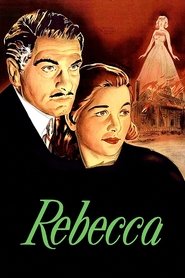
Rebecca (1940)
The most powerful presence in this film never appears on screen. Watch how Hitchcock and cinematographer George Barnes build her out of objects instead — a monogrammed address book, a preserved bedroom, a melody, a name spoken so often it becomes weather. Notice how the camera dwarfs the nameless young heroine inside Manderley's cavernous spaces and looming staircases, so that the architecture itself seems to belong to someone else. You keep expecting the film to turn and show you Rebecca. It can't — and that impossibility is the engine of everything.
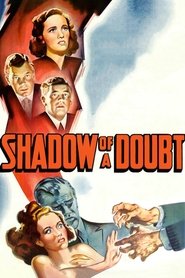
Shadow of a Doubt (1943)
Hitchcock's great trick here is splitting the light: Santa Rosa's exteriors are shot with flat, documentary plainness — the ideal American small town — while shadow creeps laterally into the sunlit Newton household whenever Uncle Charlie enters a room. Watch the objects, especially a certain ring, which carries more information than any line of dialogue. And notice how the suspense lives entirely in who knows what: your knowledge is pinned to young Charlie's, and her terror is a private relation between exactly two people, invisible whenever the family is watching.
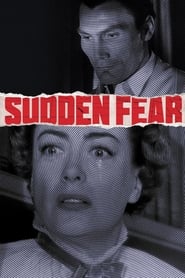
Sudden Fear (1952)
Charles Lang's Oscar-nominated photography splits the film in two — a warm, open San Francisco courtship that darkens, in its back half, into full noir shadow. But the thing to watch is Joan Crawford's face, which Lang isolates in fields of black. In the film's pivotal listening scene, she travels an entire emotional arc — contentment, horror, cold calculation — almost wordlessly. Watch the muscles work while she stays silent: a face crossing a threshold, from victim to author of her own counter-plot.
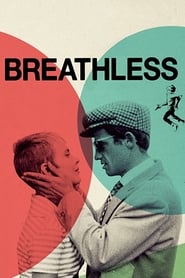
Breathless (1960)
Belmondo keeps running his thumb across his lip, the way he's seen Bogart do it — testing whether a borrowed gesture can hold a life up. Godard's camera treats Paris as reportage: hard shadows, real streets, uncorrected light, all shot against the polished French cinema of the day. And watch the famous jump cuts — pieces sliced out of the middle of shots — which make the film move the way its hero lives: restless, unresolved, all style and slack between the moments of action.
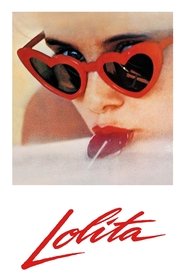
Lolita (1962)
Kubrick opens with the ending — a killing in a cluttered mansion — then circles back four years, a reordering that is his invention, not Nabokov's. Everything you watch afterward arrives pre-doomed, confessed after the fact by a narrator with every reason to lie. Notice how Oswald Morris's black-and-white photography and Kubrick's long takes let scenes play out in extended duration, giving the performances room to reveal what the voice-over is busy rationalizing away. The irony is the point: you're meant to see through the story as it's being told to you.
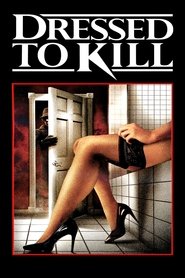
Dressed to Kill (1980)
The centerpiece is a nearly wordless museum sequence built entirely out of glances — who sees whom, who knows they're seen, and what the gliding camera knows that no one inside the frame does. Watch for De Palma's split-diopter shots, which keep near and far in simultaneous, uneasy focus, and for the mirrors that double and fragment every figure. The film makes watching pleasurable, then makes you aware of the pleasure. That discomfort is deliberate. You carry the dread; the characters don't get to.
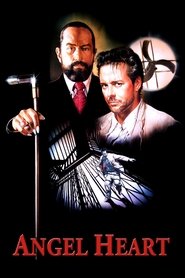
Angel Heart (1987)
A private eye does everything a private eye is supposed to do — follows clues, interviews witnesses, drives to the next town — and watch how none of it works the way the genre promises. Michael Seresin films everything through smoke and dust: New York cold and verminous, Louisiana humid, amber, and rotting. Keep your eye on the ceiling fans that turn at the top of almost every room, chopping the light into flicker. The hero keeps not looking at them. You should.
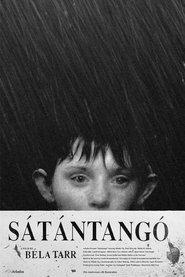
Satantango (1994)
The opening shot follows cows through a collapsing farmyard for several minutes, and by the time it releases you, Tarr has retrained your eye for the seven hours ahead. Shots here run five, eight, ten minutes; time is allowed to stretch until you stop waiting for events and start inhabiting duration itself. Watch how the film's people — stranded on a dead collective farm, waiting for money that may or may not come — become witnesses rather than actors, and how the camera dignifies their watching by watching alongside them.
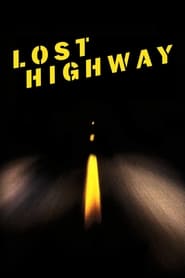
Lost Highway (1997)
It opens with a voice on an intercom delivering a message no one can place, and the whole film is folded inside that moment. Peter Deming photographs the Madison house as near-abstract darkness — rooms defined by what can't be seen, characters walking into blackness and dematerializing — set against bleached, sun-struck exteriors. Don't try to sort dream from reality; Lynch has removed the cut that would tell you. Watch instead for doublings — faces, voices, one actress in two guises — and let the film's loop tighten around you.
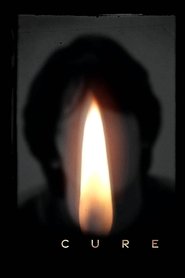
Cure (1997)
Kurosawa's answer to the glossy serial-killer thriller is subtraction: no grand design, no charismatic mastermind, no close-ups when you'd expect them. Tokushô Kikumura shoots in drained grays and sickly fluorescents, holding figures at a distance inside wide, sustained frames, so dread seeps in from the edges of rooms. Watch the hypnosis scenes — a flame, a drip of water, a patient voice — and notice that the film is doing to you exactly what its quiet stranger does to everyone he meets. You lean toward the light too.
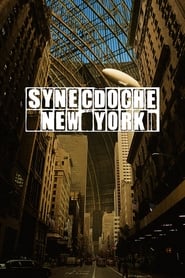
Synecdoche, New York (2008)
A woman tours a house that is actually, visibly on fire, and buys it anyway; nobody treats this as strange. That flat calm is the film's method: Frederick Elmes (who shot Eraserhead) photographs the impossible with unhurried, autumnal naturalism, never flagging the uncanny. Watch what happens as a theater director builds a full-scale replica of his own life inside a warehouse — hiring an actor to play himself, then an actor to play that actor — and the boundary between the model and the life it was meant to study quietly stops existing.
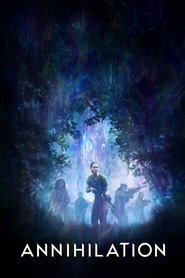
Annihilation (2018)
Two deer step from the brush moving in perfect mirrored unison, and the expedition can only watch — no explanation, nothing to be done, the looking itself the whole event. Rob Hardy renders the Shimmer as a soap-bubble membrane, greens pushed toward the toxic, everything given an oily refraction. Watch how Garland strips his heroine — a soldier and a scientist, built for competence — of anything adequate to do, and how the finale surrenders words entirely to image and sound fused into one throbbing texture.
Watch these together and something cumulative happens: you start noticing how much of cinema's power lives between action and understanding — in the held shot, the withheld face, the object that knows more than the person holding it. Hitchcock pins your knowledge to a frightened woman's; Godard lets a chase go slack until only style remains; Tarr slows time until watching becomes a moral act; Lynch and Kaufman fold the image back on itself until the copy and the original trade places. They are all, in their different registers, films about attention — about what it costs to see clearly, and what the camera sees that we, and the people inside the frame, would rather not. Give them your patience, and they'll teach you a new way of watching everything else.