Sightlines · a mini film course
When Watching Becomes the Drama: Twelve Films About Knowing Too Much and Doing Too Little
There's a peculiar pleasure that connects these twelve films, and it isn't plot. It's the experience of knowing — of being handed a secret early, of watching a face register something it cannot say aloud, of seeing a plan tighten around someone who can't feel it yet. Again and again, these filmmakers place us one step ahead of their characters (or one devastating step behind), and then make us sit with that knowledge. Sometimes the camera watches rather than chases. Sometimes time is allowed to stretch, or is run backwards, or circles a corpse. Sometimes the brightest, most legible surfaces — a small town, a snowfield, California sunshine — turn out to be the most dangerous places on screen. Watch these together and you'll start noticing how much of cinema's real drama happens not in the deed, but in the space between what people know and what they can do about it.
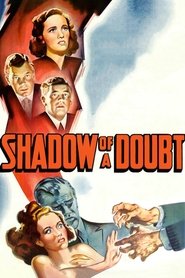
Shadow of a Doubt (1943)
Watch how shadow behaves in this film. Joseph Valentine photographs Santa Rosa's exteriors with almost documentary plainness — flat light, wide shots, a town that looks utterly legible — and then lets darkness slide laterally into the sunlit Newton household whenever a certain visitor enters, a trick descended straight from German silent cinema. The film's engine is knowledge, not action: pay attention to how carefully Hitchcock pins what you know to what young Charlie knows, so that her isolation becomes yours. And keep an eye on small objects; Hitchcock can make a ring carry an entire moral universe.
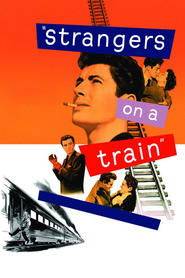
Strangers on a Train (1951)
The famous opening gives you two pairs of shoes — flashy two-tones one way, plain oxfords the other — converging across a station platform before you've seen a single face. That's the film's whole method in miniature: it's built out of pairings rather than deeds, doubles and mirrors and crossed paths, and you, the viewer, are the one who holds the connections in mind. This is also the film that began Hitchcock's great partnership with cinematographer Robert Burks, whose raking, high-contrast shadows turn psychological disturbance into something you can see. Notice how often the frame rhymes two things — and how much menace lives in the rhyme.
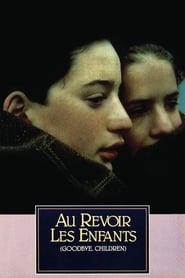
Au Revoir les Enfants (1987)
Malle's camera holds at a watchful distance — no melodrama, no nudging — in the tradition of The 400 Blows. Renato Berta's palette is cold and narrow: grays, browns, the bluish white of winter light in an unheated wartime school. Watch the boy at the center, played almost entirely through watchfulness rather than deed; this is a film about perceiving something enormous and having no action available. The most important events here may be as small as a glance — so watch the eyes.
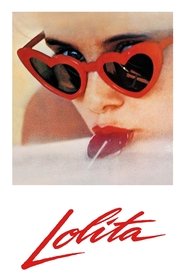
Lolita (1962)
Kubrick opens with the ending — a killing in a cluttered mansion — and then circles back, a structure he borrows from Citizen Kane, Sunset Boulevard, and Double Indemnity, so that everything you watch afterward feels like doom already sealed. Notice how Oswald Morris's camera favors long, fluid takes over aggressive cutting, letting scenes play out so that performance itself becomes the spectacle. And listen skeptically to the voice-over: this story doesn't unfold, it is confessed — by a narrator with every reason to lie. The film's dark comedy lives in the gap between what he says and what you see.
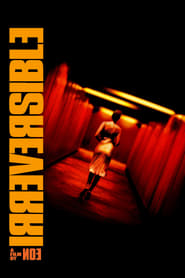
Irreversible (2002)
Noé runs his dozen long sequences from last to first — even the credits scroll the wrong way — so that you know outcomes before you know causes, and every tender moment arrives already shadowed. Benoît Debie's camera in the early sections never settles: it corkscrews and tumbles, unmoored from any human viewpoint, before the film's texture changes. This is time itself made the subject: le temps détruit tout, the film insists — time destroys everything. Watch for the small details planted in plain sight, like the title of a paperback lying in the grass. This is a genuinely extreme film — part of what critics called the New French Extremity — so know your own limits going in.
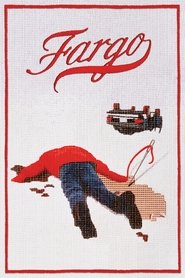
Fargo (1996)
Roger Deakins photographs the snowbound Midwest as a vast blankness: flat white ground meeting flat grey sky, human figures reduced to small dark smudges in a field that doesn't notice them. Watch how the Coens hold shots and let scenes sit, refusing the thriller's acceleration, so you feel the gap between a character's frantic effort and its total lack of effect. The film runs on the disproportion between a small greedy scheme and its enormous cost — and on the quiet contrast between venality and ordinary, principled decency. The comedy and the dread come from the same place: you can see the plan failing long before the planner can.

Life Is Beautiful (1997)
The film's boldest gamble is a scene of translation: a guard barks orders in German, and a father who speaks no German "translates" them into the rules of a game for his believing son — two incompatible versions of reality laid over one soundtrack. Watch how Benigni makes storytelling itself the drama: a fabrication built not to deceive for gain but to protect, drawing on Chaplin's The Great Dictator and Lubitsch's To Be or Not to Be, where performance outwits barbarism. Tonino Delli Colli's photography — from a career that includes Leone and Fellini — gives the film its split personality, and the whole structure pivots, like City Lights, from broad slapstick toward something else entirely.
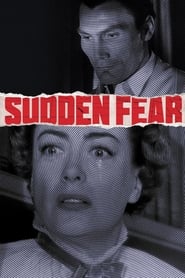
Sudden Fear (1952)
Charles Lang's Oscar-nominated photography splits the film in two: a warm, open San Francisco courtship that darkens into deep-shadowed noir. But the scene to slow down for is one of pure listening: a woman alone in a dark room, hearing something she cannot act on — and Crawford plays the entire arc in her face, muscles working in silence, feeling gathering toward a decision. Watch that face isolated in fields of black. This is a film about the unknowability of the person you love, told through performers playing performers — and about the terrifying moment before a victim decides to become an author.
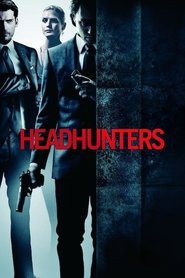
Headhunters (2011)
After all that watching and waiting, here's the machine running at full throttle: a protagonist who perceives, acts, improvises, survives, with every gear meshing. Tyldum went to school on Hitchcock — The 39 Steps' wrong-man trap, North by Northwest's plant-and-payoff construction where innocuous early details return as lethal mechanisms — so watch what the first act shows you casually; it will all come back. Andersen's camera shoots Oslo with gleaming, aspirational clarity that mirrors the hero's own curated self-image, then follows him down, unflinching, into places no image survives. A thriller about the performance of identity, told at the speed of consequence.

Chinatown (1974)
John A. Alonzo turns Californian light into moral weather: amber, dust-bleached, with the crimes happening in harsh midday sun — a deliberate inversion of noir's nighttime grammar, where shadow offers no refuge and daylight no clarity. Watch the detective work as detective work: Gittes photographs, tails, wades into irrigation channels, each procedural beat staged with quiet precision — and watch what the film does to that machinery. Note the white bandage Nicholson wears across half the film: a detective who can't follow his own nose, maimed on screen by the director himself in a cameo. Every disclosure here costs something.
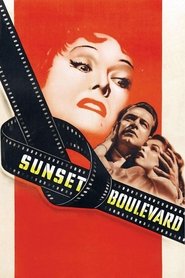
Sunset Boulevard (1950)
A dead man narrates his own story, calm and past-tense, and the camera watches him from below the water. Everything strange about the film floats in that opening: the ending sits at the beginning, and time circles rather than pushes forward. Watch the projector scene, where an aging star runs her own silent pictures in the dark and her younger, luminous self is thrown by a beam of light into the room where she sits — past and present sharing the same darkness, becoming impossible to tell apart. Seitz's low angles and deep focus make the mansion feel enormous and predatory, in the direct lineage of Citizen Kane's Xanadu. Mirrors and portraits everywhere: count them.
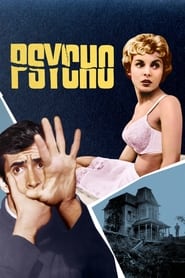
Psycho (1960)
Watch the first forty-five minutes as its own complete movie: a woman who does things — steals, drives, lies, decides — with every cut serving her flight, even her guilt rendered as imagined voices rehearsing consequences. Then watch what the film does to that engine. Hitchcock organizes everything around looking: who watches whom, through what frame, and what looking costs — and he implicates you at every turn. Note the deliberately plain, televisual photography by John L. Russell, stripped of Hitchcock's usual gloss, and the famous montage grammar that assembles violence from fragments, a technique with roots reaching back to Battleship Potemkin.
Watched together, these films teach a single lesson from twelve directions: that suspense, dread, comedy, and grief are all, at bottom, arrangements of knowledge — who has it, who lacks it, and what the gap does to everyone caught inside it. You'll start seeing the rhymes. Kubrick and Wilder both open on endings; Noé takes that idea and runs an entire film in reverse. Hitchcock builds drama out of pairings and shared secrets; Tyldum inherits his blueprints; Polanski and the Coens inherit his genre and quietly cut its wires, making films where effort and effect come apart. Malle and Benigni put children at the center of history's machinery — one answering with watchful silence, the other with a fabulous, loving lie. And running under all of it: faces in darkness, shadows crossing sunlit rooms, small planted objects returning with terrible weight. Watch for the moment in each film when the camera stops chasing and starts watching. That's where these movies live.