Sightlines · a mini film course
The Detective Who Can No Longer Simply Act
Here is a set of films that all circle the same question: what happens when seeing something terrible doesn't tell you what to do about it? Some of these films run on the classic engine of cinema — a person perceives a wrong and acts to right it, cleanly, decisively. Others deliberately break that engine and study the wreckage: detectives who absorb rather than deduce, witnesses who cannot speak, towns where every gesture of change has quietly stopped working. Watched together, they form a conversation about action and helplessness — about the camera that chases versus the camera that waits, and about what floods into a story when its people can no longer fix what they see. Notice, across all eleven, how the place itself does the pressing: a sunlit small town, a chalk outline on a black floor, a snowfield, a valley, an Arctic summer that will not go dark.
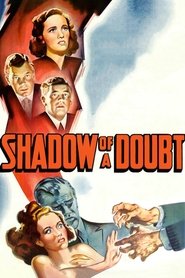
Shadow of a Doubt (1943)
Watch how Hitchcock photographs the sunny town of Santa Rosa with an almost documentary plainness — flat light, wide legible streets — and then lets shadow creep laterally into the warm family home whenever one particular visitor enters, a strategy inherited from silent-era masters like Murnau. The real suspense here is never in a deed; it's in who knows what, and what each person knows about the other's knowing. Your knowledge is deliberately pinned to young Charlie's: you learn as she learns, and you feel her isolation as she becomes unable to speak without shattering the family around her. Keep an eye on the objects — Hitchcock can load an entire relationship into a ring held up to the light.
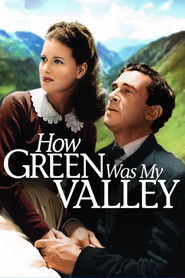
How Green Was My Valley (1941)
Ford built an entire Welsh mining village from scratch in the Santa Monica hills so that home, chapel, street, and pithead could all sit legibly inside one deep-focus frame — a whole society visible in its physical relation to its labor. Watch the scenes where nothing dramatic happens: miners climbing a street singing, a mother at her doorway. This is classical cinema's engine running beautifully — a world presses on a family, the family answers, and each answer reshapes the world. Notice how place and people stamp each other; it's the standard against which the later films in this set measure their broken worlds.
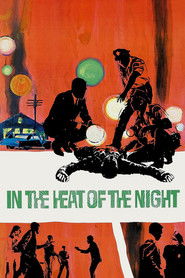
In the Heat of the Night (1967)
Haskell Wexler's hot, close, sweat-sheened camera makes the Mississippi town of Sparta feel physically hostile — long lenses compressing space, isolating Sidney Poitier's Virgil Tibbs inside rooms that don't want him. This is a detective story where the detective's power to read a clue and act on it works at full strength, and every small confrontation — over a form of address, a doorway, the right to give an order — carries the whole weight of the film's argument about dignity. Watch for one returned slap and how the camera goes not to the blow but to the faces around it.
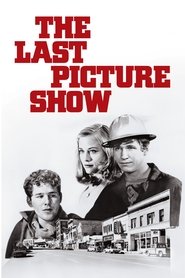
The Last Picture Show (1971)
Bogdanovich, counseled personally by Orson Welles, shot this in hard black-and-white with deep-focus frames that hold a whole dying Texas town in view at once — and he restages the iconography of Ford's Westerns only to show it depopulated and exhausted. Listen to the wind and the grit before anyone speaks. The young men here look and drift and endure; the frontier engine — see a threat, ride, settle it — has stopped turning, and the film's melancholy comes from watching people inhabit its ruins.
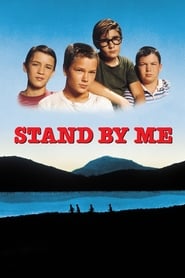
Stand by Me (1986)
It looks like a quest — four boys, a rail line, a destination — but watch what the film actually values: the walking, the talking, the golden hazy light on the tracks converging toward the horizon. Thomas Del Ruth's unhurried, wide compositions trust the actors completely, and the adult narrator's remembering voice (a device borrowed from To Kill a Mockingbird) frames it all as something already lost. Watch especially for a quiet dawn scene involving a deer — a moment where nothing happens, and where the whole film holds still.

Once Were Warriors (1994)
The opening shot is a lesson in itself: a postcard-perfect landscape that turns out to be a billboard bolted over a roaring motorway. Stuart Dryburgh's glossy, neon-inflected camera makes the pub interiors glow amber and red while the domestic spaces stay flat and cool. Watch how a recognizable world — the wage, the bar, the cramped state house — sits like a thin crust over something older and more volcanic, a warrior inheritance with no proper battlefield left. Temuera Morrison's performance channels Brando's Stanley Kowalski: magnetic and terrifying in the same breath.
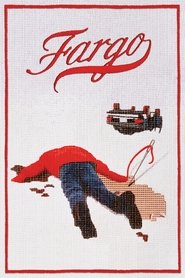
Fargo (1996)
Roger Deakins photographs the snowbound Midwest as a vast blank page — flat white ground meeting flat grey sky, human figures reduced to small dark marks. Watch the scene of a man beating an ice-scraper against a windshield in an empty white lot: the Coens hold the shot, and you feel the gap between effort and effect just sit there, open. You'll often know more than any character does, and the film lets that knowledge curdle into both comedy and dread. Against all the futility, notice the one character whose ordinary decency simply works.
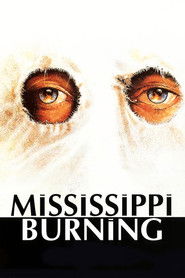
Mississippi Burning (1988)
Parker opens with two drinking fountains, side by side, labeled — an image you don't interpret so much as instantly recognize. Peter Biziou's Oscar-winning photography pushes the skies toward white and the palette toward dust and amber, echoing Depression-era documentary stills. This is the classic engine at its most forceful: a hostile world leaning on the frame until decisive men act on it. Watch it in dialogue with In the Heat of the Night, whose template it extends — and notice the question its own structure raises about whose story is being told.
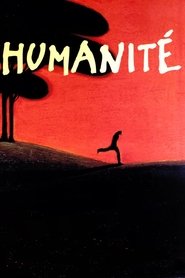
Humanité (1999)
Dumont builds a murder mystery around a policeman who has lost the one faculty the genre celebrates: turning what he sees into what he does. Instead of deducing, Pharaon absorbs — watch him lean in to smell people, nose almost on the skin. Yves Cape frames tiny figures against the agricultural flatness of Flanders, alternating with unsparing close-ups held in long, patient takes; the model is Bresson, where grace is read off an inexpressive face given time. Let the slowness work on you — the stretched time isn't emptiness, it's the film's whole subject.
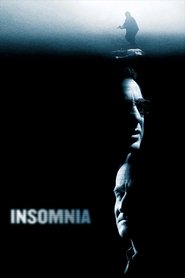
Insomnia (2002)
Nolan inverts noir's oldest rule: instead of shadow, overexposure. The perpetual Arctic daylight is exhausting where it should be clarifying, and the film's central image is a man jamming a towel under a curtain, trying to manufacture darkness — and failing. Watch Pacino play a great detective's engine going slack: not a rupture but a slow leak, hesitation piling on hesitation, the movement going syrupy. The genre keeps promising resolution; notice how the film keeps deferring the feeling of it.

Dogville (2003)
Von Trier strips away the visible world — a town rendered as chalk lines and hand-lettered labels on a black floor, borrowed from Thornton Wilder's bare-stage Our Town — and then sets Anthony Dod Mantle's restless handheld camera hunting among the actors inside it. Watch the very first knock: a woman raps her knuckles on empty air and a latch clicks from nowhere. With no doors and no walls, you have to read every image rather than simply watch it, and that labor makes you strangely complicit. Notice how darkness, not architecture, defines the spaces — pools of light isolating bodies on a near-abstract stage.
Watch these together and you'll start to feel the difference in your own body: the satisfying click of a world where action lands (How Green Was My Valley, In the Heat of the Night, Mississippi Burning) against the slow ache of worlds where it doesn't (Fargo, Humanité, The Last Picture Show, Insomnia). The middle cases are the richest — Hitchcock's suspense built entirely out of who knows what, von Trier's town you must decipher line by line, the boys on the tracks whose journey matters more than its destination. What connects them all is a conviction that how a camera behaves — whether it chases or waits, isolates or encompasses, shows the deed or shows only the aftermath — is the meaning. Attention is the whole price of admission here, and these films repay it compounded.