Sightlines · a mini film course
The Space Between Seeing and Doing
Every spy movie is secretly a movie about attention — about who notices what, and whether noticing is enough. This set of eleven films, spanning ninety years, keeps circling one question: what happens in the gap between perceiving a danger and being able to act on it? Some of these films close that gap with exhilarating speed — a glance becomes a gearshift becomes a swerve. Others pry it open and let you sweat inside it: a glove fails half a mile up, a file copies too slowly, a man watches something he cannot change. Watched together, they form a conversation about how thrillers are built — chase or watch, run or endure — and about the bodies, institutions, and landscapes caught in between.
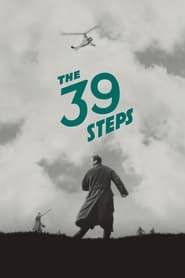
The 39 Steps (1935)
Listen for the cut where a landlady's scream becomes a train whistle — the film converts horror into motion in a single frame, and never stops moving after that. Hitchcock fuses the innocent-man-on-the-run picture with romantic comedy at a relentless tempo, using shadowy, near-expressionist passages (a lamplit cottage, fog and torchlight on the moors) learned from German cinema. Notice how respectable surfaces keep concealing treachery, and how the police — the people meant to protect an ordinary man — become his hunters. This is the template nearly everything else on this list will borrow.
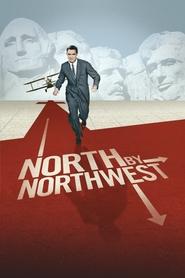
North by Northwest (1959)
Watch how the visual register shifts: constricted Manhattan interiors, the formal geometry of the UN, and then a prairie so radically open it becomes its own kind of trap — a man in a gray suit at a crossroads with the whole horizon visible and nothing on it. The engine here is what you know that the hero doesn't; Hitchcock hands the audience the web of connections and lets you sweat over it. And savor the film's deepest joke: a man whose job is manufacturing images for a living gets mistaken for a man who doesn't exist at all.
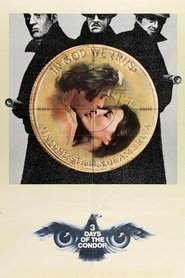
Three Days of the Condor (1975)
The hero is a reader — his job is noticing anomalies in books — and the film's dread lives in the gap between how clearly he can see and how little he can do about it. Watch how New York becomes a labyrinth: brownstone staircases, phone booths, narrow sightlines. This is New Hollywood paranoia at full strength, where the conspiracy has no ceiling and every handhold of the older thriller — call your handler, trust the badge — comes away in the hero's hand. It borrows Hitchcock's wrong-man structure and then asks what happens when running isn't enough.
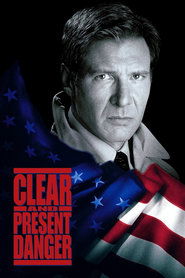
Clear and Present Danger (1994)
One of the tensest scenes in the movie is two men typing at each other — one copying a file while the other deletes it out from under him. Noyce runs the classic thriller through information: paperwork, chain-of-command sparring, and surveillance become the action. Watch McAlpine's photography split the film into two worlds — Washington in cool, shadowed, wood-paneled light against the heat of the field — and notice how the title's legal phrase gets quietly repurposed to point somewhere unexpected.
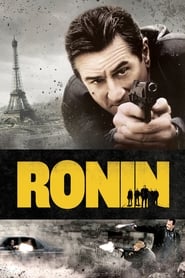
Ronin (1998)
Watch the briefcase — who can reach a weapon, who owns the exit, who has the high ground — and notice that the film never shows you what's inside it. The hole is the argument. Frankenheimer, drawing on his own Grand Prix, shoots the car chases with real vehicles at real speed and cuts for coherence, never confetti: you always know where hunter and hunted are. The cool, overcast European palette strips the thriller of glamour, and the title's samurai legend — warriors who have outlived their masters — hangs over every ex-operative in the frame.
The Insider (1999)
Mann takes the journalism-procedural grammar of All the President's Men — phone calls, documents, editorial friction — and quietly removes its promise that digging fixes things. Watch Spinotti's restless, near-documentary camera: handheld long lenses that isolate a face, frames that breathe and drift, focus that searches. And watch for a hotel-room moment where a wall seems to thin into something only one man can see — held just long enough that you can't call it flashback, threat, or daydream. It's a thriller about knowing everything and being permitted to say nothing.
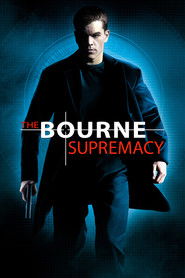
The Bourne Supremacy (2004)
Watch Bourne in a market before anything happens: he's reading exits, sightlines, a car parked a beat too long — and the handheld camera makes you attend the way he does. This is where Greengrass's documentary background (he made the you-are-there docudrama Bloody Sunday) becomes a thesis: the frame chases the world rather than composing it, long lenses smear crowds into static, and you're never given the god's-eye view because the hero never gets one either. Underneath the jitter, it's a film about memory and atonement — identity as something earned through accountability.
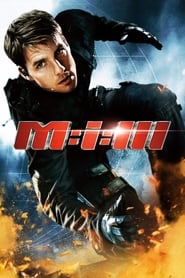
Mission: Impossible III (2006)
The film opens on its own worst moment, ripped out of sequence — then flashes back, so you spend two hours watching a life get built precisely so you can dread its demolition. Abrams imports his TV toolkit (the cold-open hook, the spy team as family) and Dan Mindel's close, handheld, lens-flared camera keeps faces at the center of the spectacle. Watch how the franchise's mask-and-disguise machinery becomes a metaphor: a man whose vocation is deception trying to be honestly present in a marriage.
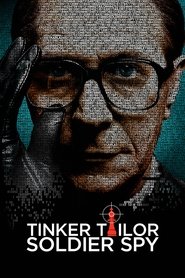
Tinker Tailor Soldier Spy (2011)
The counter-argument to everything else here: a spy film where the hero almost never acts. He reads a file, listens to a tape, remembers a party — and it's gripping, which is the puzzle worth solving. Watch van Hoytema's photography of enclosure: characters framed through frosted glass, doorways, partitions, spectacle lenses, everyone watching everyone in a service that has turned its surveillance inward. It's the anti-glamour le Carré tradition — betrayal as bureaucracy — delivered with a cool Nordic restraint that lets scenes hang in cold silence.
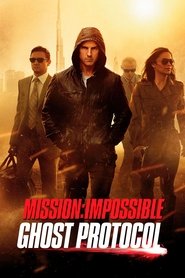
Mission: Impossible – Ghost Protocol (2011)
Watch for the moment a climbing glove blinks dead half a mile up the Burj Khalifa — the joke is the whole movie. Nearly every gadget fails, and suspense pours into the stutter between seeing the danger and answering it. Bird, arriving from animation, brings the legibility of The Incredibles to live action: wide frames that hold the performer and the hazard in the same shot, space you can always read. Note the against-type hiring of Robert Elswit — Paul Thomas Anderson's Oscar-winning cinematographer — to shoot a stunt picture: clean, comprehensible space as a craft philosophy.
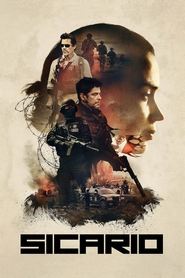
Sicario (2015)
Watch where Villeneuve keeps putting his protagonist: in a doorway as shooting starts, in the back seat of a convoy that won't say where it's going, at the edge of a briefing where the real plan is decided elsewhere. She's a good agent who perceives clearly and can change nothing — and the film smuggles that stall into a genre picture and makes it the engine. Deakins shoots the border landscape as geology rather than postcard, wide frames dwarfing the humans, refusing the Western's mythic register. It's an anatomy of complicity: how institutions recruit people into things they'd refuse if told the truth.
Watched in sequence, these films become a single long argument about what an action movie is. Hitchcock builds the machine: a hero who sees, decides, moves, and transforms the world. Frankenheimer, Bird, and Abrams run that machine at maximum voltage, each finding new ways to make the gap between seeing and doing visible — a failing glove, a real body on a real building. And then Pollack, Mann, Alfredson, and Villeneuve slow the machine down or break it entirely, giving us watchers instead of runners, heroes whose clearest perceptions lead nowhere they can act. The reward of seeing them together is that each film teaches you how to watch the next: you start noticing who owns the exits, whose knowledge outruns whose power, when the camera chases and when it simply, patiently, watches. That noticing — the thing every spy in these films lives or dies by — becomes yours.