Sightlines · a mini film course
A Mini-Course in the Espionage Thriller: Knowing, Seeing, and (Sometimes) Being Unable to Act
Every film in this set is about spies, conspiracies, and people caught inside machinery bigger than themselves — but that's not what binds them. What binds them is a question of distance: the distance between what a character knows and what we know; between seeing danger and being able to answer it; between the person on the ground and the institution watching from above. Some of these films close that gap at exhilarating speed — a glance becomes a gearshift becomes a swerve. Others pry the gap open and make you live inside it, watching alongside a character who can perceive everything and change nothing. Watched together, they form a spectrum: from the thriller as pure motion to the thriller as pure watching, with some of the most interesting films sitting nervously in between.
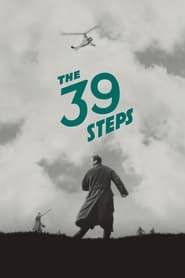
The 39 Steps (1935)
Start here, at the source. Watch how Hitchcock converts everything into forward motion — most famously the cut where a landlady opens her mouth to scream and what comes out is a train whistle, yanking you three hundred miles north in a single frame. Notice too the doubling everywhere: respectable surfaces hiding treachery, strangers who may be allies or enemies, an innocent man forced to perform false identities just to survive. This is the template — the wrong man on the run, romance fused to peril, all of it at relentless tempo — that half the films below inherit.
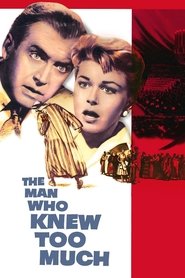
The Man Who Knew Too Much (1956)
Watch the printed concert program change hands early in the Albert Hall sequence, because from that moment the music becomes a clock: you know a cymbal crash is coming, you know why it matters, and Hitchcock makes you suffer every bar in something close to real time. This is Hitchcock's great gift to suspense — telling the audience more than the characters, so the tension lives in your head, not on the screen. Notice also how the espionage machinery is really a delivery system for something more intimate: a strained marriage, parental terror, a wife whose competence keeps being sidelined.
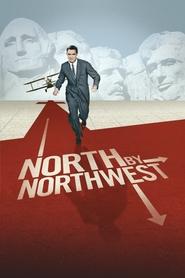
North by Northwest (1959)
Watch how the visual register keeps shifting — cramped Manhattan interiors, the formal geometry of the UN, and then the terrifying openness of the prairie, where a man in a gray suit stands at a crossroads with the whole horizon visible and nothing on it. The famous crop-duster scene works because you already know what Thornhill doesn't; your knowledge is the engine. And keep the film's sly joke in mind: a man whose job is manufacturing images is mistaken for a man who doesn't exist at all. Identity here is a suit someone else hands you.
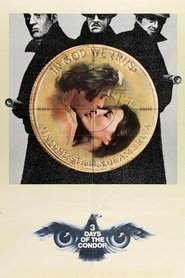
Three Days of the Condor (1975)
The New Hollywood inheritor of Hitchcock's wrong-man structure — but watch what's changed. Manhattan is shot as a labyrinth of narrow sightlines, brownstone staircases, and phone booths, and the hero is a reader, a junior analyst whose skill is noticing patterns in books. Notice how the film keeps offering him the standard thriller handholds — call your handler, trust the badge — and how each one comes away in his hand. Perceiving clearly and acting effectively have come apart, and the dread lives in that split.
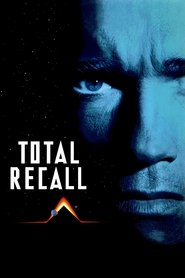
Total Recall (1990)
Watch for the scene where a calm, reasonable man offers Quaid a pill and an explanation: none of this is real, and you can wake up. Verhoeven shoots it so you genuinely can't tell if he's lying — and he has said outright that he built the entire film so two mutually exclusive readings stay coherent all the way down. Notice Jost Vacano's restless handheld camera (honed in the corridors of Das Boot) keeping even the glossiest scenes slightly destabilized. This is the identity crisis of the wrong-man thriller pushed to its limit: not "they think I'm someone else" but "I may not know who I am."
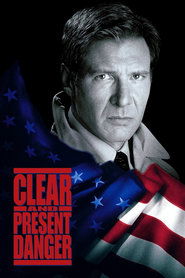
Clear and Present Danger (1994)
Watch the film's quietest, tensest image: two men typing at each other across a hemisphere — one copying a file, one deleting it out from under him, a progress bar crawling. No guns in frame. Notice how McAlpine's photography splits the film into two worlds — Washington in cool shadow and wood paneling, the field in heat and light — and how the real "clear and present danger" of the title migrates from a foreign cartel to the hero's own government. Paperwork as suspense; bureaucracy as battlefield.
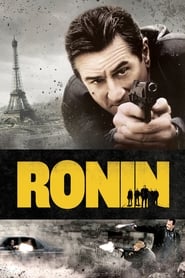
Ronin (1998)
Watch the briefcase — who can reach it, who owns the exit — and notice that the film never shows you what's inside. Nobody opens it; the hole is the argument. Then watch the car chases through Nice and Paris: real vehicles at real speed, cut for coherence rather than confetti, so you always know exactly where the hunter is relative to the hunted, in the tradition of Bullitt and The French Connection. Frankenheimer strips the thriller of glamour — overcast skies, available light, men defined by codes who have outlived the masters those codes served.
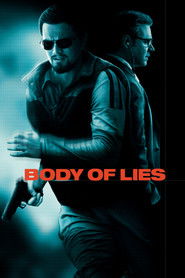
Body of Lies (2008)
Watch the vertical cut: a man sweating through a crowded street in Amman, then the leap upward to a drone feed where he becomes a pale shape on a monitor in suburban Virginia. Scott keeps returning to that cut, and it's the film's conscience — the same human being shown twice, once as a body in danger and once as information. Notice the tension between the overhead eye that sees everything and understands nothing, and the film's counter-argument: that trust is the only real currency of this work, and it can only be earned in person, at shared risk.
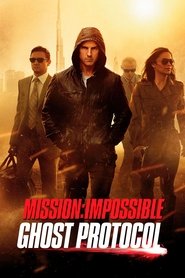
Mission: Impossible – Ghost Protocol (2011)
Watch the gadgets fail. Nearly every device in this film malfunctions at the worst possible moment — the climbing glove blinking dead half a mile up the Burj Khalifa, the holographic screen glitching — and suspense pours into each stutter. Notice why Brad Bird hired Robert Elswit, an Oscar-winning art-house cinematographer, to shoot a stunt movie: wide, clean framings that hold the performer and the hazard in the same shot, importing the legible, comic-timed action grammar Bird perfected in animation. The film keeps reminding you that its hero is a body that has to decide.
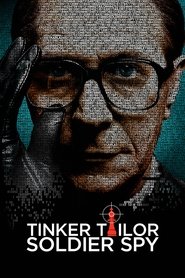
Tinker Tailor Soldier Spy (2011)
Here the thriller slows almost to stillness — and becomes gripping anyway, which is the puzzle worth solving. Watch how van Hoytema frames everyone through glass, doorways, and partitions: a secret service that has turned its surveillance inward, onto itself. Smiley barely acts. He reads a file, listens to a tape, remembers a Christmas party — and the film hands nearly every scene over to pure looking and listening. This is the anti-Bond tradition at full strength: drab, bureaucratic, elegiac, where betrayal is ordinary and watching is the drama.
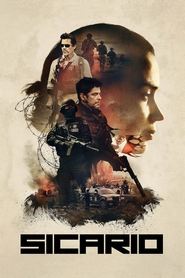
Sicario (2015)
Watch where Villeneuve keeps placing Kate Macer: in a doorway as shooting starts, in the back seat of a convoy that won't say where it's going, at the edge of briefings where the real plan is decided somewhere she is not. She's a good agent who perceives clearly and can change nothing — the whole argument is in the blocking. Notice Deakins's desert frames, geological rather than picturesque, dwarfing human figures without romanticizing the space. A genre picture that quietly tears up the genre's contract: the competent investigator, systematically denied.
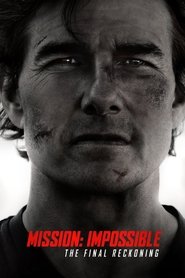
Mission: Impossible – The Final Reckoning (2025)
Watch the hand — knuckles white on the strut of a biplane, the ground a long fall below — and hold onto the promise that shot makes: the man is really up there, none of it was invented. Then notice the villain: an AI whose entire nature is fabrication, deepfakes, images that lie. The film is a duel between a body that cannot be faked and an enemy made of faking — thirty years of practical-stunt filmmaking arguing, in its final form, that physical courage and trust are things a networked, deceiving world cannot synthesize.
Why Watch These Together
Run in sequence, these films teach you to feel the machinery of suspense — and to notice when a filmmaker deliberately jams it. Hitchcock shows you the original engine: give the audience knowledge the characters lack, and let that knowledge do the work. The chase pictures — Ronin, Ghost Protocol, the Ryan and Hunt films — show that engine running at full legible speed, where craft means always knowing where the hunter stands relative to the hunted. And then Condor, Tinker Tailor, and Sicario show what happens when a director takes the same genre and slows the hand reaching for the door: heroes who see everything and can grip nothing, cameras that watch rather than chase. By the end you'll notice it everywhere — the held beat between seeing danger and answering it — and you'll understand that the whole history of the thriller lives inside that beat: how long it lasts, who controls it, and what it costs.