Sightlines · a mini film course
The Case That Can't Be Closed: Twelve Nights in Noir
Every film in this set puts a watcher at its center — a detective, an agent, a stranger in a foreign city — and then quietly asks a heretical question: what if watching, following, and figuring things out isn't enough? Classic Hollywood ran on a simple promise: a hero sees a problem, acts, and the world changes. These twelve films, spanning eighty years, are all in conversation with that promise — honoring it, bending it, sabotaging it, or shattering it into fragments of memory and dream. What connects them isn't just shadows and murder. It's a shared fascination with the gap between seeing and knowing, between the beautiful surface and what it conceals — very often the sunlit, lying surface of Los Angeles itself. Watch them together and you'll see one long argument about what a camera owes the truth.
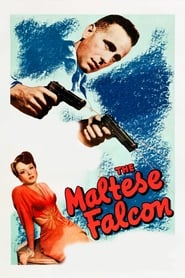
The Maltese Falcon (1941)
The founding document. Notice how little actually happens — Huston builds nearly the whole film out of people talking in rooms, because the real action is inference: Sam Spade reading people and objects like texts, and us reading over his shoulder. Watch Arthur Edeson's lighting, honed on Frankenstein — figures carved out of near-total darkness with hard pools of light — and the deep-focus compositions that trap characters inside layered planes of décor. Everyone here is pursuing something under cover of something else; the film teaches you to distrust every motive, including the hero's.

Double Indemnity (1944)
Watch the venetian blinds. John Seitz prints slanted shadows across faces and bodies like the bars of a cell nobody has entered yet — spaces that look open and quietly close around their occupants. Notice the film's boldest structural gamble: the story is narrated from its own aftermath, so every confident action the hero takes runs side by side with a doom we already know is coming. And study Barbara Stanwyck's flat, unreadable performance, built from Weimar-era models of erotic opacity — a surface the camera cannot get behind.
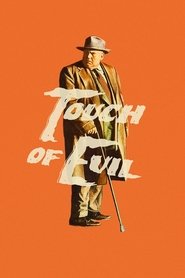
Touch of Evil (1958)
The famous opening: a car with a bomb in its trunk, and a camera that leaves the ground to follow it — three unbroken minutes threading traffic, neon, and music through a border town, no cut. Feel how that single motion binds strangers together and makes the whole town seem alive past every edge of the frame. Then watch how Welles shoots his corrupt cop from floor level, wide-angle, ceiling pressed down on his head — the lens itself distorting a man into something monstrous. Scenes here move by actors advancing on and retreating from the camera rather than by cutting; it's noir pushed to gorgeous, self-conscious excess, the classical cycle's terminal statement.

Chinatown (1974)
Noir usually hides its crimes in the dark; Polanski stages his in harsh California midday, where daylight offers no clarity and shadow no refuge. Watch John Alonzo's amber, sun-bleached palette treat light itself as a kind of moral weather. And keep your eye on the bandage that spends half the film taped across Jack Nicholson's face — a detective who can't follow his own nose, expertly gathering clues in a world where every discovery only makes things worse. The private-eye machinery runs at maximum craft, and it's being sabotaged from inside.
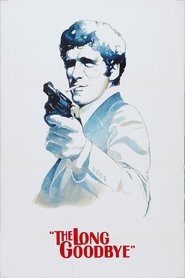
The Long Goodbye (1973)
Altman opens a murder mystery with a man trying to fool his cat with the wrong brand of cat food — and that errand is the whole film folded small. Watch Vilmos Zsigmond's camera: never still, always drifting, zooming, panning across rooms with its own curiosity, behaving like an alert but passive witness rather than a storyteller pointing at clues. Elliott Gould's Marlowe is a man of loyalty and effort adrift in a Los Angeles that has stopped keeping score. The tension between his old code and the camera's shrugging detachment is the film's real subject.
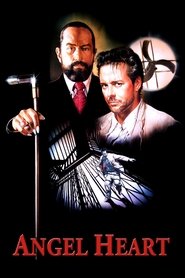
Angel Heart (1987)
A hardboiled private-eye film grafted onto occult horror, filmed through perpetual smoke and dust — grey, verminous New York; humid, amber, rotting New Orleans. Watch the ceiling fans: a slow blade chopping the light in almost every room, an image the hero keeps not looking at and the film keeps making you look at. Notice the near-subliminal flash-cuts seeded into naturalistic scenes, a technique inherited from The Exorcist. This is an investigation film where the gap between what the image knows and what the man inside it can bear to know does all the work.
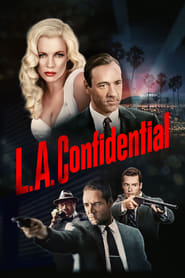
L.A. Confidential (1997)
Watch how Dante Spinotti lights the fake with love. In a story about a city of manufactured surfaces — tabloid press, a TV cop show, a vice ring selling call girls surgically altered to resemble movie stars — the film gives its counterfeit starlet the full warm, amber, 1940s glamour-portrait treatment anyway. The forgery is beautiful, the film knows it's a forgery, and it refuses to choose between those facts. Notice, too, how three very different detectives embody three different relationships to the gap between what the law says it is and what it actually does.

Dark City (1998)
A city of near-total night, lit hard and low through blinds and neon, its shadows descended straight from German Expressionism — Metropolis's vertical megacity, Nosferatu's silhouetted menace. Watch what happens when the clock strikes twelve: the citizens fall asleep standing up and the buildings themselves begin to move, towers screwing up out of the pavement while no one is awake to witness. It's a sealed world with no sun, no edge, no history you can trust — except for one word, a sunlit place everyone can name and no one can find. Watch how the film uses that word.
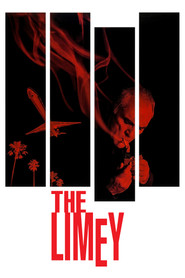
The Limey (1999)
Soderbergh's boldest move is borrowed footage: grainy 1967 film of a young Terence Stamp (from Ken Loach's Poor Cow) inserted as the older character's own remembered past — a real cinematic youth dropped whole into a man's remembering, never flagged as flashback. Watch how memory surfaces here the way it does in life: unannounced, mid-thought, past and present sharing the same frame. Ed Lachman shoots Los Angeles in unglamorous, bleached, sunstruck clarity — a city of glass and freeways, profoundly foreign to the hard Englishman moving through it. Grief, not vengeance, is what fractures the timeline.

Mulholland Drive (2001)
Lynch splits his film into two visual registers — golden, diffuse Hollywood glow on one side; something colder on the other — and lets Peter Deming's photography map the divide. Watch for the Club Silencio sequence, where a voice comes loose from the body that's supposed to produce it: a feeling that is real and manufactured at once, and a ninety-second demonstration of how all cinema works. The editing follows emotional association and unconscious rhyme rather than cause and effect, in the lineage of Sunset Boulevard's Hollywood-as-illusion-machine. Don't try to solve it in real time; let it be deciphered slowly, like a dream you're still inside.
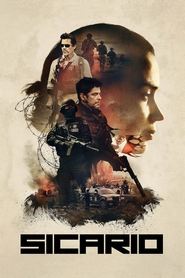
Sicario (2015)
Watch where Villeneuve keeps placing Emily Blunt: in doorways, in back seats, at the edges of briefings where the real decisions happen somewhere she is not. The blocking is the argument — a supremely competent agent who is always the person things happen near. Roger Deakins shoots the border landscape geologically rather than picturesquely, wide frames dwarfing human figures, borrowing the Western's scale while refusing its myth. This is a thriller that keeps converting action into something you can only witness — and making that helplessness the point.
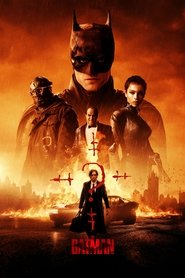
The Batman (2022)
Greig Fraser lights a blockbuster like The Godfather: radically underexposed, faces top-lit with eyes lost in shadow, light coming only from lamps and neon you can actually see in the frame. Watch how much of the film is watching — a hero introduced as the city's most patient observer, in a story where surveillance is the plot. The murders come with ciphers addressed to the detective, drawing on Zodiac's obsessive, document-driven procedural and Se7en's rain-soaked staging, so that we end up decoding over the hero's shoulder. It's a comic-book film built like a detective picture, and the difference shows in every frame.
Watched together, these films become a single long conversation across the decades. You'll see the venetian blinds of 1944 modernized into 1997's amber glow; the daylight fatalism of Chinatown echoing forward into Sicario's doorways and Angel Heart's bayou; the reading-over-the-shoulder pleasure of The Maltese Falcon reborn in The Batman's ciphers; and the confident classical camera slowly learning — through Altman's drift, Soderbergh's fractures, Lynch's dreams — to watch rather than chase, to let time stretch, to love a beautiful surface while telling you it's a forgery. The pleasure isn't in solving anything. It's in noticing how each film decides what a camera can promise you — and what it can't.