Sightlines · a mini film course
The Cinema of Watching: Twelve Films Where Looking Is the Action
Most movies chase. These movies watch. Across four countries and seven decades, the films on your list share a quiet conviction: that the most powerful thing a camera can do is hold still — on a face, a shadow, a beautiful room, a man who cannot bring himself to move — and let time do the work a plot usually does. In these films, light stops being mere illumination and becomes a force; faces stop being reaction shots and become events; beautiful spaces double as traps. Watch them as a set and you'll start to feel how much drama lives in the delay between seeing something and doing something about it — and what happens when that gap never closes.
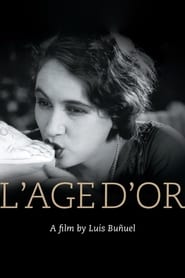
L'Âge d'or (1930)
Buñuel films outrage the way a nature documentary films scorpions — plainly, evenly lit, classically composed, refusing to flinch or wink. The scandal is never in the camera; it's in what the camera consents to look at without blinking. Watch the central lover: he isn't a man who weighs a situation and acts, but a man ridden by an appetite that erupts through good furniture and good manners while the world politely declines to notice. It's the founding joke of the whole Buñuel project: deadpan clarity as the sharpest weapon.
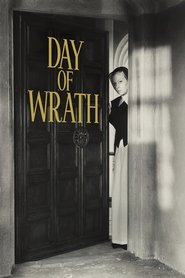
Day of Wrath (1943)
Watch how long Dreyer holds a face after the scene's business is over. In ordinary cinema a face is a relay — you read the feeling, the film cuts, the feeling becomes an act. Dreyer cuts the relay: the camera stays on Lisbeth Movin until her face stops being information and becomes the event itself, tiny movements gathering under the stillness like weather. The black-and-white photography, all Rembrandt shadow and white linen, does the same slow work — faces surfacing out of darkness, thought surfacing out of faces.
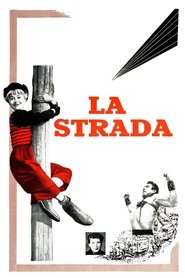
La Strada (1954)
Giulietta Masina's face is the film's whole instrument, and Fellini lights it plainly and evenly — no shadow to tell you how to feel. In the opening minutes her expression hovers between a grin and bewilderment, and the film refuses to decide for you whether to laugh or grieve. Her mime-built performance descends straight from Chaplin's City Lights: a single held look loaded with comedy and devastation at once. Notice, too, how the road scenes have the grainy overcast look of a documentary while the circus scenes tip toward fable — the film living in the seam between the two.
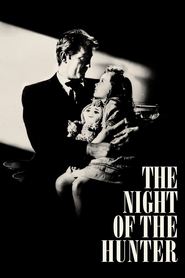
The Night of the Hunter (1955)
You'll remember the shadow before the man: a black cut-out thrown huge on a bedroom wall, more alive than the body casting it. Laughton — an actor directing his only film — understood that a predator is scariest not as a psychology but as a shape, and Stanley Cortez's stark pools of light and engulfing dark build a film that thinks the way a frightened child thinks: in pictures too large and too clear. Watch for the deliberate storybook flatness of the frames, borrowed from the silent era — this is a fairy tale wearing a thriller's clothes.
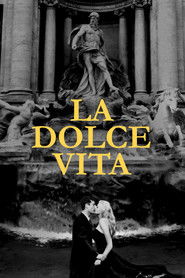
La Dolce Vita (1960)
The opening image is the film's thesis: a statue of Christ dangling from a helicopter over Rome, the holy and the trivial crossing the same sky while the rotor drowns out every word. Marcello is a professional watcher — a gossip journalist — and the film's radical move is that his watching never converts into doing; he drifts laterally through nights and dawns while the story refuses to become one. Watch Mastroianni's performance of intelligent, helpless receptivity, and Martelli's hard, bleached light that flattens celebrities into surfaces, like photographs of people rather than people.
Diary of a Chambermaid (1964)
Late Buñuel is even colder and more precise than early Buñuel: level camera, plain grey light, no music to tell you how to feel — a meal, a fetish, a corpse, all lit identically. That evenness is a method: the surest way to expose what drives this genteel Norman household is to refuse, absolutely, to be surprised by it. Watch how the widescreen frame places figures inside their rooms and rituals, so the manor starts to feel like a thin, respectable skin stretched over something feral.
Death in Venice (1971)
Hold onto this: the man at the center never crosses the room. He takes his café table, his deckchair, his gondola cushion — and it's the camera that does the reaching for him, De Santis's long slow zoom drifting across a hotel dining room until a face swims up close enough to touch and as far away as another country. That gesture is the whole film: desire that has quietly given up on action, leaving only looking. Let the milky lagoon light and the near-real-time pacing work on you; the slowness isn't padding, it's the subject.
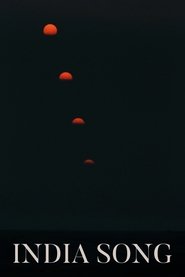
India Song (1975)
Nobody on screen speaks. Bodies drift through amber, smoky rooms — recumbent, statue-still — while the talking happens elsewhere: off-screen voices remembering, wondering, unsure of their own memories, conjuring the figures we see without ever getting an answer back. Duras split sound from image more completely than anyone before her, so that soundtrack and picture become two separate works communicating across a gap. Watch the great mirror shots, where you can't always tell the body from its reflection — the whole film is a present tense we're told, again and again, is already a memory.

Caravaggio (1986)
Nothing here was shot in Rome — Jarman made the film inside a blacked-out London warehouse and turned poverty into doctrine: no streets, no weather, just darkness out of which Gabriel Beristain's hard single light hauls a face, a shoulder, a bowl of fruit, exactly the way the painter's own canvases work. Watch for the held poses: a tired model lying still just long enough that you realize you've seen this image before, on a wall, behind glass — then he breathes and becomes a body again. The whole film lives in those few seconds between a person and the painting they're about to become.

The Belly of an Architect (1987)
Sacha Vierny — who shot Last Year at Marienbad — frames Rome head-on and dead-center: the Pantheon, the Vittoriano, monuments held in rigorous symmetry with a single human figure dwarfed inside the geometry. It's a film about permanence in stone set against the failing, perishable body, and every composition stages that argument. Watch what the architect actually does with his hands: he builds nothing, he copies — postcards, reproductions, photocopies — and the Xerox machine becomes one of the strangest, saddest props in 1980s cinema.
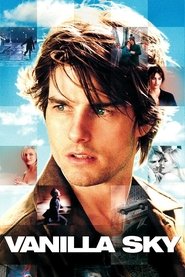
Vanilla Sky (2001)
Early on, a man finds Times Square scrubbed empty of every other human being — and the film shows you this gorgeous nightmare before telling you anything is wrong. That's the trick in miniature: John Toll's lush, high-gloss photography makes a world almost too beautiful to trust, and the film wants you to notice the "almost." Watch it as a hall of mirrors where present and memory, lived and dreamed, keep trading places in the same image — and treat every needle-drop on the soundtrack as a deliberate clue rather than decoration.
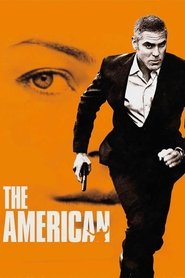
The American (2010)
Start with the back of his neck: Corbijn loves to film Clooney from behind, a small figure walking into a wedge of converging medieval stone, the beautiful town closing on him like a vise. Stop waiting for the chase — there isn't going to be one in the sense the trailer promised. Instead there's a man, a town, and the slow tightening of sightlines, with long wordless stretches of pure craft: exercises, coffee, a piece of steel being filed. The film even screens Once Upon a Time in the West inside itself, tipping its hat to the idea that waiting can be the drama.
Watched together, these twelve films retrain your eye. You'll start noticing how a single hard light against blackness (Caravaggio, Day of Wrath, The Night of the Hunter) can carry more menace and more tenderness than any dialogue; how a held face (La Strada, Day of Wrath) or a held distance (Death in Venice, The American) can replace an entire plot; how deadpan plainness (both Buñuels) and excessive beauty (Vanilla Sky, India Song, The Belly of an Architect) are two routes to the same destination — an image you can't quite trust and can't look away from. These are films that ask you to sit still the way they do. Give them that stillness, and they give back more per frame than almost anything else you'll ever watch.