Sightlines · a mini film course
The Watcher in the Dark: Cinema That Turns Looking Into the Story
Every film in this set is, one way or another, about a person trying to read another person — a detective studying a portrait, a wife listening in the dark, a profiler renting a killer's eyes — and every one of them quietly makes you the final reader. These are films where the camera doesn't just record events; it watches watchers. It gives you knowledge the characters lack, or withholds knowledge the characters have, and the gap between what you see and what they see becomes the whole electric charge. Across fifty years and four countries, these twelve films keep circling the same beautiful problem: looking is never innocent, an image can be more powerful than the person it depicts, and a story told with enough conviction can start to feel truer than the truth.
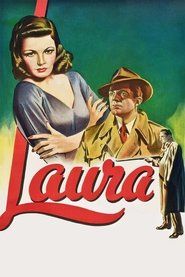
Laura (1944)
Notice how much of this film is built around a painting — a face lit just a half-shade warmer than the room around it, so it seems to hold its own small reserve of life. Joseph LaShelle's cinematography is elegant rather than shadowy: selective light that sculpts Gene Tierney's face into something ideal, which is exactly the point, because everyone in the film has turned Laura into an image of their own desiring. Watch how the detective comes to know her secondhand — through letters, possessions, testimony — and ask yourself whether he's falling for a woman or for a picture. The film borrows its held, layered compositions from Citizen Kane and its investigation-of-a-dead-woman structure from Rebecca, but makes something dreamier and stranger of both.
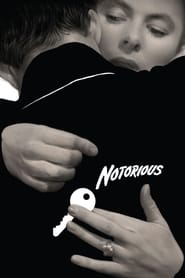
Notorious (1946)
Hitchcock's masterclass in what the audience knows. Watch for the famous shot where the camera starts high above a crowded party and travels, without a cut, all the way down to one small object in a woman's hand — a single gesture telling you that the film's meaning lives not in the crowd but in the secret. Ted Tetzlaff's photography keeps putting you inside a character's disorientation, and the suspense comes not from mystery but from your own uncomfortable knowledge. Beneath the espionage plot is something crueler and more romantic: a love story about whether trust can survive being tested.
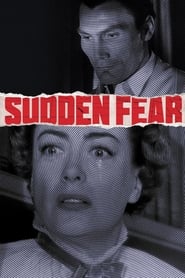
Sudden Fear (1952)
The film splits visually in two: a warm, open San Francisco courtship that darkens, in its back half, into deep shadow and oppressive interiors — Charles Lang's Oscar-nominated photography charting a marriage curdling in real time. Its great set piece is nearly silent: a woman alone in a dark room, listening, while Joan Crawford's face does all the storytelling. Watch that face work in close-up — feeling registering before it can become action, contentment giving way to horror giving way to cold calculation, almost wordlessly. It's a whole performance staged in muscle movements.
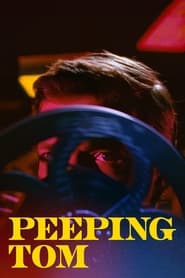
Peeping Tom (1960)
Powell's notorious film about a man who films — and about what that makes us, sitting there watching him. Notice the small mirror bolted to the killer's camera, an object that folds the whole movie into one image: recording and reflecting in the same instant. Notice too that we learn who he is almost immediately; the dread isn't whodunit, it's the distance between what the kind girl downstairs sees in him and what we already know. Otto Heller lights it all in colors that feel vaguely, inappropriately beautiful — an airy boarding house instead of gothic gloom — which only makes the discomfort sharper.
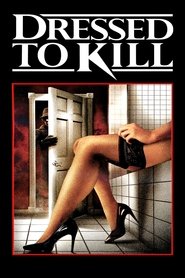
Dressed to Kill (1980)
Come for the museum sequence: several minutes without a single line of dialogue, just a gliding camera, Pino Donaggio's climbing strings, and a chase built entirely out of glances — who sees whom, who knows they're seen, what the camera knows that nobody in the frame does. De Palma is Hollywood's most devoted student of Hitchcock, and here he transplants that inheritance into something more voluptuous: mirrors that double and fragment people, and split-focus shots that keep near and far simultaneously sharp, so you're always watching two things at once. It makes looking pleasurable — and then makes you notice your own pleasure.
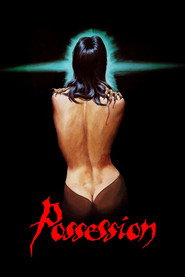
Possession (1981)
Fair warning: this one plays by different rules. Bruno Nuytten's camera behaves like an anxious participant, circling the actors, swinging after sudden movement, refusing the calm back-and-forth grammar of ordinary scenes; wide lenses turn Berlin apartments into pressurized boxes. Żuławski directed Isabelle Adjani to the edge of collapse, and the famous subway-corridor sequence is the result: a body not acting but undergoing, going on far past anything a plot would require, until you're watching raw duration itself. A marriage falling apart, staged as cosmic catastrophe.
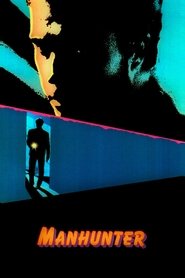
Manhunter (1986)
Michael Mann's forensic thriller makes perception itself the drama. Watch the scene where the investigator runs a murdered family's home movies alone in the dark and begins speaking to them — trying not to deduce but to occupy, to stand where the killer stood and see what he saw. Dante Spinotti's photography — cold blues, teals, hard horizons, wide empty spaces — turns the whole film into a study of watching, with the camera forever observing a man who is himself observing. Its glass-and-concrete architecture works on you like a mood.
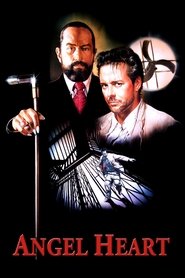
Angel Heart (1987)
A private-eye film that keeps all the moves of the genre — the wealthy client, the missing man, the trail of witnesses — while something underneath quietly rewires the machinery, so that every door the detective opens seems to tighten rather than loosen the knot. Michael Seresin films the world through smoke and dust: New York cold and verminous, Louisiana humid, amber, and rotting. Watch the ceiling fans — there's one turning at the top of almost every room, chopping the light into flicker, and the film keeps looking at them even when its hero won't. The image knows something the man inside it can't bear to know.
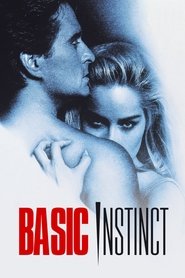
Basic Instinct (1992)
The interrogation scene is the film in miniature: five men circling one woman in white, Jan de Bont's camera gliding unhurried around her as if she were the still point and the entire apparatus of the law the thing in motion — and by the scene's end, the questioners are the ones being read. Verhoeven takes the classic femme fatale and makes her something bolder: a novelist, a woman who may be scripting the very story she's inside. Watch how confession, evidence, even seduction all become potential performances, and how the film refuses to let you peel fact from fiction.
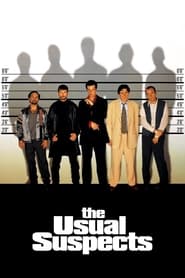
The Usual Suspects (1995)
A man sits in a bureaucratic white-box interrogation room and narrates — and the film does what films always do with narration: shows you the events, fully lit, fully scored, fully convincing. That's the trap. Newton Thomas Sigel deliberately strips the interrogation room of atmosphere so the baroque flashbacks feel more vivid, more real, than the room where they're being told. Watch how completely you trust images just because you can see them — this film inherits the confession-to-an-authority-figure structure of Double Indemnity and the competing-testimonies method of Rashomon, and turns your trust into the subject.

Dark City (1998)
Watch for the midnight sequence early on: an entire city falls asleep standing up, and the buildings begin to move — towers screwing up out of pavement, streets folding into new streets — while no one is awake to witness it. Proyas builds a metropolis with no sun, no edge, no history you can trust, drawing directly on the painted shadows of German Expressionism (the looming silhouetted figures descend straight from Nosferatu) and the stratified miniature city of Metropolis. Dariusz Wolski shoots it in near-total night, light carved from practical lamps and neon. Listen for one recurring place-name — a sunlit elsewhere everyone can name but nobody can reach.
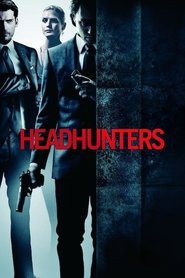
Headhunters (2011)
The most propulsive film here, and a great palate cleanser: pure mechanism, every gear meshing. Tyldum builds it on the oldest Hitchcock chassis — the imperfect civilian dropped into an impossible situation, forced to improvise survival — and on the plant-and-payoff craft of North by Northwest, where innocuous early details return as lethal ones. Watch the first act's aspirational surfaces (the gleaming lobbies, the too-big house, the too-neat breakfast table) with care: this is a film about a man performing an identity he can't afford, and everything the camera lingers on will come back. When things get grim, the camera refuses to flinch — and the refusal is somehow both horrifying and very funny.
Watched together, these films teach you to notice the thing most movies hide: the position you've been given as a viewer. Sometimes you know more than the characters and carry the dread for them; sometimes a narrator hands you images so convincing you forget to ask whether they're true; sometimes the camera makes looking so pleasurable that you catch yourself in the act. The through-line runs from a painted portrait in 1944 to a shape-shifting city in 1998 to a Norwegian con man in 2011, but the question never changes — what do you actually know, and who put that knowledge in your head? By the end of this set, you won't watch a suspense film the same way again. You'll watch it watching you.