Sightlines · a mini film course
Eyes in the Dark: Twelve Films About Watching
Here is a watchlist with a secret spine. Every film on it wears the clothes of the crime picture — shadows, murders, detectives, doomed romance — but none of them really runs on action. They run on looking. In these films, the drama isn't the chase or the punch; it's who knows what, who's watching whom, and what a face gives away when it thinks no one is reading it. The camera watches rather than chases. Light becomes a form of knowledge, and darkness a form of doubt. Watched in sequence, they trace fifty years of American cinema learning — and re-learning — that the most suspenseful thing you can film is a person trying to see clearly.
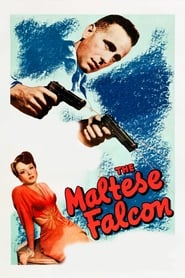
The Maltese Falcon (1941)
The founding document, and notice how little "action" it contains: this is a film built almost entirely of people talking in rooms, and the tension lives in what's said versus what's meant. Watch Arthur Edeson's photography trap characters in layered planes of décor — deep-focus compositions where everyone is visible and no one is legible. Sam Spade is less a man of fists than a man of inference; the pleasure is standing behind him, doing the same arithmetic.
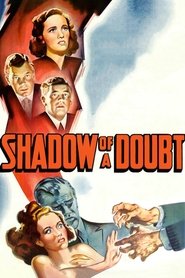
Shadow of a Doubt (1943)
Hitchcock brings menace home to a sunny small town, and the visual argument is everything: Santa Rosa is shot with almost documentary plainness, flat and bright — until shadow starts creeping sideways into the family house. Watch how the film ties your knowledge to young Charlie's, so that dread becomes something private, unspeakable inside a loving household. The terror here isn't in any deed; it's in what one person knows about another, and can't say at the dinner table.
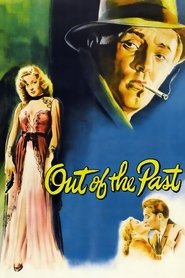
Out of the Past (1947)
Nicholas Musuraca lights this one with a single low, raking key, letting whole regions of the frame fall into true black — faces split by shadow, venetian blinds like bars. Notice the structure: a long drive at night, a voice beginning to remember, and a past that feels less like memory than like something waiting up ahead. The dissolves and the narration always tell you which layer of time you're standing in — and that clarity, strangely, is what makes it feel like a verdict being read.
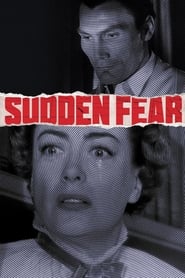
Sudden Fear (1952)
Charles Lang's Oscar-nominated photography splits the film in two: a warm, open San Francisco courtship that slowly darkens into deep shadow and oppressive rooms. This is a film about performance — an actor, a playwright, and the terrifying question of whether love itself can be staged. Watch Joan Crawford's face when Lang isolates it in fields of black: entire chapters of feeling cross it in silence, muscle by muscle. It's a masterclass in what a close-up can hold.
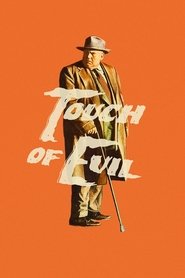
Touch of Evil (1958)
It opens with one of the most famous shots ever made — a single unbroken crane movement threading minutes of traffic, neon, and border-town life without a cut — and you should let it wash over you before asking why it matters: it binds a whole world together in one breath. Then watch what the wide-angle lenses do to Orson Welles's crooked cop, shot from floor level with ceilings pressing down. This is noir turned up to the point of exhaustion — every element pushed to grand, grotesque excess.
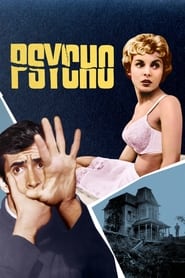
Psycho (1960)
Watch how much of this film is about being watched: from her first scene, Marion Crane is observed — by a boyfriend, a boss, a highway patrolman staring wordlessly through a car window — and Hitchcock quietly makes you one of the watchers. Shot fast and lean by a television cameraman rather than Hitchcock's usual prestige crew, its plainness is a trap. Go in knowing as little as possible, and trust that Hitchcock will break a rule you didn't know movies had.
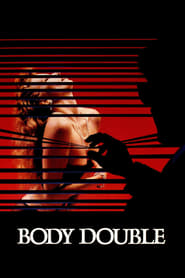
Body Double (1984)
De Palma rebuilds Hitchcock in glossy, saturated Los Angeles light, and his great trick is refusing to let the act of looking dissolve: when Jake aims his telescope at a distant window, the eyepiece's vignette and wobble stay in the frame. You're never allowed to forget you bought a ticket to watch a man watching. Look also for the split-diopter shots — foreground face and deep background both knife-sharp at once — vision made uncanny hardware.
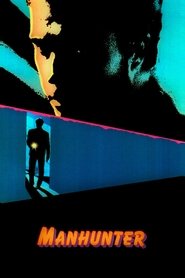
Manhunter (1986)
Michael Mann and Dante Spinotti compose in cold blues, teals, and clinical whites, with hard horizons and vast negative space — a thriller that looks like architecture. Its detective doesn't deduce; he occupies: Will Graham's method is to stand where a killer stood and rent his eyes, speaking the crime aloud in the present tense. The camera is forever watching a watcher, and the film asks whether that kind of seeing has a cost.
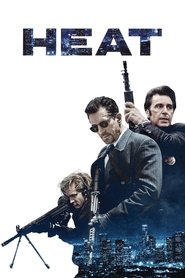
Heat (1995)
The scale is enormous — anamorphic widescreen, Los Angeles as glass towers, freeways, and dark Pacific — but seek out the film's still center: two men, a cop and a thief, across a coffee-shop table, no music, room noise pushed low, simply taking each other's measure. In a 170-minute crime epic, the most electric scene is the one where nothing can happen. Notice how Spinotti's palette splits the world: blue-green surveillance night against fragile, warm domestic interiors.
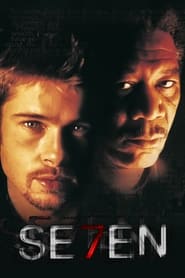
Se7en (1995)
A detective story that wants you to do homework: the crimes arrive as texts to be read, and the film's real procedure is a man in a library at night, pulling Dante off the shelf under Bach. Darius Khondji's hugely influential photography lights only from sources you can see — a bare bulb, a flashlight, streetlight through rain — letting maximum shadow claim the rest. Watch how it deputizes you alongside the detectives, teaching you to interpret before it lets you understand.
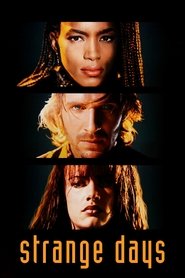
Strange Days (1995)
Kathryn Bigelow's opening puts you inside someone else's eyes — a first-person clip you don't watch so much as wear — years before GoPro and bodycam footage made that vision ordinary. The film maintains two distinct ways of seeing: the grimy, neon-soaked "real" Los Angeles, and the immersive playback of recorded experience. It's a thriller about the addiction of reliving other people's sensations, and it makes you feel the hook.
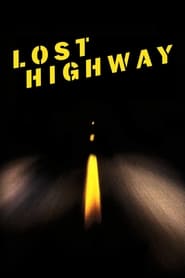
Lost Highway (1997)
Peter Deming photographs Lynch's film in engulfing darkness — rooms defined by what cannot be seen, characters walking into blackness and simply dematerializing — set against bleached, sun-struck daylight. Don't watch it for explanation; the film strips noir of motive and detection and keeps only the dread. Notice the doubling everywhere — faces, names, one actress in two guises — and let the film refuse, deliberately, to tell you which world you're in.
Watched together, these twelve films become a single long conversation about the act of seeing. The classic noirs carve knowledge out of shadow; Hitchcock turns the audience into an accomplice; De Palma, Mann, and Fincher make the watcher the subject; Bigelow puts the camera inside the skull; Lynch dissolves the difference between what