Sightlines · a mini film course
Shadow School: Twelve Nights in the Dark Where Watching Beats Doing
Every film on this list is, in some way, a crime picture — but the crimes are almost beside the point. What binds them is a shared suspicion: that what people show us and what people are might be two different things, and that the camera is the instrument for catching the gap. Across ninety years, these films keep returning to the same discoveries — that a face in shadow can tell you more than a chase, that appetite runs underneath good manners like a current, that light itself can lie beautifully — and that sometimes the most gripping thing a movie can do is stop moving and simply look. Watch them in order, and you can feel the crime film learning, decade by decade, to trust the audience's eyes over its own plot.
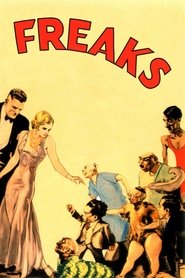
Freaks (1932)
Tod Browning ran away with a circus as a boy and worked as a barker — the man who sells you the spectacle — and then made a film that refuses to sell one. Watch how plainly and evenly he lights his sideshow performers: no gothic shadows, no gawking angles, just people filmed doing things well. The melodrama on top (a beautiful trapeze artist, a scheming strongman, money and marriage) is almost a decoy; the real subject is who deserves the word "freak," and the camera's calm is the whole argument.
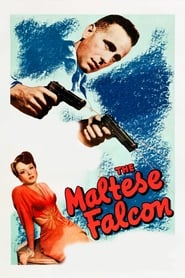
The Maltese Falcon (1941)
Nearly the whole film is people talking in rooms — and it's riveting, because talk is where the danger lives. Notice how Arthur Edeson's deep-focus compositions trap characters inside layers of furniture and shadow, and how Peter Lorre builds menace through insinuation rather than aggression. Bogart's detective barely throws a punch; he reads people, and the film quietly drafts you in to read alongside him.
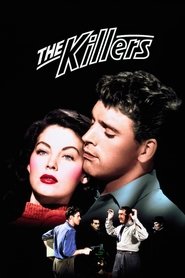
The Killers (1946)
The opening is one of noir's great set pieces: hard light raking down over a diner counter, two professionals waiting with their coats on, and a man in a boarding house who hears them coming — and does nothing. Hold on that stillness; the rest of the film is a mosaic of flashbacks, borrowed from Citizen Kane, assembling an explanation witness by witness. Woody Bredell's lighting is a masterclass in how much a film can withhold from the frame and still make you feel everything.
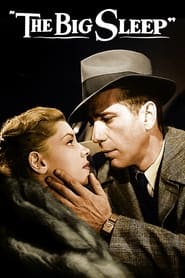
The Big Sleep (1946)
The first scene tells you what kind of ride this is: Marlowe sweating in a hothouse so tight and humid the room becomes a trap with orchids in it. Listen for Hawks's overlapping dialogue — actors talking across each other so that rhythm carries as much information as words — and don't panic when the plot gets murky. The murk is the point: you're placed in the detective's position of partial knowledge, trusting the man rather than the map.
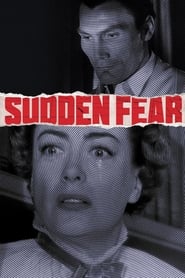
Sudden Fear (1952)
Watch this one for Joan Crawford's face and Charles Lang's Oscar-nominated photography, which are really the same subject. The film has a two-part visual structure — a warm, open San Francisco courtship that gradually darkens into deep shadow and oppressive interiors — and it asks a chilling question: how do you know the person you love isn't performing? He's an actor; she's a playwright; and at a crucial moment Lang isolates Crawford in a field of black and lets her face travel an entire emotional arc almost without a word. Slow down and watch the muscles work.
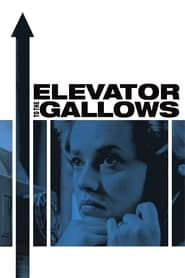
Elevator to the Gallows (1958)
Louis Malle's debut runs on two visual registers: controlled, hard-edged shadow for the interiors — a murder filmed with clinical, unglamorous efficiency — and something looser and more alive for the Paris night outside. The premise is right in the title: a careful man's perfect plan, and a stopped elevator. Notice how every modern convenience in the film — car, camera, elevator — turns on its user, and how the film lets time stretch while a man who has finished acting can only wait.

Chinatown (1974)
Classic noir hid its crimes in the dark; John Alonzo's photography puts them in blinding midday sun, where shadow offers no refuge and daylight no clarity. Watch Jack Nicholson spend half the movie with a white bandage across his nose — a detective who literally can't follow his own nose, maimed on-screen by a knife-wielding thug played by Polanski himself. Every procedural beat is executed at maximum craft, and the film uses that very competence to unsettling ends.

The Postman Always Rings Twice (1981)
Bob Rafelson brought in Sven Nykvist — Ingmar Bergman's cinematographer — to shoot pulp, and the collision is the film. Everything is lit as if by the actual bulbs and windows of a Depression roadhouse: dim, diffused, unromantic. Watch the famous kitchen scene, flour on the counter, and notice how the film treats hunger for food, for sex, and for escape as one continuous appetite, filmed in the same plain daylight.
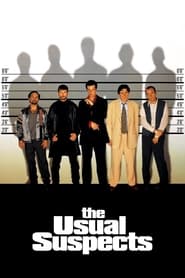
The Usual Suspects (1995)
The trick to appreciating this one on a first viewing: notice where you are. The interrogation room is a drab, fluorescent, bureaucratic white box — deliberately stripped of atmosphere — while the flashback sequences a small-time crook narrates are rich, shadowed, fully scored, fully convincing. Ask yourself, as you watch, why the flashbacks feel so trustworthy. The film knows exactly which cinematic habits you'll lean on, and it's counting on every one of them.
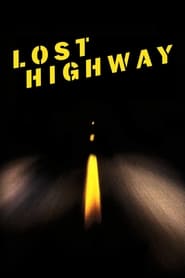
Lost Highway (1997)
Peter Deming photographs the Madison house as near-abstract darkness — rooms defined by what you can't see, characters walking into blackness and dissolving. Don't fight the film's dream logic or hunt for a timeline; Lynch is working in the tradition of Vertigo and Persona, where identity itself is the unstable thing. Watch instead for doubles, for surveillance, for the creeping sense that the film is watching its characters the way they fear being watched.
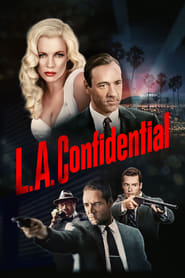
L.A. Confidential (1997)
Dante Spinotti lights 1950s Los Angeles in amber and gold — sunlight through venetian blinds, lacquered bars — and the warmth is a kind of trap. Watch for a woman lit exactly like a 1940s studio portrait of a movie star; the film knows the glamour is manufactured, lights it with full reverence anyway, and refuses to choose between the beauty and the forgery. Every institution in the film — the police, the press, Hollywood itself — is running the same con.
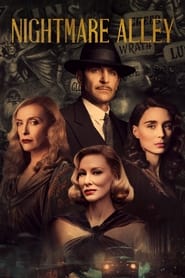
Nightmare Alley (2021)
Del Toro and cinematographer Dan Laustsen build the film on a strict color scheme: the carnival glows in amb