Sightlines · a mini film course
Beautiful Liars: Twelve Films That Stop Trusting Their Own Stories
Every film in this set descends from noir — the shadows, the murders, the doomed romances — but what actually binds them is something stranger and more exciting: each one, in its own way, breaks the old contract between camera and viewer. Classical movies promised that what you saw was what happened, that a hero who acted could change things, that the ending would sort the true from the false. These twelve films pick at that promise until it unravels. You'll watch characters who stage things rather than do them, narrators who build stories instead of reporting them, faces that perform feeling until you can't tell the performance from the person, and cameras that drift, watch, and stretch time rather than chase the plot. Seen in order, they trace a sixty-year arc: the machinery of the confident American thriller slowly seizing up — and turning that breakdown into a new kind of beauty.
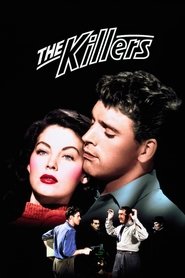
The Killers (1946)
Start with the opening: a man lies in a dark room, knows what's coming, and simply waits — the hero's reflex to act has already failed before the story begins. Watch Woody Bredell's lighting, hard shafts cutting through rooms with the depth of coffins, a style carried over from German Expressionism by émigré director Robert Siodmak. Notice too how the film is assembled: not told straight, but reconstructed from witnesses, a mosaic borrowed from Citizen Kane. Fate here isn't a plot device; it's the architecture.

In a Lonely Place (1950)
A noir with no femme fatale and no heist — the danger lives inside the protagonist and inside a love affair. Watch Burnett Guffey's lighting sculpt Bogart's face so that charm and menace can trade places within a single shot; the film weaponizes the trusted Bogart persona against you. And watch the hands: Nicholas Ray builds his most unnerving scenes around gesture and staging rather than deeds, moments where a man demonstrates what he's capable of without touching anyone. The mystery matters far less than the suspicion — and what suspicion does to intimacy.
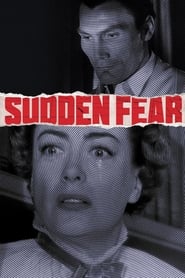
Sudden Fear (1952)
The great terror here is the unknowability of the person sharing your bed — he's an actor, she's a playwright, and the whole film asks whether love can be staged. Charles Lang's Oscar-nominated photography tells the story before the script does: the San Francisco courtship shot warm and open, the back half sinking into shadow and closed-in rooms. Above all, watch Joan Crawford's face in long, wordless close-ups isolated against blackness — entire emotional journeys played out in the muscles alone, silence doing the work of pages of dialogue.
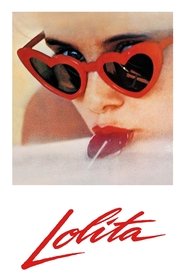
Lolita (1962)
Kubrick opens at the end — a killing in a cluttered mansion — so that everything after plays as a doom already sealed, confessed after the fact by a narrator with every reason to lie. Notice Oswald Morris's long, fluid takes: scenes allowed to run in real duration so performances curdle and shift before your eyes rather than being chopped into safety. And listen to Humbert's voice-over as a sustained act of self-justification the images quietly contradict. The comedy is real, and so is the bleakness underneath it.
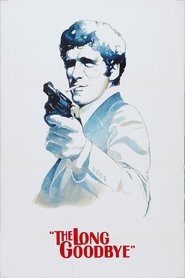
The Long Goodbye (1973)
Altman spends his opening reel on a man trying to fool his cat with the wrong brand of cat food — and that errand is the whole movie in miniature. Vilmos Zsigmond's camera never stops drifting, zooming, and repositioning, like a curious bystander with no stake in the plot; it watches Marlowe rather than assisting him. This is the detective film with the detection removed: a man of loyal, old-fashioned effort moving through a Los Angeles that has stopped keeping score. Watch what the camera notices at the edges of the frame that Marlowe doesn't.
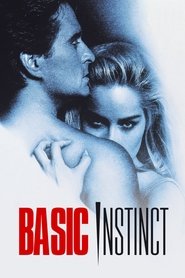
Basic Instinct (1992)
The famous interrogation scene is a masterclass in reversal: five men circle one woman in white, and by the end you realize the questioners are the ones being read. Jan de Bont's gliding, unhurried camera and cool, affluent palette owe an open debt to Vertigo — San Francisco as obsessive terrain, the lens circling a blonde enigma. The deeper game: the suspect is a novelist who may be writing the plot the detective thinks he's investigating. Watch for how the film treats every confession, every clue, every seduction as a possible performance.
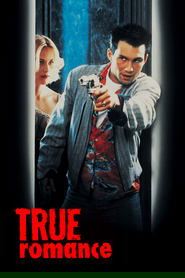
True Romance (1993)
Clarence learned who to be from movies — his apartment is an autobiography written in posters and merchandise — and the film's wager is that a self built from borrowed pictures can still be real. Tony Scott shoots even the impossible (Elvis dispensing advice in a bathroom mirror) dead literal, with no dreamy signal, in Jeffrey Kimball's bruised blues and molten ambers, saturated nearly to abstraction. It's the lovers-on-the-run picture (Gun Crazy, Bonnie and Clyde) filtered through Godard's kid imitating Bogart — pop-culture romance taken absolutely seriously.
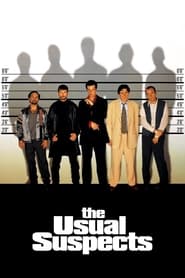
The Usual Suspects (1995)
Notice the two visual worlds: the interrogation room is a drained, fluorescent bureaucratic box, while the story told inside it blooms into full noir richness — shadow, score, atmosphere. That contrast is the film's secret subject, because movies always make narration visible, and visible things feel true. The blueprint runs from Double Indemnity's confession-to-an-authority-figure through Rashomon's contradictory testimonies given equal photographic weight. Watch how completely you trust what you're shown, and ask yourself why.
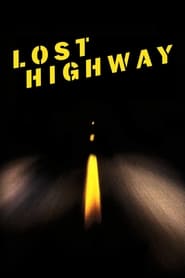
Lost Highway (1997)
Peter Deming photographs the Madison house as near-abstract darkness — rooms defined by what can't be seen, characters walking into blackness and dissolving. Lynch takes the standard noir kit (femme fatale, gangster, jealousy, surveillance) and strips out motive, explanation, and detection, leaving pure dread. Watch how the film refuses to separate what's happening from what's dreamed, remembered, or feared — one actress, two women, and no cut that settles which is which. Time here isn't a line; let it fold.
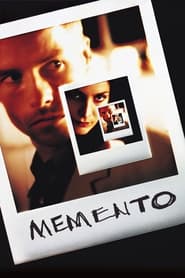
Memento (2000)
Nolan's real invention isn't the amnesiac hero — it's building the film's form to put you inside his condition. The color scenes run in reverse order, each one dropping you in with no idea how you got there, while a black-and-white strand runs forward until the two meet; for two hours, you're the one who can't make new memories. Wally Pfister's photography stays deliberately clean and legible — a kindness, given the cognitive load. Watch the objects: Polaroids, notes, tattoos — a mind built out of things, and things can be edited.

Mulholland Drive (2001)
Peter Deming shoots the film in two registers — a warm, golden, late-afternoon Hollywood glow against something colder and harsher — and learning to feel the difference is half the experience. The cuts follow emotional rhyme rather than cause and effect, dream logic descended from the Surrealists, inside a noir frame inherited from Sunset Boulevard: Hollywood as the machine that manufactures illusions and breaks the people who believe them. When you reach a nightclub called Silencio, slow down: Lynch stages a demonstration of how a feeling can be completely manufactured and completely real at the same time. That paradox is the engine of the whole film.
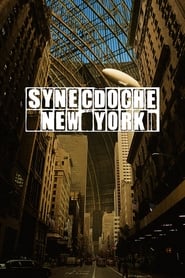
Synecdoche, New York (2008)
A theater director tries to master his life by building a full-scale replica of it in a warehouse — hiring an actor to play himself, then an actor to play that actor — and the copy starts absorbing the original. The masterstroke is Frederick Elmes's photography: calm, autumnal, observational naturalism (this from the man who shot Eraserhead and Blue Velvet), so the impossible is never flagged as impossible. Watch how nobody onscreen treats the strangest images as strange; that flat acceptance is your way in. It's 8½'s artist-in-crisis rebuilt at American scale, with mortality as the ground note.
Watched together, these films teach a single skill: distrust, of the most pleasurable kind. The early noirs show you the machinery working — faces