Sightlines · a mini film course
The War Room and the Street: How Combat Cinema Learned to Watch
The films on this list span sixty years, four continents, and every budget tier Hollywood offers — but they're all wrestling with the same problem: how do you film the gap between what a person sees and what they can actually do about it? Some of these films are machines of pure action, where seeing flows straight into doing without a wasted frame. Others quietly sabotage that machine — the orders go out to armies that aren't there, the transmission cuts off mid-word, the hero does everything right and the world gives back a void. Watched together, they become a conversation about competence and its limits: the sniper reading a doorway, the analyst staring at a map, the officer holding half a message. Notice, in each one, where the camera chases and where it simply watches — that's where each film shows you its soul.
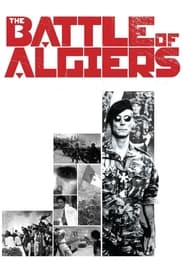
The Battle of Algiers (1966)
Start here, because nearly every other film on this list learned its visual language from this one. Pontecorvo opens with a confession — a title card telling you that not one foot of newsreel was used — and then spends two hours making every staged frame look like footage grabbed under fire: grainy stock, long lenses that catch faces in crowds as if unaware, a camera that stays slightly unsettled even indoors. Watch how the rough texture itself does political work, making a reconstruction feel like testimony. The whole handheld war-film tradition descends from this trick.

Full Metal Jacket (1987)
Kubrick divides the film into two visual worlds, and the switch is the point. In boot camp, the frame is ruthlessly ordered — symmetrical compositions, recruits geometrized into ranks, the architecture itself enforcing uniformity. Watch the faces inside those orderly frames: Kubrick loves to hold on a face where something is building underneath, crossing a threshold you can see gathering but can't yet name. And listen for his signature move — the ironic collision of cheerful pop culture against images of institutional violence, a formula he'd been refining since Dr. Strangelove.
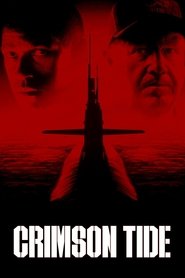
Crimson Tide (1995)
A submarine movie that's secretly a courtroom drama in a steel tube. Tony Scott shoots the confined hull in shafts of hard light, amber haze, and deep shadow — the cramped geometry exploited rather than disguised — while two readings of one severed radio message split the crew down the middle. Watch how the film builds unbearable pressure from interpretation: two capable men, the same fragment of text, opposite conclusions. Listen too for the sound design inherited from Das Boot — groaning hull plates, sonar pings, the terrible quiet between them.
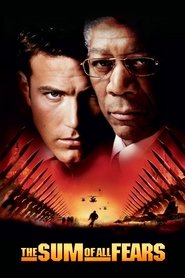
The Sum of All Fears (2002)
Here the suspense lives entirely in you. Robinson lets the audience know something neither Washington nor Moscow knows, then cross-cuts between sealed rooms full of intelligent people reading the situation wrong — the Fail Safe architecture updated for a post-Soviet world. Watch how the clean, institutional photography — cool war rooms, screens, corridors — keeps everything legible so that the dread comes not from chaos but from watching rational procedure march confidently in the wrong direction.
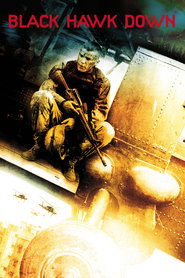
Black Hawk Down (2001)
Ridley Scott shot this with up to seven cameras running at once, and its editing and sound both won Oscars — but the real subject is what happens when a map dissolves into pure sensation. Watch the film cut between commanders reading a tidy grid of icons on screens and soldiers on the ground who can no longer tell you what street they're on. Idziak's harsh, drained palette — a deliberate reversal of his lush work for Kieślowski — makes the city feel like a place that resists being known. The film pretends to be a mastery machine while showing you mastery falling apart.
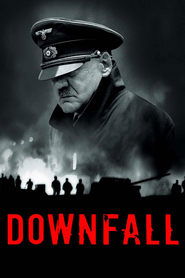
Downfall (2004)
A war film where the war has already been lost, staged almost entirely underground. Klausmann's handheld camera traps faces in shallow focus and narrow bunker corridors, while above ground the city burns. The film's engine is the gap between the map room and the street: orders issued to armies that no longer exist, delivered and received in the measured tones of functioning procedure. Watch how a closed system keeps running on pure momentum after reality has withdrawn its consent — it's one of the most unnerving things ever put on screen precisely because it stays so calm.
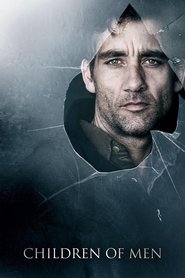
Children of Men (2006)
Cuarón and Lubezki take away the thing thrillers depend on most — the cut — at exactly the moments the genre leans on it hardest. The famous long takes hold you inside danger with no editing to rescue you; at one point blood spatters the lens and the camera simply keeps going, refusing to wipe the world clean. Watch how the refusal to cut changes what time feels like: it stops being the beat of the action and becomes something you're trapped inside. A science-fiction film shot like war reportage, with The Battle of Algiers visibly in its DNA.
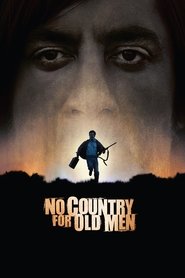
No Country for Old Men (2007)
The Coens build a perfect chase-thriller machine — money found, killer hunting, lawman closing in — and then quietly unplug it. Deakins shoots with strategic restraint: long lenses compressing figures against featureless desert, emphasizing distance and exposure. Watch the gas-station scene, where nothing moves except talk and fluorescent light, and the tension has nowhere to go. And listen: this film trusts ambient sound — rustle, drone, room tone — the way other thrillers trust a score. The silences are where the dread lives.
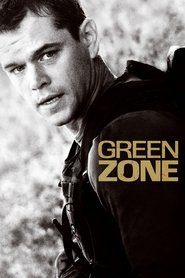
Green Zone (2010)
Greengrass wears the action movie like a uniform — Ackroyd's reactive handheld camera, furious cutting, driving percussion — and then aims all that kinetic machinery at emptiness. Watch the early weapons-site raids: a competent soldier does everything the genre asks, moves hard on good intelligence, and finds nothing, again and again. The film grafts the paranoid-investigation structure of All the President's Men onto a war picture, and the friction between the propulsive style and the hollow discoveries is the argument.

Zero Dark Thirty (2012)
Bigelow strips the manhunt movie of its promised pleasures. Fraser shoots the black sites and Langley offices in the same drained, institutional light — the horror rendered ordinary, no expressive distortion, no editorial music telling you how to feel. Watch how the film tracks its decade through title cards and timestamps, procedure accumulating like sediment, and how completely its protagonist becomes her case. This is The Battle of Algiers and All the President's Men fused: interrogation as routine, obsession as architecture.
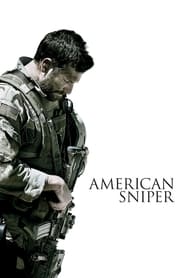
American Sniper (2014)
Eastwood hired Barry Ackroyd — the cinematographer of The Hurt Locker and Green Zone — and the choice tells you everything: multi-camera, long-lens coverage that catches performance at close range without staging it. But watch the scope. The film keeps putting you inside a bright circle of magnified vision where a small detail — a gait, a pair of hands, something held — must be read as one thing or another, and everything depends on the reading. And watch how the film cuts between war zone and home, using domestic space to measure what combat has subtracted — a structure inherited straight from The Deer Hunter.
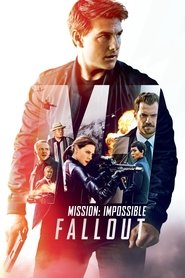
Mission: Impossible – Fallout (2018)
After all that dismantling, here is the machine rebuilt and running at full power — almost as a defiant argument. Watch the discipline: Hardy's camera goes handheld and intimate in the fights but pulls to clean, geographically legible wides in the chases, so you always know exactly where everything is. And watch the London rooftop sprint, where Cruise genuinely broke his ankle mid-jump and McQuarrie kept the take — a real body at real risk inside the fiction. In an era of digital spectacle, this film stakes everything on the oldest promise in cinema: a person sees, a person acts, and nothing gets lost in between.
Why watch them together? Because the order reveals a hidden argument. The Battle of Algiers invents the grammar; Full Metal Jacket shows the institution manufacturing the actors; Crimson Tide and The Sum of All Fears trap action inside interpretation; Black Hawk Down, Downfall, and Green Zone watch the connection between orders and outcomes snap; No Country and Zero Dark Thirty sit with what remains when the mission ends; Children of Men refuses you the mercy of the cut; and Fallout insists, against all of it, that seeing and doing can still be one motion. Every one of these films asks you to watch how someone reads a situation before anything happens. Pay attention to the reading — the doorway, the map, the coin, the half-received message — and you'll see twelve films quietly talking to each other about the most basic question a camera can ask: what can a person actually do about what they see?