Sightlines · a mini film course
When the Mirror Talks Back: Dreams, Identity, and the Danger of Looking
There's a particular kind of cinema that refuses to let you sit comfortably in your seat and simply watch. The films gathered here all share a common restlessness: they are suspicious of surfaces, obsessed with the gap between what we see and what is real, and quietly insistent that the act of looking — at a face, a room, a memory, a dream — is never innocent. Some are Gothic, some romantic, some horrifying, some wickedly funny. But each one, in its own way, builds a world where the image cannot quite be trusted, where identity bends or shatters, and where the camera itself becomes a kind of unreliable witness. Watch them in any order. Each will make the others stranger and richer.
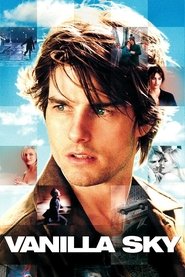
Vanilla Sky (2001)
The film opens with a sequence so beautiful it should put you on guard immediately: an entirely empty Times Square, bathed in perfect morning light, and a man spinning in rapture at the center of it. Cameron Crowe, working with cinematographer John Toll — whose saturated, high-gloss imagery here carries the same lush precision he brought to Terrence Malick's The Thin Red Line — uses glamour and visual richness as a deliberate trap. Watch how the film weaponizes beauty itself. When the world looks too clean, too luminous, too exactly like happiness should look, that excess is the clue. Also pay attention to how music functions: Crowe uses his needle-drops not as background mood but as a parallel layer of meaning, songs commenting on and sometimes contradicting what the images show. The film is an adaptation of the Spanish Abre los ojos, and the confession-to-a-psychiatrist framing it inherits from that source is worth tracking — notice how it conditions everything we see before we've been told why.
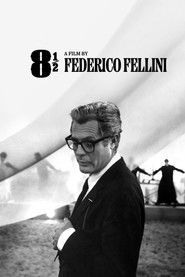
8½ (1963)
Fellini's great achievement here is the removal of a single editorial courtesy that almost every other film provides: the signal that tells you when you've left reality for memory or fantasy. Watch Gianni Di Venanzo's black-and-white photography, and notice that he shoots present-tense scenes, childhood flashbacks, and pure daydreams in essentially the same register — no softening, no change of grain, no harp glissando. The cut between the real and the imagined is the same hard, matter-of-fact cut between two rooms. The seam is gone on purpose, and once you've adjusted to its absence you'll find the film teaches you a different way of watching — more associative, more like thought itself. Pay attention, too, to how the film's blocked, creatively paralyzed protagonist uses fantasy not to escape his problems but to rearrange them without solving them.
Altered States (1980)
Jordan Cronenweth — shooting this immediately before Blade Runner — draws a hard visual line between two worlds: the overlit, institutional surfaces of laboratories and lecture rooms, and the engulfing blackness of the isolation tank sequences, where figures are carved out of darkness by single points of light. Watch how the film is structured as a slope rather than a journey — each experiment goes deeper than the last, and the images inside the tank escalate from symbolic to cosmic to genuinely terrifying in a way that feels like acceleration rather than repetition. Director Ken Russell brings his characteristic operatic religious imagery to the hallucinatory sequences, and the tension between William Hurt's controlled, cerebral performance and the visual chaos surrounding him is the film's central engine. Notice, too, how the domestic relationship at the core keeps asserting itself as the thing the experiments can't dissolve.
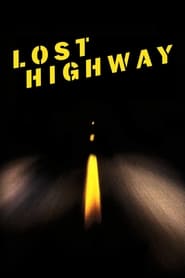
Lost Highway (1997)
Peter Deming photographs the Madison house as near-abstract darkness — characters walk into shadow and simply cease to be visible, rooms defined by what cannot be seen rather than what can. Against this interior murk, Lynch cuts to bleached, overexposed desert exteriors that feel like a different film entirely. Watch for the recurring presence of video tapes and surveillance footage, which introduce a second layer of image inside the image — not what happened, but what was recorded, which may not be the same thing. The film is built as a loop, and its central mystery is not whodunit but who is this person — identity here is not a stable thing with a history but something that can be replaced wholesale, like a fuse. Patricia Arquette plays two characters who may or may not be one, and the film refuses every cut that would clarify the relationship between them.
Annihilation (2018)
Rob Hardy's cinematography pushes the greens of the Shimmer sequences toward something faintly toxic — a lushness that reads as wrong, like a nature documentary of a world where the rules have quietly changed. Notice how the film systematically removes the option of purposeful action. The five women who enter the Shimmer are all highly competent in their fields, and that competence becomes steadily less useful as cause and effect stop behaving reliably. What the film does instead of action is looking — long, still passages where characters (and we with them) can only observe something extraordinary happening, with no adequate response available. The lighthouse sequence at the climax abandons dialogue almost entirely and trusts sound design and image alone. Garland's two structural templates — Tarkovsky's Stalker and Solaris — are worth having in mind: both are films about expeditions into spaces that reflect the inner life of the people who enter them.
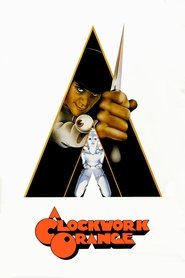
A Clockwork Orange (1971)
John Alcott's 9.8mm wide-angle lens makes everything closest to the camera swell and loom — faces inflate, corridors yawn open, space bends toward the viewer. This is not how the world looks; it is how it looks to Alex, and the film is relentlessly, uncomfortably built inside his point of view. Notice how Kubrick deploys the exact reverse effect for contrast: long telephoto shots compress space during scenes of institutional power, flattening characters against architecture as the wide-angle puffed them up. The violence is choreographed rather than spontaneous — Alex and his droogs perform their cruelty, and the film makes you aware of watching a performance, which raises its own uncomfortable questions about spectatorship. Pay attention to what the Ludovico Technique does to the eye specifically, given how much the film has asked us to share that eye.
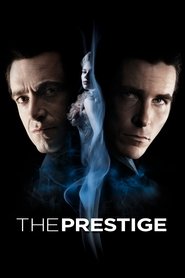
The Prestige (2006)
Wally Pfister shoots in 2.39:1 anamorphic widescreen — the widest standard theatrical ratio — and the horizontal expanse is part of the argument: wide frames contain more than you can track, information hidden in plain sight. The Victorian London palette is cool and desaturated, a world of slate and soot that makes the Colorado sequences feel geographically and tonally alien. Watch the structure rather than just the story. The film is built as two diaries being read simultaneously by two rivals, each reading the other's account, and every scene arrives pre-distorted by the agenda of whoever is supposedly narrating it. Nolan does not correct these distortions with a master truth — he lets incompatible versions coexist. The film is also a sustained argument about what a magic trick actually costs, and the theatrical three-act structure it borrows from stage magic (the Pledge, the Turn, the Prestige) is worth holding in mind as an organizing principle.
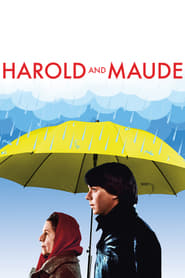
Harold and Maude (1971)
John Alonzo — three years before Chinatown — shoots in a restrained, naturalistic Northern California palette: overcast skies, autumnal cemeteries, muted greys and greens. This quietly observational style makes Harold's staged suicides funnier and stranger, because the camera refuses to treat them as anything other than ordinary events. Hal Ashby was an Oscar-winning editor before he directed, and his timing here is precise: the gags land because the cuts are cut, not because the performances oversell them. Like Crowe with his needle-drops, Ashby uses Cat Stevens's songs not as mood accompaniment but as a running commentary that often contradicts or gently mocks what's happening on screen. Watch, too, for how Maude's relationship to objects — she steals and liberates things impulsively, without guilt — functions as a visual philosophy before she articulates it in words.

American Beauty (1999)
Conrad Hall builds the film's visual language around containment: centered compositions, strong verticals and horizontals — doorframes, blinds, banisters — that place characters inside geometric boxes. Watch for when characters break out of frame and when they don't, because the film tracks a kind of domestic captivity in its compositions before it articulates it in dialogue. The recurring red roses are almost aggressively symbolic, but Hall keeps them on the edge of abstraction — present in daydreams, scattered across images — so they feel more like a fever than a motif. The film runs two registers simultaneously: Lester's plot, which is driven and purposeful, and Ricky's, which is entirely given over to watching. The tension between those two modes — acting and seeing — is the film's deepest structural argument.
Dressed to Kill (1980)
The wordless museum sequence early in the film is the best introduction to De Palma's art you could ask for: a sustained passage of pure visual storytelling in which the camera, Donaggio's strings, and a grammar of glances do everything dialogue would conventionally do. Pay close attention to the split-diopter shots — a lens technique that keeps both a close foreground object and a distant background subject in sharp focus simultaneously — because De Palma uses them to hold two points of attention in one frame, making you aware that you are watching someone watch someone else. Mirrors and reflective surfaces double and fragment figures throughout; the film is obsessed with incomplete information, with what characters can see versus what the camera (and we) can see. De Palma studied Hitchcock with something close to scholarly devotion, and the film is in part a meditation on what Hitchcock discovered about the relationship between the camera, the viewer, and complicity.
The Shining (1980)
The Steadicam — then a new invention — follows Danny through the Overlook's corridors at trike height, smooth and relentless, and the effect is immediately unnerving in a way that's worth analyzing: the rig was designed to eliminate shakiness, but Kubrick turns its gliding perfection into something predatory. Notice the hotel's geometry, which is famously impossible — viewers have spent decades trying to draw its floor plan and failing, because windows open onto walls, corridors fold back on themselves, and rooms connect in ways the building's exterior cannot accommodate. This isn't a continuity error; it's the architecture of a mind rather than a building. John Alcott's one-point-perspective compositions, with corridors receding to a single central vanishing point, create a relentless symmetry that feels less like photography and more like being stared at. Also notice how the Steadicam is used for Danny and the handheld camera is used for Jack — two different relationships to space, two different states of being.
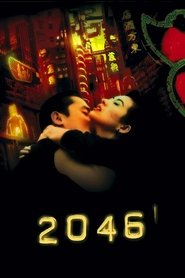
2046 (2004)
Christopher Doyle and Kwan Pun-leung shoot in a style built around step-printing — a technique in which individual frames are repeated in the optical stage, so that a moment of hesitation or movement expands and smears into something you can almost touch. Watch for what this does to time: a single second of a face can become four or five seconds of screen time, held long enough that you feel the emotion accumulating rather than simply registering it. The shallow-focus telephoto work dissolves backgrounds into molten color, so characters are often islands of clarity floating in warm or cold abstraction. The film moves between two registers — the amber hotel corridors of 1960s Hong Kong and the cool blue carriages of Chow's science-fiction serial — and rather than separating them cleanly, Wong lets them rhyme and bleed into each other. A name recurs attached to a different face; a room number carries the weight of an entire political history; and love, throughout, is something that arrives just slightly too late to be lived in the present tense.
Watched together, these films form a kind of hall of mirrors — each one reflecting something back from the others. The theme of identity under pressure runs through all of them: Alex's eye, Fred Madison's face, Lena's double in the lighthouse, Guido's fantasies, David's curated dream. The camera's relationship to truth is constantly in question: De Palma and Kubrick use it to make you complicit; Nolan and Lynch use it to make you uncertain; Fellini and Wong use it to make you feel time differently. And nearly all of them are, at some level, about what it costs to inhabit an illusion — whether that illusion is a purchased dream, a performance of violence, a vanished love, or a hotel that thinks. The reward for watching carefully is not resolution. It's the richer unease of knowing exactly how the trick is done, and feeling it work on you anyway.