Sightlines · a mini film course
Worlds That Watch You Back: Ten Films About Seeing, Doubting, and Being Seen
Here is a set of films that share a quiet obsession: what happens when seeing stops being simple. In each of these, the camera isn't a neutral window — it's a participant, a liar, a corporate asset, a machine's readout, or a memory you can't trust. These are films where a hero's competence often fails him, where the world resists being fixed, and where the most important events are moments of looking: at footage, at visions, at a double of yourself, at a city rebuilding itself while everyone sleeps. Some are satires, some are nightmares, some are both at once. What connects them is that they all ask you to notice how you're being shown things — because the showing is never innocent.
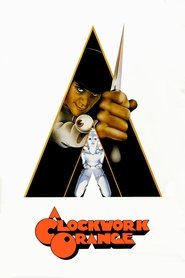
A Clockwork Orange (1971)
Watch the lenses. Kubrick and cinematographer John Alcott use an extreme wide-angle to put you inside Alex's gaze — faces bulge, corridors yawn, the world curves toward him as if it belongs to him. This isn't how the world looks; it's how it looks to him, and the film greets you through that eye before anyone is hurt, which is precisely the unsettling part. Notice too how violence is staged as performance — choreographed, musical, theatrical — and how the film's central question is whether goodness means anything if you're not free to choose it.
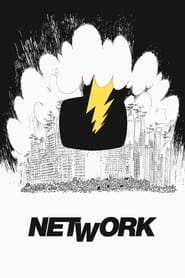
Network (1976)
A film that moves almost entirely by talking. Watch how little gets decided by anyone actually doing anything — the turning points are speeches, sermons, arias of rage delivered straight into cameras. Lumet and cinematographer Owen Roizman pull off a slow visual trick: the film begins looking like naturalistic 70s cinema and drifts, almost imperceptibly, toward the polished artifice of television itself — the movie gradually becomes the thing it's satirizing. Listen for how a man saying words can be the deed itself.
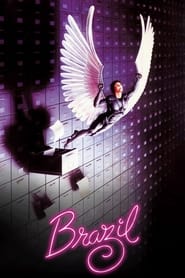
Brazil (1985)
Start with the pipes. Gilliam fills every wall with exposed ductwork — the machinery of power is never hidden, just ignored — and Roger Pratt's wide lenses stretch offices into oppressive geometries where even ceilings feel threatening. Watch the tension between the grey bureaucratic world and the golden dream sequences, and ask yourself whether the dreaming is an escape or exactly what keeps the dreamer docile. The comedy here comes from architecture as much as dialogue — rooms are the joke, and the trap.
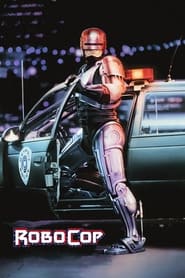
RoboCop (1987)
Watch for the visor: the pixelated targeting-grid POV that turns a city street into readable data. Verhoeven inherits this machine-vision from Westworld but makes it colder — every time you drop into that readout, you're watching a human way of seeing get overwritten. Notice how cinematographer Jost Vacano shifts registers: warmth for the human material, hard metallic surfaces and low angles for the machine. And don't skip the fake newscasts and commercials that interrupt the film — the satire lives in those breaks.
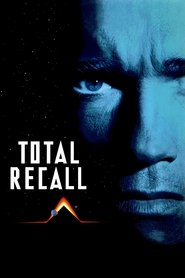
Total Recall (1990)
Verhoeven again, and this time the unreliable image is the whole architecture. The film is deliberately built so that two completely incompatible explanations of what's happening are both internally consistent all the way down — watch how carefully key scenes are shot so you can never settle the question. There's a scene in a hotel room where a calm, reasonable man offers a pill, and the horror is that he might be telling the truth. Vacano's restless handheld camera keeps you as destabilized as the hero.
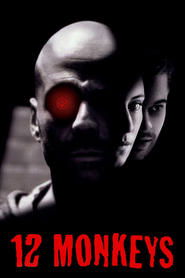
Twelve Monkeys (1995)
Gilliam takes an action star — Bruce Willis, carrying all his physical authority — and spends the film systematically disabling it: a large, capable man who can see everything and change almost nothing. Watch the recurring fragment of memory the film keeps circling back to, each return slightly different, and notice how the distorting lenses and low angles (Roger Pratt again, carrying his Brazil toolkit forward) make institutional spaces feel like mental states. The structure is inherited from Chris Marker's La Jetée — a film built almost entirely from a single haunting image.
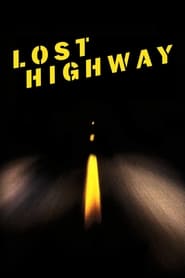
Lost Highway (1997)
Lynch and cinematographer Peter Deming shoot darkness as a material — rooms defined by what you can't see, characters walking into blackness and simply dematerializing. Don't try to sort the film into "real" and "imagined"; Lynch deliberately refuses the cut that would tell you which is which, melting present, memory, and dream into one surface. Watch for doubling everywhere — faces, names, one actress in two guises — and let the loop structure work on you rather than trying to solve it.

Dark City (1998)
Hold onto the image of a city that rebuilds itself each night while its citizens sleep standing up. Dariusz Wolski shoots in near-total night — hard, sourced light carving figures out of darkness in the old noir manner, pushed toward the grotesque — and the sets themselves borrow German Expressionism's bent geometry: shadows as menace, architecture as psychology. Watch how the film treats memory as something removable and identity as something assigned, and notice the one word everyone clings to as proof there's an outside.
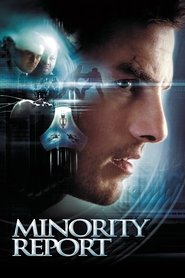
Minority Report (2002)
The film's truest image is a strange one for a thriller: a man standing before a wall of glass, sorting fragments of a crime that hasn't happened, able to do everything to the image except act on it. Detection becomes reading — the visions arrive fragmented, out of order, demanding to be deciphered. Watch Janusz Kamiński's drained, silvery palette (achieved through overexposure and bleach-bypass processing), which gives a Spielberg blockbuster the cold texture of noir, and notice how a film about perfect foresight keeps insisting the future stays open.
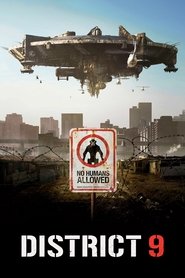
District 9 (2009)
Before it's a film about aliens, it's a film about footage — who holds the camera, and why. Blomkamp opens in strict documentary mode: interviews, news clips, surveillance, crash-zooms, harsh bleached daylight. Watch how the camera initially sees the world the way the corporation files it — the cheerful bureaucrat with his clipboard of eviction notices is presented as just the day's business, and the form itself is complicit in that framing. Then notice how the visual language gradually shifts as the film's allegory — rooted specifically in South Africa's history of forced removals — engages.
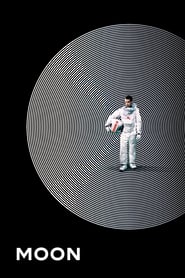
Moon (2009)
A chamber piece that refuses glamour: Gary Shaw shoots the lunar station in fluorescent institutional greys, more remote oil rig than gleaming future. Watch the pacing — Duncan Jones borrows Kubrick's patient, architectural cutting tempo from 2001, and when the film reaches its central disclosure, the editing barely accelerates. That refusal to thrill is the point: this isn't a film interested in shocking you, but in sitting with the question of what it's like to be a self you cannot verify. Keep an eye on the half-finished model town on the rec-room table.
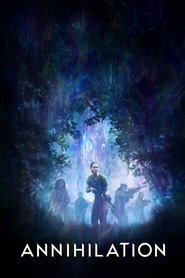
Annihilation (2018)
Watch for the moments when watching is the whole event — two deer moving in mirrored unison, unexplained, and a group of trained, competent women who can do nothing but look. Garland builds the Shimmer (inheriting the forbidden-zone structure of Tarkovsky's Stalker) as a place where cause and effect refract like light, and where a soldier-scientist's competence has no lever to pull. Rob Hardy's cinematography pushes greens toward the toxic and gives everything an oily, soap-bubble refraction. The final stretch surrenders story to pure image and sound — go with it.
Why watch these together? Because they teach each other. Kubrick's bulging subjective lens, RoboCop's targeting grid, and District 9's complicit documentary camera are three answers to the same question: whose eye am I inside? Brazil, Twelve Monkeys, and Annihilation form a trilogy of capable people stranded in worlds that won't respond to action. Total Recall, Lost Highway, Dark City, and Moon all ask what's left of a self when memory can be issued, doubled, or rewritten — and each answers with a different formal strategy, from Verhoeven's perfectly balanced ambiguity to Lynch's seamless loop to Jones's quiet, unhurried disclosure. And Network, the oldest satire here, predicts them all: a world where the image has swallowed the deed. Watched in sequence, these films stop feeling like ten separate stories and start feeling like one long conversation about cameras, memory, and trust — a conversation you'll find yourself continuing every time you notice how a film is showing you something, not just what.