Sightlines · a mini film course
When the Camera Stops Chasing the Plot
There's a moment early in almost every one of these films where you realize the movie isn't going to behave. A detective spends his opening reel shopping for cat food. A crime picture holds on a woman riding an airport walkway, doing nothing, for longer than any thriller should allow. A hit-and-run happens and the film simply walks away to follow someone else. What connects this set isn't genre — you've got noir, romance, mob epic, camp musical, black comedy — it's a shared wager about attention. These are films where the camera watches rather than chases, where meaning lives in the gaps between storylines rather than in any single hero's forward march, and where the people on screen often see their world with perfect clarity but can't punch, deduce, or charm their way out of it. Some of these movies braid many lives together and trust you to hold the connections. Others slow down and stretch time until a face becomes a landscape. All of them ask you to be a more active watcher than the multiplex usually requires — and they repay it lavishly.
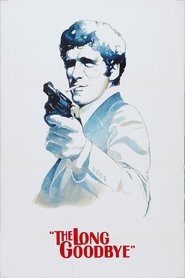
The Long Goodbye (1973)
Watch the camera. Altman and cinematographer Vilmos Zsigmond agreed the lens should behave like an alert but passive witness — always drifting, zooming, repositioning, panning across rooms with its own curiosity rather than obediently following the plot. Notice how much screen time goes to things a normal detective picture would cut: errands, ambient chatter, the margins of scenes. This is the hard-boiled tradition (Leigh Brackett wrote both this and Hawks's The Big Sleep) revisited through a post-Vietnam lens, with a Marlowe whose code of loyalty is treated with real sympathy even as the Los Angeles around him has quietly stopped keeping score. The tension between his old-fashioned effort and the camera's cool indifference is the movie.
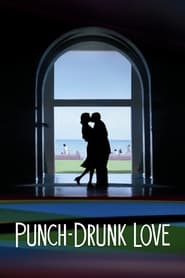
Punch-Drunk Love (2002)
Watch the colors and the sound. Anderson uses deep blues, sharp reds, and whites like emotional annotation rather than decoration — Barry's blue suit is armor and vulnerability at once, a trick descended from Godard's flat fields of primary color. The handheld camera catches Sandler off-balance, mid-gesture, from odd angles, so his interior life never settles. And notice the glass-walled warehouse office, a box inside a box that exposes and traps him simultaneously — a direct nod to Tati's Playtime, where architecture itself becomes the comedy and the loneliness. It's a romantic comedy with all the social lubrication drained out, replaced by something rawer and stranger.
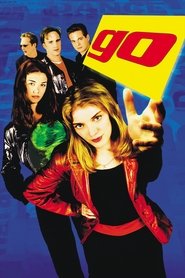
Go (1999)
Watch what you know that the characters don't. Liman (serving as his own cameraman) tells one Christmas Eve three times, from three vantage points, and each panel has its own visual temperature — neon-frantic, Vegas-garish. The engine of the whole film is the gap between the frame and your memory of the other panels: you've seen a scene rehearsed from an angle the person walking into it never got. The film only completes itself inside your head. Notice too how it refuses to hand you resolutions on schedule — it withholds, rewinds, and strolls off, trusting your patience with borrowed Pulp Fiction and Rashomon architecture rebuilt for pure momentum.
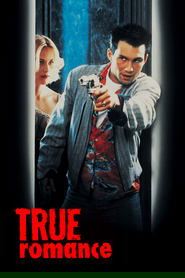
True Romance (1993)
Watch how the film treats fantasy as flatly real. Tony Scott shoots everything — including a certain famous bathroom-mirror conversation — dead literal, lit like a perfume ad, with no wavy-screen signal separating daydream from fact. Clarence is a man assembled out of other people's pictures (his apartment is an autobiography written in comic books and movie posters), the direct descendant of Godard's Bogart-worshipping hero in Breathless. Kimball's cinematography pushes bruised blues and molten ambers to the edge of abstraction: image as sensation, borrowed from music video and advertising, wrapped around a lovers-on-the-run story with roots in Gun Crazy and Bonnie and Clyde.
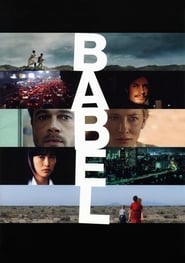
Babel (2006)
Watch the editing do what no character can. Four storylines on multiple continents, and no one on screen can see the web connecting them — the whole exists only in the cross-cutting, addressed directly to you. Rodrigo Prieto's handheld camera is the connective tissue: sun-scorched documentary nervousness in Morocco, different textures elsewhere, always close to bodies, reading discomfort in skin. This is the Short Cuts mosaic scaled to a globe, and the theme is right there in the title: communication breaking down across languages, deafness, generations, borders — while the film's own form quietly performs the connection its people can't.
Gomorrah (2008)
Watch what the camera doesn't do. Marco Onorato's handheld, long-lensed photography keeps a watchful distance even during violence — no swelling strings, no slow motion, no reverse angle to grant a death its drama. The film refuses the crime genre's basic deal: that violence will be paid back to you as spectacle. Notice the scene where two teenagers imitate Scarface on a beach — Garrone stages the Hollywood myth precisely to puncture it. This is neorealism's inheritance (real locations, non-professional faces, the street as evidence) turned on a world where the syndicate isn't a gang but the total environment, with no visible exit.
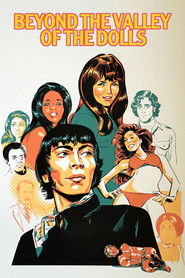
Beyond the Valley of the Dolls (1970)
Watch the cutting and listen to the voice. Meyer brought his grindhouse reflexes onto the Fox lot: percussive, near-subliminal smash-cuts that bang faces, thighs, guitars, and pills together like graphic shocks — he cuts to hit you, not to explain. And hold onto the gap between the film's solemn moralizing narrator and the gleeful chaos it pretends to judge; that mock-sermon device is Meyer's oldest trick, and the hypocrisy is the joke. It's a studio sexploitation picture made at the exact moment the old censorship system collapsed — a genuinely strange artifact of a door that opened briefly and slammed shut.
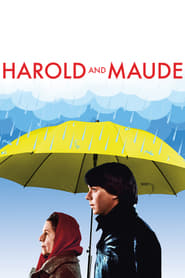
Harold and Maude (1971)
Watch how the gags are cut. Ashby was an Oscar-winning editor before he directed, and Harold's elaborately staged suicides land as deadpan comedy precisely because of timing — total commitment in the staging, met by a world too bored to look twice. John Alonzo (who'd shoot Chinatown three years later) gives it a muted, overcast Northern California palette against which the morbid theatrics bloom. Notice the Cat Stevens songs working the way Simon & Garfunkel did in The Graduate: pop music as ironic commentary. Underneath the black comedy is a genuine argument about embracing life in full knowledge of death — staged, cunningly, through its inversion.

3 Women (1977)
Watch the swimming pool. Someone has painted archaic figures on its bottom, visible through the water in nearly every exterior shot, and Altman never explains them — they're the film's underneath, the part of a dream you can't swim down to. This one grew from an actual dream Altman had, and it moves by association rather than cause: scenes don't resolve, they stop. Chuck Rosher Jr.'s widescreen desert compositions are deliberately uncomfortable — figures at odd distances, negative space that threatens rather than rests. The lineage runs straight from Bergman's Persona: identity as a set of performances with no fixed core, boundaries between people going quietly porous.
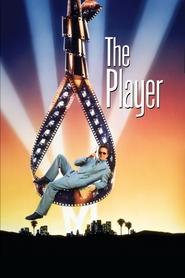
The Player (1992)
Watch the opening — roughly eight unbroken minutes prowling a studio lot, picking up and dropping conversations, while the characters inside the shot discuss famous long takes like Touch of Evil and Rope. It's a film that performs a piece of craft and hands you its footnotes simultaneously. Notice how the camera never locks onto a hero; it grazes, lifts a conversation, drops it, so the overlapping dialogue renders Hollywood as one continuous murmur of deal-making. This is the Sunset Boulevard tradition — Hollywood devouring itself, with a crime in the machinery — updated for the age of the executive and the pitch.
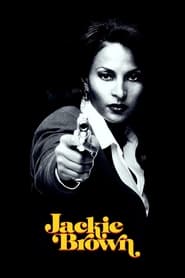
Jackie Brown (1997)
Watch the patience. Tarantino, of all people, switches off his own machine here: the camera is observational, holding on faces, tracking characters through the mundane corridors of a Torrance shopping mall with anthropological calm. The opening travelator shot holds long past the point where a thriller would give her something to do — and that's the point. This is a film that watches a woman be a person before it makes her a plot. The blaxploitation homage (Pam Grier, the Bobby Womack theme, the funk soundtrack) is loving and specific, never parodic, wrapped around a story about surviving by letting everyone underestimate you.
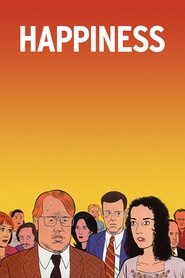
Happiness (1998)
Watch the lighting — or rather, watch how it refuses to change. Maryse Alberti lights every scene, tender or terrible, with the same even, clinical brightness; Solondz frames his actors frontally and holds shots well past comfort. Nothing in the image judges, nothing warns you, nothing lets you off the hook. The most devastating scenes are staged exactly like the most ordinary ones, and that sameness is the whole film. Structurally it's a mosaic in the Nashville / Short Cuts tradition — isolated lives braided by cross-cutting, where the meaning comes from juxtaposition, not cause and effect. Steel yourself; it earns its reputation.
Watched together, these twelve films teach a single skill: how to watch a movie that trusts you. When the camera stops chasing the plot, everything else in the frame comes alive — the margins of Altman's rooms, the colors of Barry's suit, the connections only you can see between Iñárritu's continents or Liman's three retold nights, the terrible evenness of Solondz's light. You'll start noticing the family resemblances too: the ensemble mosaic passing from Nashville's heirs down through Short Cuts to Happiness and Babel; the Godard-worshipping self-inventors of Breathless echoing in True Romance; the long take as thesis statement in The Player. Genre-wise these films couldn't be less alike. But every one of them asks you to slow down, hold the pieces, and do some of the work — and every one rewards you with the peculiar pleasure of a film that respects your attention enough to demand it.