Sightlines · a mini film course
Watching Men Who Can't Quite Win: A Mini-Course in the Crime Film
Here's the secret thread running through this watchlist: every one of these films inherits the oldest promise in American genre cinema — a person sees a problem, acts on it, and the world answers back — and every one of them, in its own way, tests that promise until it creaks. Some let the camera drift away from the hero mid-thought. Some let silence and procedure do the work of dialogue. Some build detectives who follow every clue perfectly and still find the ground moving under them. Watch these twelve together and you'll start noticing not just what happens, but how a film decides whether effort matters — and what it looks like when a movie quietly stops keeping score.
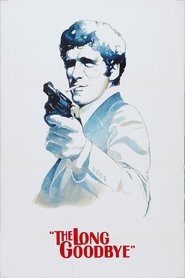
The Long Goodbye (1973)
Watch the camera. Altman and cinematographer Vilmos Zsigmond built a lens that behaves like an alert but easily distracted witness — always slightly repositioning, zooming, panning across a room, catching things at the margins rather than chasing the plot. And watch the opening: a murder mystery that spends its first minutes on a man trying to fool his cat with the wrong brand of cat food. That errand is the film folded small — a loyal man moving with enormous care through a Los Angeles that has stopped caring back. Notice how his old-fashioned code of loyalty is treated with real sympathy even as the film keeps asking whether it works anymore.

Chinatown (1974)
Classic noir hides its crimes in shadow; cinematographer John A. Alonzo shoots this one in punishing amber daylight, where the sun clarifies nothing. Watch the bandage: the detective spends half the film with his nose taped up — a professional nose-follower who can't follow his own nose — and Polanski cast himself as the small thug who does the cutting. Notice how the investigation is staged as quiet, immaculate procedural craft, information without commentary, and pay attention to how every disclosure seems to raise the stakes rather than settle them. Water is everywhere in this film — as resource, as metaphor for how power flows around obstacles and shapes the landscape invisibly.
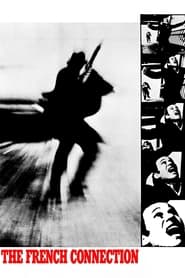
The French Connection (1971)
Friedkin shoots New York like a documentary crew that wandered into a thriller: grainy handheld work, winter greys and fluorescent greens, telephoto surveillance shots that flatten the city into a wall of obstruction. Watch the scene where the cop stands on a freezing sidewalk eating cold pizza while, through restaurant glass, the elegant Frenchman he's hunting enjoys wine at a white tablecloth. No dialogue explains it; you're simply left on the cold side of the glass. Notice how the film treats obsession not as heroism but as something closer to sickness — a pursuit defined by crudeness on one side and untouchable sophistication on the other.
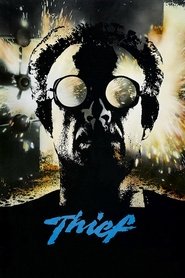
Thief (1981)
Mann's debut lives at night and in the rain — wet streets deliberately soaked so they throw neon back at the camera, everything smeared in reflected red, blue, and green, scored to a Tangerine Dream pulse. The centerpiece is a safecracking sequence built from real tools on the advice of real thieves, shot the way you'd film a master craftsman: every step legible, the heat real, the duration real. Watch how the film honors competence — and then asks whether being the best at your job buys you anything at all. The theme underneath is time: a man trying to purchase, all at once, the years he lost.
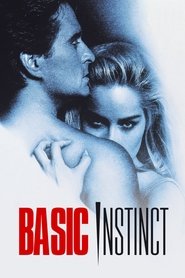
Basic Instinct (1992)
Jan de Bont's camera glides and circles with a cool, seductive smoothness — and the famous interrogation scene is a masterclass in staging: five men arranged around one woman in white, the lens orbiting as though she were the fixed point and the entire machinery of the law the thing in motion. Watch who's actually reading whom. The film reimagines the femme fatale as someone who may be scripting the story from inside it, and it treats confession, evidence, and desire all as potential performances. Verhoeven brought a frank, ironic European sensibility into a glossy studio thriller — notice the Hitchcock echoes in the San Francisco geography and the sudden detonations of violence inside controlled frames.
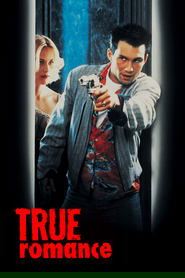
True Romance (1993)
Tony Scott shoots this in bruised blues and molten ambers, saturated nearly to abstraction — a lovers-on-the-run crime film lit like a perfume ad, and completely unembarrassed about it. Watch how the hero is a man assembled from other people's pictures: an apartment stacked with comic books, posters, and movie merchandise, with Elvis appearing in his bathroom mirror as a borrowed conscience — shot dead literal, no dreamy dissolve. The film descends from Gun Crazy, Breathless, and Bonnie and Clyde, and its wager is genuinely romantic: that a love built entirely out of pop culture can still be real. Notice how tenderness and extreme violence share the same frame without apology.
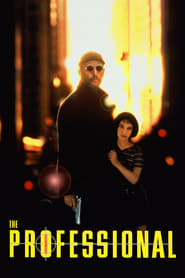
Léon: The Professional (1994)
The first strange note: a hit man who drinks milk, does sit-ups in the dark, and tends a houseplant he calls his only friend "because it has no roots — like me." Watch what Besson does between the action: the film keeps stopping to simply hold on faces, letting Thierry Arbogast's warm ambers and golds turn a killer's apartment into a refuge. Jean Reno plays the part as a nearly immobile surface behind round black glasses — the monastic professional inherited from Melville's Le Samouraï — and the film's real question is whether human connection can take root in a life organized around killing.
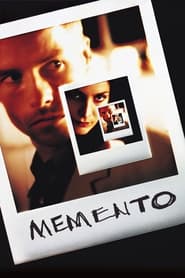
Memento (2000)
Watch the Polaroid fade — footage simply run in reverse, an image draining back into blankness, and the whole film in three seconds. Nolan's real invention is structural: the color scenes run backward, each ending where the previous one began, so every scene drops you in with no memory of how you arrived; a second strand, in noir black-and-white, runs forward. You aren't watching a man with a broken memory — for two hours, the film has broken yours. Notice how Wally Pfister's photography stays restrained and legible on purpose: with this much cognitive load in the structure, clarity is the flourish.
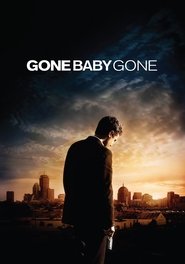
Gone Baby Gone (2007)
Affleck shoots working-class Dorchester with wide lenses at close range, placing people inside their neighborhoods rather than viewing poverty from a comfortable optical distance. Watch the patience: interrogations that refuse to cut away early, informants worked in actual bars, scenes lit by whatever light the location offers — a method inherited from The Friends of Eddie Coyle and Mean Streets. The film's real subject isn't the mystery but the gap between legal obligation and moral judgment: whether following the rules produces justice, and what you owe the vulnerable when institutions fail them. Sit with the quiet scenes; that's where the argument lives.
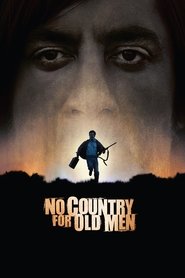
No Country for Old Men (2007)
Roger Deakins gives the desert long lenses that compress figures against featureless landscape — the terrain as participant, emphasizing distance and exposure. Watch the gas-station scene: a coin flipped onto a counter, a proprietor who doesn't know what he's playing for, and nothing moving except the talk, the fluorescent hum, and a tension with nowhere to go. Notice how the film builds dread almost entirely from ambient sound — the rustle, the drone, the room tone — a grammar inherited from The Conversation. And notice the old sheriff's meditations threading through it: this is a thriller that is also, quietly, about aging and the impossibility of understanding the world you inhabit.
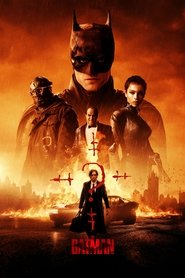
The Batman (2022)
Greig Fraser shoots this famously underlit by blockbuster standards — near-monochrome darkness cut with sodium orange and blood red, faces falling into shadow in the manner of Gordon Willis's Godfather photography. Watch how thoroughly it's built as a detective picture rather than an action spectacle: a cipher-leaving killer who addresses his crime scenes to the detective, so that you end up decoding over Batman's shoulder — the audience installed as a third party to the correspondence. The lineage here is Zodiac and Se7en, not the comic-book rack. Notice too that everyone in this Gotham is watching someone, and the watching is the plot.
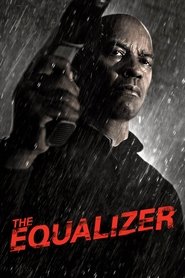
The Equalizer (2014)
Hold onto the stillness. For most of its first hour, this is a film about a man and his rituals: the same diner, the same table, the napkin folded into a clean rectangle, the tea steeped the exact right number of minutes, an apartment ordered down to the teaspoon. Watch how the camera keeps finding Denzel Washington behind glass — framed in windows, caught in reflections, studying a street he won't step into. The film draws on Le Samouraï's ritual domesticity and the Western's lone gunman, but its distinction within the modern action cycle is precisely this patience: it makes you wait, and the waiting is the argument.
Why watch these together? Because sequenced like this, they teach each other. The rituals of Thief, Léon, and The Equalizer rhyme across four decades — solitary professionals arranging small worlds against large chaos. The detectives of Chinatown, The Long Goodbye, Gone Baby Gone, and The Batman all follow clues faithfully, but each film has a different answer to whether following clues is enough. Memento and Basic Instinct go further, asking whether the story you're being told is being found or made. And running under all of it: cameras that watch rather than chase, silences that carry more than speeches, and time allowed to stretch until you feel it. Watch for the moments when each film could cut away and doesn't. That's where these movies live — and where, if you're paying attention, they'll teach you a new way of watching everything else.