Sightlines · a mini film course
Watching Without a Map: Films That Trust You to Do the Looking
The films on this list span eight decades, four continents, and every budget bracket — yet they share one deep conviction: that meaning doesn't have to be handed over. Sometimes the camera watches rather than chases. Sometimes time is shuffled like a deck of cards, and you're trusted to hold the pieces. Sometimes a face is held on screen so long that a feeling never gets to turn into an action, and you have to sit inside it. These are movies where the whole picture exists only in you — in the connections you draw between what one character knows and another doesn't, between a present moment and its ghostly reflection, between a shot's beginning and its uncomfortably long end. They are, in different ways, films that make the audience the final collaborator.
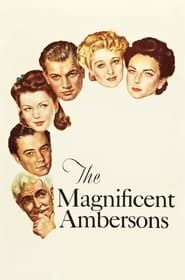
The Magnificent Ambersons (1942)
Watch the great dark staircase. Welles and cinematographer Stanley Cortez keep the whole depth of the frame in razor focus, so two people on different landings — practically living in different decades — share a single unbroken shot. Notice how the mansion is lit as a place of beauty slowly consuming itself, and how Welles uses mirrors at the ball to multiply dancers into a vanished abundance. The house holds the family's present and its memory in the same frame, and you can't always say which is which.
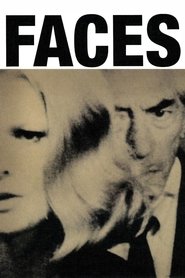
Faces (1968)
Somebody in this film is always laughing — too hard, a beat too long — and the handheld camera sits a foot from their teeth, waiting for the laugh to land. It doesn't. Cassavetes and cameraman Al Ruban built the film on proximity and duration: tight, unflattering close-ups catching pores, sweat, and the small muscular betrayals of people performing emotions they don't feel. Watch how long the shots hold, and how the frame searches and reframes within a take, chasing a glance. Nothing discharges; that's the point.
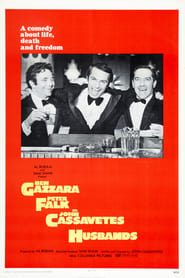
Husbands (1970)
Three middle-aged men flee a funeral into a marathon of drink and clowning, and Cassavetes throws out the machinery that usually turns watching into plot. The image is deliberately rough — handheld, long lenses hunting for faces, often catching them off-balance or half-cut by the frame. Watch the scene where the men bully a woman into singing "with feeling," again and again: an audition for an emotion they can't reach themselves. It's a film about grief that has no socially available shape, shot in a style that refuses to give it one.
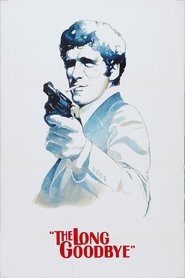
The Long Goodbye (1973)
Start with the cat food. Altman spends the opening minutes of a murder mystery on a man trying to fool his cat with the wrong brand — and that errand is the whole film folded small. Watch the camera: Vilmos Zsigmond's lens behaves like an alert but passive witness, always slightly repositioning, zooming, drifting, catching margins instead of chasing clues. This is the detective picture remade for a Los Angeles that has quietly stopped keeping score, and the film's real drama is between one man's stubborn loyalty and a camera that declines to reward it.
A Woman Under the Influence (1974)
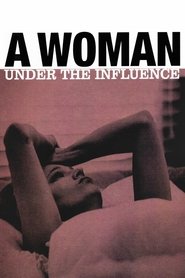
Watch Mabel's hands. Gena Rowlands gives one of cinema's great physical performances as a woman whose body does things the room cannot read, and Cassavetes shoots her with long lenses that isolate faces and hunt for expression inside continuing scenes rather than pre-composing them. Nothing "happens" in the plot sense — yet you'll feel the temperature of a kitchen change before anyone speaks. This is a film built to catch what a marriage looks like at the level of a gesture.
True Romance (1993)
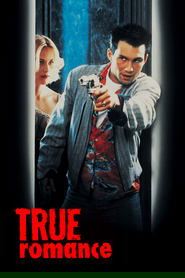
Val Kilmer's Elvis appears in a bathroom mirror to give advice — no wavy dissolve, no dream signal — and Tony Scott shoots it dead literal, lit like a perfume ad, completely unembarrassed. Watch the palette: bruised blues and molten ambers saturated to the edge of abstraction, image as pure sensation. And watch Clarence's apartment — comic books, posters, an autobiography written in merchandise. This is a lovers-on-the-run film about people who built their selves out of movies, made with total conviction that the borrowed myth can be lived hard enough to become real.
Pulp Fiction (1994)
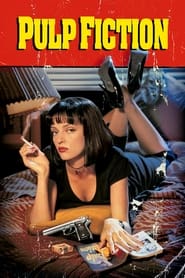
The famous move here is temporal: three chapters and a bookend deliberately out of sequence, so "before" and "after" become rooms you can enter in any order — and notice how easily you accept it. The less famous move is visual restraint: Andrzej Sekula favors long takes, static or slowly drifting frames, and medium shots that let conversations breathe without an editor imposing rhythm. Watch how the film holds fast food, foot massages, and mortal violence in the same register, and how professional ritual — the coat, the gun check — becomes a kind of liturgy.
Go (1999)
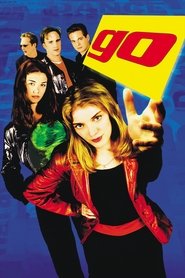
A girl goes down in the road on Christmas Eve, and the film — instead of telling you what happens — rewinds and strolls off to follow someone else. Liman, shooting his own camerawork, gives each of the three panels its own visual temperature: neon-frenetic for the rave world, hot and garish for Vegas. The pleasure is structural: the same night told three times, and you're the only one holding all three. Watch for the moments when you know something a character doesn't — the film only completes itself inside you.
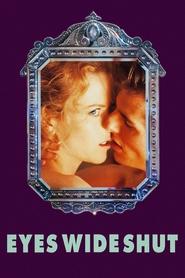
Eyes Wide Shut (1999)
A woman undresses before a mirror; her husband watches the reflection, not her. Kubrick holds the shot just long enough that you stop trusting it. Watch the mirrors and doubles throughout: nearly every encounter in Bill's long night through Manhattan rhymes with a fantasy his wife merely described, and the film refuses to sort what's happening from what's dreamed. Larry Smith's lighting and Kubrick's centered, symmetrical frames make ordinary rooms feel like dream-architecture. Also notice how money shadows every erotic moment — desire and transaction never quite separate.
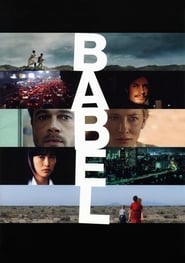
Babel (2006)
One rifle, one almost idle act, and four storylines across four continents that no single character can see whole. The whole exists only in the editing — and the editing is addressed to you. Rodrigo Prieto's handheld camera is the connective tissue: sun-scorched documentary nervousness in Morocco, a different texture for each place, always close to the body, reading discomfort in skin. Watch how the film makes the gaps between people — languages, borders, deafness, generations — into its actual subject.
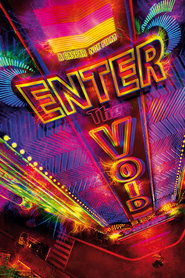
Enter the Void (2010)
The first thing this film teaches you is that you have eyelids: the screen blinks because the protagonist blinks. Noé and cinematographer Benoît Debie weld your sight to a single pair of eyes in neon Tokyo — an experiment tried once before, in 1947's Lady in the Lake, where it read as a stiff periscope. Watch what fixes it here: the blink, the drag of breath, the swim of sensation. Then watch what the camera becomes afterward — a free-floating consciousness gliding through walls in long, vertiginous movements. The camera isn't recording the protagonist. It is the protagonist.
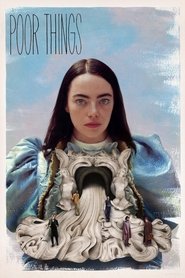
Poor Things (2023)
Before a single fact of the premise arrives, the lens has told you how Bella sees: wide-angle and fisheye shots bulge at the edges, sometimes pinched inside circular irises, the world pouring in at the corners of a consciousness meeting it for the first time. Then watch the film's quietest trick: as Bella matures, the fisheye relaxes and the framings normalize. Perception is the plot — you're literally watching a mind calibrate its lens. Around her, every authority figure is exposed as interested and partial, so her education becomes the systematic demolition of received wisdom.
Watched together, these films teach each other. Cassavetes' held close-ups train you for the mirror Kubrick refuses to explain; Altman's drifting, non-judging camera prepares you for Noé's floating eye; the shuffled chapters of Pulp Fiction and Go sharpen your appreciation for how Babel asks you to assemble a world from fragments, and how Welles folds a family's whole past into a single deep-focus frame. What connects them isn't a genre or a style but a wager: that a viewer who is trusted — to hold contradictory moments, to sit with unresolved feeling, to complete the picture — will see more, and feel more, than one who is merely told. Bring your full attention. These films are counting on it.