Sightlines · a mini film course
The Room Holds Everyone: Twelve Films Where the Group Is the Story
There's a certain kind of movie that refuses to pick a hero and follow them out the door. Instead, the camera stays in the room — drifting, watching, catching a glance here and a half-heard joke there — and slowly the group becomes the subject: a marriage, a crew, a family, three friends, a whole city of strangers. Every film on this list works this way, and most of them share something else too: characters who see their situation with perfect clarity and find they can't quite act on it. The detective who can't solve, the veteran who can't come home, the husband who can't grieve. What replaces plot-machinery in these films is texture — long unbroken takes, deep rooms where foreground and background stay sharp together, cameras that watch rather than chase. Watched in sequence, they form a fifty-year conversation, with Altman at its center and Paul Thomas Anderson answering from the other end.
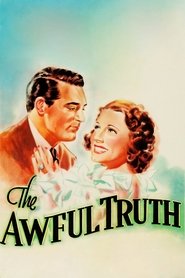
The Awful Truth (1937)
The oldest film here is the cleverest about what it doesn't say. Because the censors of 1937 forbade naming sex or jealousy outright, McCarey built the whole comedy out of inference — doorways, glances, a dog, a bowler hat, a cuckoo clock with two little figures in it. Watch for how the meaning lives in you: the characters never state the important things, and the film trusts you to be the knowing third party who completes the joke. McCarey, trained in silent slapstick, let his actors discover gags on the floor rather than execute a script — you can feel the looseness.
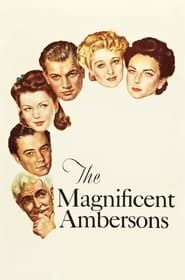
The Magnificent Ambersons (1942)
Watch the staircase. Welles and cinematographer Stanley Cortez keep the entire depth of the frame in focus, so two people on different landings — practically living in different decades — share one unbroken shot. Notice the soft, painterly shadows: the Amberson mansion is photographed as a beautiful thing consuming itself. And watch for the mirrors at the great ball, multiplying dancers into a vanished abundance. This is a film where past and present keep folding into the same frame, and grief becomes a lens.
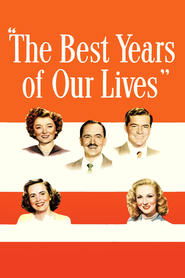
The Best Years of Our Lives (1946)
Gregg Toland's deep focus lets whole rooms stay sharp at once, so drama can unfold in foreground and far background simultaneously without a single cut — watch the famous drugstore scene, where two things happen at opposite ends of one shot. The premise is quietly radical: three veterans trained for years to convert what they see into decisive action, handed back to a peacetime that only asks them to look. Watch how the film keeps giving its men perfect perception and nowhere to aim it.
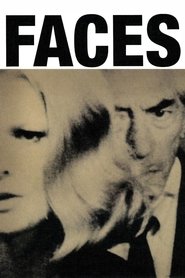
Faces (1968)
Cassavetes' camera presses a foot from people's teeth and stays — handheld, grainy, catching pores, sweat, and the small muscular betrayals of people performing emotions they don't feel. Notice the laughter: someone is always laughing too hard, a beat too long, and it never lands anywhere. It curdles. That curdling is the film. Shot in real interiors with a vérité roughness inherited from Italian neorealism, this is the cornerstone of American independent cinema — feeling held in close-up, refusing to resolve into action.
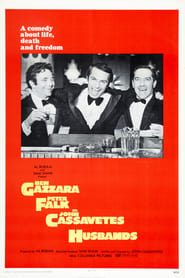
Husbands (1970)
Faces hardened into something wilder: three middle-aged men reeling from a friend's funeral, and a handheld camera on long lenses that hunts faces and catches them off-balance, half-cut by the frame, held past comfort. Watch the late-night bar scene where the men demand a woman sing "with feeling," again and again — an audition for an emotion they can't reach themselves. It looks like a buddy movie and behaves like its autopsy.
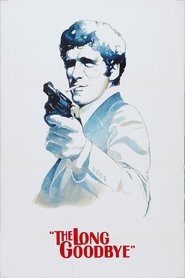
The Long Goodbye (1973)
Start with the cat food. Altman opens a murder mystery with a man trying to fool his cat with the wrong brand — an errand that is the whole film folded small. Watch Zsigmond's camera: never still, always slightly repositioning, zooming, drifting across rooms like an alert but passive witness with its own curiosity. This Marlowe still believes loyalty and effort mean something; the film watches, with real sympathy, a Los Angeles that has quietly stopped keeping score. The template for half the films that follow on this list.
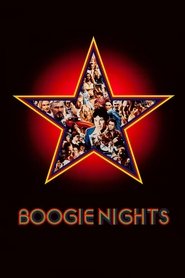
Nashville's children — and Boogie Nights (1997)
Anderson's breakthrough opens with a single unbroken Steadicam shot: down off a neon marquee, through the doors of a club, handed from character to character until it settles on a seventeen-year-old busboy. The entire ensemble introduced as one moving body, before a word of plot. Watch how Elswit's gliding camera and the wall-to-wall period needle-drops keep binding this porn-industry crew into a single breathing organism — a chosen family for people failed by their real ones. The Altman lineage (via Nashville and The Long Goodbye) is proudly visible.
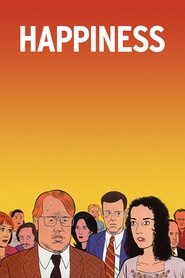
Happiness (1998)
Solondz's radical choice is sameness. Maryse Alberti lights every scene — the tender and the unbearable — with the identical even, household-bright clarity. Frontal framing, no shadows to mark anyone as a monster, no music to tell you how to feel, shots held well past comfort. Watch how the film's mosaic of suburban lives draws its meaning from juxtaposition rather than cause and effect, in the tradition of Nashville and Short Cuts. Nothing in the image judges; that job falls entirely, uncomfortably, to you.
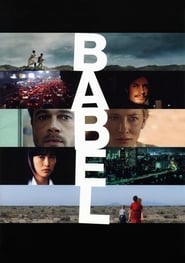
Babel (2006)
Four continents, one rifle, and an editing scheme addressed directly to the viewer: none of the characters can see the web connecting them — only you can, watching from above the whole. Notice how Prieto's handheld camera changes texture with each place (sun-scorched Moroccan dust, the vertigo of Tokyo nightlife) while staying close to skin and faces throughout. This is the ensemble film scaled to the globe, where meaning lives entirely in the cross-cutting.
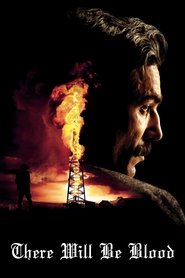
There Will Be Blood (2007)
Fifteen nearly wordless minutes open the film: a man alone in a landscape, prospecting by hand, breaking a leg, hauling himself across rock. You learn Daniel Plainview the way you learn an animal — by watching what it does to survive. Watch how Elswit keeps showing you two worlds in one frame: the surveyed, bought-and-sold California of leases and church socials, and underneath it something older and feral — pure appetite wearing the social world like a skin. Deep-focus power arrangements straight out of Citizen Kane.
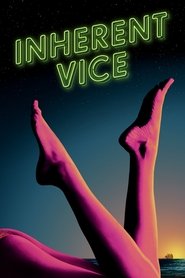
Inherent Vice (2014)
Anderson returns The Long Goodbye's favor: a Chandler detective adrift in a case he never masters, mood and milieu outrunning plot on purpose. Watch Doc scrawling notes to himself — not hallucinating — because he can no longer tell a clue from a contact high. Notice how restrained the camera is compared to Boogie Nights: patient framings through doorways, windows, and smoke, keeping Doc's bemused face at the center while the conspiracy swells past anything one head can hold. Don't try to track the plot; that bewilderment is the point, played as stoner comedy and counterculture elegy at once.
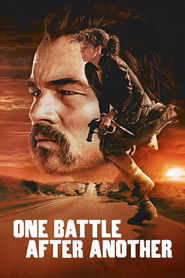
One Battle After Another (2025)
The newest film here completes the circle: a washed-up radical, sixteen years off-grid, too stoned to stay vigilant and too paranoid to relax, suddenly called on to be a man of action — the person on earth least equipped for it. Watch how Anderson channels his 1970s inheritances (Zsigmond's telephoto Los Angeles, Nashville's parallel storylines that accumulate rather than converge) while playing the gap between the call to act and the body that can't answer as comedy rather than despair.
Watch these together and the echoes become the pleasure. You'll see Toland's deep rooms in Welles and Wyler become the blueprint for Anderson's power struggles; Cassavetes' punishing close-ups teach you to read faces the way Solondz's flat light later demands; Altman's drifting camera reappears, transformed, in a Reseda nightclub in 1997 and an off-grid compound in 2025. More than technique, though, what binds them is a shared conviction: that the most interesting people in movies aren't the ones who fix things — they're the ones held inside situations too large, too tangled, or too tender to fix, in rooms full of other people, watched by cameras patient enough to let them be. Trust these films to take their time. They'll repay every minute of attention you give them.