Sightlines · a mini film course
Twelve Ways of Looking at a Crime: Noir and the Untrustworthy Eye
Every film in this set descends from the same ancestor — the detective picture, the story that promises the truth will out if someone just looks hard enough. And every one of them, in its own era and idiom, quietly breaks that promise. Across eighty years, these films keep circling one question: what happens when looking stops guaranteeing knowing? Sometimes the camera watches rather than chases. Sometimes the image itself is a beautiful forgery. Sometimes the person doing the investigating is the one being read. Watched together, they form a secret history of noir — not as a style of hats and shadows, but as cinema's longest-running argument with its own eye.
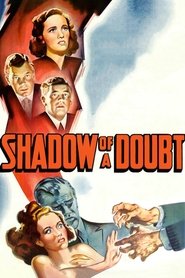
Shadow of a Doubt (1943)
Hitchcock photographs small-town Santa Rosa with an almost documentary plainness — flat light, wide friendly streets — and then lets shadow slide sideways into those sunlit rooms whenever a certain visitor enters. Watch how the suspense here is never about action but about knowledge: who knows what, and what each person knows about the other's knowing. Your information is pinned to a young woman's, and her isolation becomes yours. Terror, this film argues, can be a relationship between exactly two people.
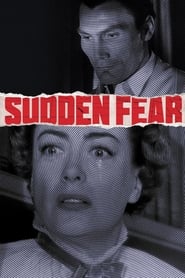
Sudden Fear (1952)
Charles Lang's Oscar-nominated photography splits the film in two: a warm, open San Francisco courtship that darkens, room by room, into full noir. But the real spectacle is Joan Crawford's face, isolated in fields of black, asked to travel enormous emotional distances almost wordlessly. Watch a key listening scene for how much a silent face can do — feeling caught at the instant it registers, before it can become action.
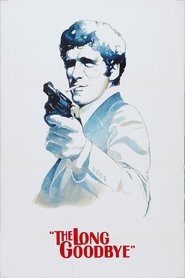
The Long Goodbye (1973)
Altman opens a murder mystery with a man trying to fool his cat with the wrong brand of cat food — and that errand is the whole film folded small: a loyal man moving carefully through a Los Angeles that has stopped keeping score. Watch the camera, which never sits still: always drifting, zooming, repositioning, an alert but passive witness with its own curiosity. The detective investigates constantly; notice how rarely his effort changes anything, and how the camera seems to know it.
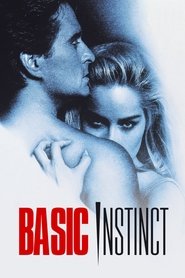
Basic Instinct (1992)
Jan de Bont's camera glides in cool, affluent circles, and nowhere more famously than an interrogation scene where five lawmen surround one woman in white — and the questioning quietly runs backward, until the askers are the ones being read. Verhoeven takes the old noir femme fatale and makes her, literally, an author, someone who may be scripting the detective rather than merely tempting him. Watch how confession, evidence, even desire all become performances you can't verify.
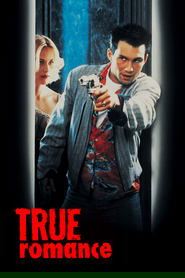
True Romance (1993)
Tony Scott shoots everything — including a man taking advice from Elvis in a bathroom mirror — dead literal, saturated to the edge of abstraction, lit like a perfume ad, completely unembarrassed. The hero is assembled entirely out of other people's pictures: comic books, kung-fu movies, posters stacked like an autobiography in merchandise. Watch how the film wagers that a self built from pop culture can still be genuine — that borrowed feeling, lived hard enough, becomes real feeling.
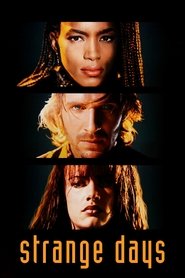
Strange Days (1995)
You don't watch this film's opening — you wear it: an unbroken first-person sequence through borrowed eyes, shot on custom rigs years before GoPro or VR existed. Bigelow maintains two distinct ways of looking — the grimy, neon-soaked "real" Los Angeles, and the immersive playback of recorded experience — and the friction between them is the film. Watch how it keeps asking whether watching a recording of something makes you complicit in it.
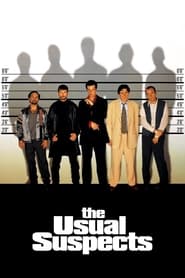
The Usual Suspects (1995)
Notice the deliberate visual split: the interrogation room is a stripped, fluorescent, bureaucratic white box, while the story being narrated inside it unfolds in rich, smoky, fully realized flashback. That's the trick — cinema almost always shows narration as if it were evidence, fully lit and scored and convincing. Watch how completely you trust images simply because a film bothered to stage them, and hold onto your skepticism about who is doing the telling.
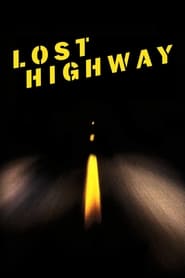
Lost Highway (1997)
Peter Deming photographs a house as engulfing darkness — rooms defined by what can't be seen, characters walking into blackness and dematerializing. Lynch strips the noir engine of motive, explanation, and detection, and refuses the cuts that would sort dream from memory from fact. Don't fight it: watch how doubled faces, repeated phrases, and time that bends rather than flows create dread precisely because the film won't tell you which version is real.
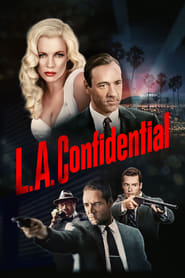
L.A. Confidential (1997)
Dante Spinotti lights 1950s Los Angeles in warm amber and gold — sunlight through venetian blinds, lacquered bars — and lights a call girl surgically styled to resemble a 1940s movie star with full, loving glamour-portrait reverence. The forgery is beautiful, the film knows it's a forgery, and it refuses to choose between those facts. Watch the gap between official narrative and institutional reality at every level: tabloid press, a TV cop show, a city selling counterfeit versions of itself.

Dark City (1998)
When the clock strikes twelve, the city falls asleep standing up and the buildings begin to move — towers screwing out of pavement, streets folding into new streets, while nobody is awake to watch. Proyas builds his metropolis from the painted shadows and looming silhouettes of 1920s German expressionism: a sealed world with no sun, no edge, no history you can trust. Watch for the one word everyone can name but no one can reach — a sunlit elsewhere murmured like a prayer.
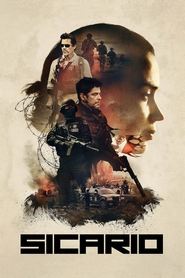
Sicario (2015)
Watch where Villeneuve keeps placing Emily Blunt's agent: in doorways, in back seats, at the edges of briefings where the real decisions happen elsewhere. Roger Deakins shoots the border landscape geologically rather than romantically — wide desert frames that dwarf human figures without ever making them mythic. The film's whole argument lives in that blocking: a competent, clear-eyed investigator systematically converted into a witness, and the audience along with her.
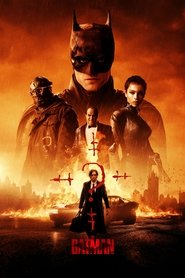
The Batman (2022)
Greig Fraser underlights the film daringly by blockbuster standards — faces falling into shadow, a near-monochrome darkness punctured by sodium orange and blood red, borrowed from the old grammar of eyes lost in top-lit gloom. The first thing Reeves teaches you is that everyone here is being watched, and the watching is the plot. A killer stages clue-laden scenes addressed directly to the detective, so you decode over Batman's shoulder — the film installs you as a knowing third party, and the procedural becomes a conversation you're inside.
Watch these together and the through-line becomes unmistakable: noir isn't really about crime, it's about epistemology in a trench coat. Hitchcock and Miller show you suspense built from knowing rather than doing; Altman and Villeneuve show detectives whose clear perception leads nowhere; Verhoeven, Singer, and Hanson show images and stories that manufacture truth rather than reveal it; Lynch, Proyas, and Bigelow dissolve the boundary between seeing and dreaming altogether; and Scott and Reeves show selves and cities built out of watching. Each film sharpens your eye for the next. By the twelfth, you'll notice something wonderful: you've stopped asking "what happens?" and started asking "how am I being made to see?" — which is exactly the question these filmmakers spent eighty years teaching us to ask.